A/D Devotionals
BEFORE YOU BEGIN
This devotional is provided in three languages on the same page. Each day begins in English. After reading the English version, simply scroll down for the Spanish version, and then continue scrolling for the Simplified Chinese version. All three translations are included together in each daily devotional so you can easily read or share the language you need.
If you are beginning this devotional while struggling with active addiction or just beginning your recovery, start with January 1, regardless of today’s date. The first 31 days of January are intentionally written as a foundation to help establish the biblical truths needed for the recovery journey. After completing those first 31 days, you can return to the current calendar date and continue through the 365-day devotional.
QUICK ACCESS (First 31 Days)
Devotionals Working Through the 12 Steps (Feb-Jun)
For those needing a more structured recovery process, we also recommend using one of our Breaking Free Recovery Manuals located on our website under the library section. These daily manuals are designed to walk you day by day through specific stages of recovery. This devotional provides daily truth and encouragement, but it is not intended to replace a structured recovery process, discipleship, accountability, or personal support. If you would like help knowing where to begin or which material best fits where you are right now, contact Breaking Free. We would be honored to help you take the next step.

December 26
Peace Beyond Comfort
Learning to Walk in God’s Peace When Recovery Requires Effort
We can enter alcohol and drug recovery hoping life will finally leave us alone. No pressure, no difficult conversations, no one asking anything of us. We imagine that peace will arrive when the bills are paid, our family understands, and nothing interrupts our plans. But if peace depends on everything going our way, it will always be fragile. Jesus offers us something we can carry into a demanding day: fellowship with Him, confidence in His care, and strength to do what is right.

December 25
When Fear Tries To Control Tomorrow
Learning to Trust God One Day at a Time in Recovery
Fear often becomes loud when we cannot predict what comes next. In alcohol and drug recovery, questions crowd our minds. Will my family trust me again? Will I find work? What happens when I leave this program? We want answers that will let us relax. Before long, we may begin believing we cannot be okay until every possibility has been examined and every outcome secured. Yet life never gives us that kind of guarantee. God calls us to walk with Him through what we do not yet understand.
December 24
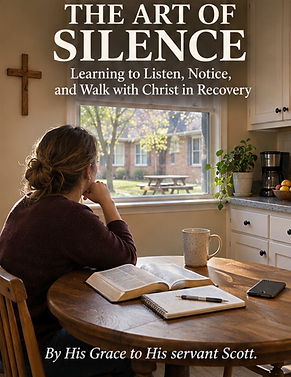
The Art of Silence
Learning to Listen, Notice, and Walk with Christ in Recovery
Silence can feel unfamiliar when we begin recovering from alcohol and drugs. We may have spent years trying to change what was happening inside through something we put into our bodies. Now the chemicals are gone, but the urge to escape discomfort can remain. We reach for the phone, fill the room with noise, or keep talking so we do not have to listen. God invites us to learn another way: being present with Him and becoming honest about what is happening within us.

December 23
Words That Reflect A Changed Heart
Learning to Speak with Respect, Kindness, and Integrity in Recovery
In alcohol and drug addiction, our words often became tools for getting what we wanted. We made excuses, shifted blame, broke promises, or spoke harshly to people who cared about us. Getting sober gives us an opportunity to change that pattern. Our mouths can become instruments of honesty, encouragement, and respect. Does the way I speak communicate that this person matters?

December 22
Christ In The Ordinary
Reflecting Jesus Through the Small Choices of Everyday Recovery
Following Jesus reaches into moments that never feel spiritual. You drop a wrapper and pick it up. Someone gives you too much change, and you return it. A tired person needs a seat, so you make room. In alcohol and drug addiction, we often trained ourselves to notice our own needs first. Recovery gives us opportunities to learn a different response. We begin asking, “What would reflect the character of Christ in this moment?”
December 21
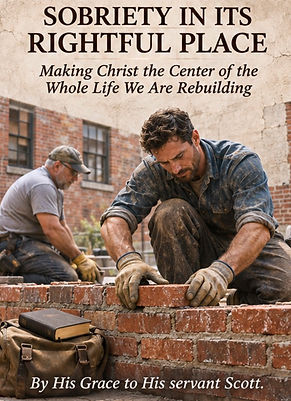
Sobriety In Its Rightful Place
Making Christ the Center of the Whole Life We Are Rebuilding
When alcohol and drugs have controlled our lives, getting sober can feel like the only thing that matters. We know the damage: broken trust, neglected responsibilities, wasted money, and another morning filled with regret. Stopping that destruction deserves serious attention. We need honest support, practical boundaries, and a willingness to receive help. For someone just beginning, making it through today without using may be a tremendous step. Then, as strength returns, we begin asking what kind of life we are learning to live.

December 20
I Don’t Know What I Don’t Know
Finding the Humility to Remain Teachable
One obstacle in alcohol and drug recovery is not simply what we do not know. It is our certainty that we already know enough. We hear a familiar Scripture, or receive counsel and think, “I know that.” Yet knowing the words does not mean we understand their depth, and understanding a principle does not mean we are living it. We can explain surrender while resisting correction. We can describe honesty while protecting a lie. Familiarity can disguise a heart that has stopped listening.

December 19
When Recovery Becomes a Bargaining Chip
Taking Responsibility Without Holding Loved Ones Hostage
Sometimes alcohol and drugs leave our lives before manipulation does. We stop using and work the steps. Then someone says no. A family member will not give us money, restore a privilege, or change a boundary. Suddenly, we withdraw, neglect responsibilities, or make sure everybody knows how discouraged we are. Beneath that behavior can be an old message: “If you want me to keep doing well, you had better give me what I want.” Sobriety has become leverage instead of a life we are learning to steward.

December 18
Slow Down Your Mouth—Let Your Feet Speak
Rebuilding Trust Through Patience and a Changed Life
One of the surprises in alcohol and drug recovery is discovering that our excitement about changing is not always shared by the people we hurt. We have been sober a few months, praying and working the steps. But while we are celebrating a new beginning, they may still be recovering from years of broken promises. Our progress is real, but so is their pain. We cannot expect a few good months to erase the history they lived through.

December 17
More Than Staying Sober
Letting Recovery Grow into a Whole Life of Following Jesus
When alcohol and drugs have been running our lives, getting sober requires immediate attention. We need honesty, support, accountability, and changes that protect us from returning to use. But God has more for us than a life measured only by what we no longer drink or use. He invites us to become disciples of Jesus Christ. Recovery opens into a steady walk in which every part of life comes under His loving authority.

December 16
More Than My Testimony
Honoring Where God Brought You From Without Limiting Where He Can Use You
Step Twelve turns our attention toward giving back, but there are two ditches along that road. In one, we only talk about the alcohol, drugs, and destruction behind us. In the other, we avoid our past because shame still makes it painful to acknowledge. God calls us into honest freedom between those extremes. Our recovery story matters, but it is not the whole of our calling. We can remember where His mercy found us while remaining available for the life He is forming today.

December 15
When Getting More Keeps Us Empty
Finding Contentment in Christ Instead of Chasing the Next Purchase
After alcohol and drug addiction has stripped away possessions and stability, getting something new can feel like getting part of ourselves back. But rebuilding can quietly become a race to prove we are no longer the person who had nothing. We begin asking purchases to provide dignity, security, and relief. Jesus warns, “Not even when one has an abundance does his life consist of his possessions” (Luke 12:15). What we own cannot establish who we are.
December 14
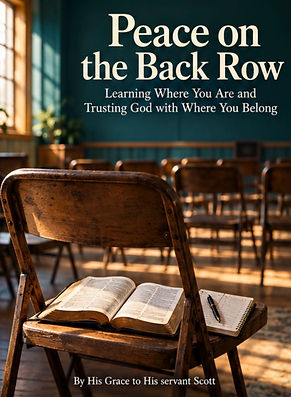
Peace on the Back Row
Learning Where You Are and Trusting God with Where You Belong
After years of alcohol and drug addiction, we may feel an urgent need to prove we are no longer the person others remember. Having lived so long with shame, we assume moving to the front will finally quiet it. But a better seat cannot settle a heart still searching for worth through approval. Recovery invites us to become faithful where we are, without requiring an audience to confirm that our life matters.
December 13
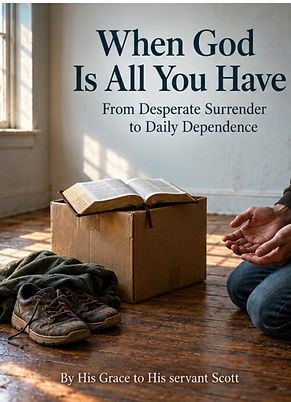
When God Is All You Have
From Desperate Surrender to Daily Dependence
Sometimes we do not recognize how deeply we need God until everything we counted on can no longer carry us. Alcohol and drugs have exhausted our promises. Step One brings us face to face with the truth: we cannot manage our addiction through determination alone. This is a painful place, but it can become a precious beginning. We can stop defending the life that is falling apart and become willing to receive help.

December 12
Who Has Your Ear?
Choosing a Faithful Guide and Becoming Willing to Grow
Recovery from alcohol and drug addiction requires learning to receive help, not merely admitting we need it. We need someone who can hear the truth behind our polished answers and recognize the patterns we overlook. Whether we call that person a sponsor, mentor, or discipler, the relationship should help us grow in honesty, responsibility, and devotion to Christ. Pray for someone with established recovery, consistent character, and time to walk alongside you.

December 11
God in My Image?
Letting Christ Reshape Our Lives Instead of Reshaping His Truth
We can enter recovery wanting God to remove the consequences of alcohol and drugs without giving Him authority over the life beneath them. Help me, Lord, but do not challenge this relationship, this resentment, or this habit. Jesus asks, “Why do you call Me, ‘Lord, Lord,’ and do not do what I say?” (Luke 6:46). His question reaches beyond what we call Him into how we respond when His direction differs from our desires.

December 10
Cutting Corners, Keeping Control
When Doing It My Way Keeps Me from Growing God’s Way
A shortcut can look like a smart idea until we notice what it allows us to avoid. In recovery from alcohol and drug addiction, we may search for another way whenever honesty becomes uncomfortable, discipline feels demanding, or someone challenges our thinking. We want the freedom, but we want to negotiate the process. We rush the inventory, skip the conversation, or decide accountability is unnecessary. The question is not simply whether our way is easier. It is whether our way protects the very pattern God is calling us to surrender.

December 9
Don’t Open That Door
Protecting Your Recovery Before the First Drink or Drug
The first drink or drug rarely announces everything it intends to take. It offers relief, pleasure, confidence, or a break from the pressure. It does not show the broken promises, sleepless nights, frightened family, or shame that may follow. In recovery, we must learn to see beyond the invitation. We are protecting more than a stretch of sobriety. We are protecting the honesty, relationships, purpose, and daily fellowship with God that are growing in our lives. A moment of escape is not worth reopening a door that led us into bondage.

November 2
The Boundaries That Keep Us Free
Learning to Recognize, Accept, and Live Within God’s Protective Limits
Addiction trains us to treat boundaries as enemies. We want relief now, freedom without accountability, and choices without consequences. A rule feels like interference; another person’s no feels like rejection. Even after alcohol and drugs are removed, that resistance can remain. Recovery involves learning that a limit can protect the very life we are asking God to restore. Freedom grows stronger when we stop treating every boundary as something to escape.

November 2
Before Anger Takes the Wheel
Recognizing the Warning Signs and Protecting Your Recovery
When a warning light appears on your dashboard, covering it does not fix the engine. The light calls for attention before damage follows. Anger can serve a similar purpose in recovery. Someone says no, plans change, or trust is not restored as quickly as we want. We cannot control the outcome, and frustration rises. Ignoring it while pressing harder can move us toward the very escape we once found in alcohol and drugs.

December 6
When Control Becomes a Relapse Trap
Recognizing the Feelings That Drive Us Back to Escapes
Sometimes the danger in recovery begins with something we cannot make happen. A relationship will not improve on our schedule. Someone says no. We push harder, replay conversations, and try to force an outcome. Soon, the situation is no longer our only struggle; our feelings are taking over. Alcohol and drugs begin looking like a way to quiet what we cannot control. “Trust in the LORD with all your heart and do not lean on your own understanding” (Proverbs 3:5). Recovery requires learning to trust God when life refuses to follow our instructions.

December 5
Putting Life Back In Order
Learning Daily Organization to Make Room for Recovery
Where are my keys? Did I pay that bill? What time was the meeting? For many of us, alcohol and drug addiction left ordinary life scattered. Responsibilities waited while the next drink, drug, or crisis took priority. When we begin recovery, the substances may be gone while the disorder remains. Now we are trying to grow, rebuild trust, and handle emotions while searching for things we cannot find. Learning organization gives us a practical way to reduce confusion and make room for what today requires.

December 4
Money and The Recovering Heart
Letting God Restore Our Desires, Our Security, and Our Stewardship
Money often carried the weight of our addiction. We needed it for the next drink, the next drug, or the next escape. We borrowed with promises we did not keep, concealed purchases, or pressured people who loved us. Now that we are learning to live differently, our relationship with money needs attention too. Jesus said, “For where your treasure is, there your heart will be also” (Matthew 6:21). What we do with money can reveal what we are asking it to do for us.

December 3
When Understanding Becomes Surrender
Letting God Change the Heart Behind Our Addiction
There comes a moment in recovery when explaining ourselves is no longer enough. We understand why rejection hurts, why anger rises, and why alcohol or drugs became an escape. Yet the same reactions keep appearing. Insight has helped us recognize the struggle, but now truth asks for a response. Will we keep studying the problem while protecting our control, or will we place ourselves before God and become willing to obey? Healing moves into life when what we discover becomes something we surrender.

December 2
Beyond Awareness: A Heart Made New
Letting God Reveal, Restore, and Teach Us to Walk in Freedom
Understanding why we drink or use drugs can bring clarity. We begin recognizing the wounds, fears, relationships, and choices connected with our addiction. But knowing where a pattern began does not automatically change where it leads. We can explain our anger and still wound people with it. We can identify our fear and still let it govern every decision. The deeper question is whether we will surrender what we have discovered to the God who created us.
December 1
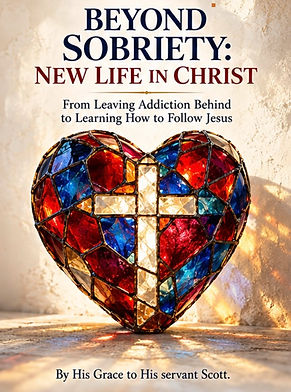
Beyond Sobriety: New Life In Christ
From Leaving Addiction Behind to Learning How to Follow Jesus
Putting down alcohol or drugs is a vital beginning. We need freedom from the substance that has been damaging our bodies, relationships, and choices. But once the substance is gone, a deeper question remains: How will I live now? Selfishness can remain active in a sober life. At Breaking Free, we want more than an interrupted habit. We invite people into a relationship with Jesus Christ and a lifelong journey of learning to follow Him.

November 30
Redeemed From The Pit
Living the Recovery Principles Through the Goodness of God
Read Psalm 103 slowly. Addiction taught many of us to remember every disappointment while forgetting the mercy that kept reaching for us. David begins, “Bless the LORD, O my soul, and forget none of His benefits” (Psalm 103:2). Recovery needs that deliberate remembering. During quiet time, pause before listing everything that is wrong. Remember where God has met you, who He has sent to help, and what His grace has made possible. Gratitude can tell the truth about pain while still acknowledging His care.

November 29
From Needing The Benefit To Loving The Master
How Serving Deepens Our Recovery and Our Fellowship With God
Early in recovery, serving can help us step outside the world of our own demands. Alcohol and drug addiction taught us to ask what would relieve us, satisfy us, or get us through the next hour. Now we wash dishes, welcome a newcomer, or help someone carry a burden. We discover that our hands can contribute instead of taking. Jesus said, “It is more blessed to give than to receive” (Acts 20:35). God can use that blessing to help us begin living differently.

November 28
Learning To Be Still
Finding Peace in God’s Presence Without Escaping Ourselves
For many of us, being alone without alcohol or drugs once felt unbearable. When the room grew quiet, everything inside seemed to get louder. Regret spoke. Fear rehearsed tomorrow. Loneliness pressed against places we did not know how to comfort. We reached for something that would change the feeling before we had to face it. In recovery, we begin learning that discomfort does not have to decide our next move. We can pause, acknowledge what is happening, and invite God into the moment without running from ourselves.

November 27
Faithful With What God Has Given
How Daily Obedience Prepares Us to Carry Greater Influence
We often want the fruit of maturity without the time it takes to grow. In alcohol and drug addiction, we learned to reach for immediate relief. That same impatience can follow us into recovery. We hear a teaching, understand a spiritual truth, and assume we are ready to lead others into it. But understanding obedience is not the same as practicing it. Insight gives us something to respond to; obedience begins putting it into practice. God is forming people who can faithfully carry what they have received.

November 26
Becoming a Giver to Life
Learning to Build Others Up Through the Little Things
What happens to people when they spend time with us? Do they leave encouraged, heard, and respected, or worn out from carrying our demands? Alcohol and drug addiction trained many of us to organize life around our next need. We took money, time, trust, and emotional energy while overlooking what it cost others. Even after substances are removed, that taking mentality can remain. This is not our permanent identity in Christ, but it is a pattern we must face. Recovery means learning to bring something life-giving into the room.

November 25
Finding the Gold in Others
The Power of Affirmation, Encouragement, and Loving Correction in Recovery
In alcohol and drug recovery, we spend time identifying faults. We examine dishonesty, resentment, selfishness, manipulation, and character defects that fed addiction. This matters. But we can become so skilled at finding faults that we miss the good God is developing. We see only failure. Scripture gives us another instruction: “Therefore encourage one another and build up one another” (1 Thessalonians 5:11). Recovery needs truth, but it also needs encouragement.

November 24
The Twelve Steps - A Biblical Roadmap for Life
How God’s Timeless Truths Lead Us From Surrender to Healing, Spiritual Maturity, and Serving Others
The beauty of the Christian Twelve Steps is not that someone discovered twelve new spiritual truths. It is that biblical principles were placed into a systematic order, giving people trapped in alcohol and drug addiction a practical way to begin rebuilding their lives. Scripture has always taught surrender, confession, repentance, forgiveness, restoration, prayer, and serving others. But when addiction has destroyed someone’s ability to think clearly, maintain relationships, or make healthy decisions, understanding where to begin can seem overwhelming. Psalm 119:105 declares, “Your word is a lamp to my feet And a light to my path.” The Twelve Steps provide a roadmap, but God’s Word provides the light.
November 23
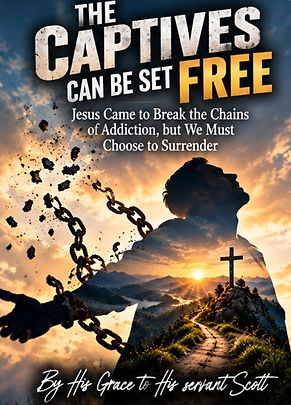
The Captives Can Be Set Free
Jesus Came to Break the Chains of Addiction, but We Must Choose to Surrender
Isaiah 61:1–2 reveals the very heart of Jesus Christ toward those trapped in alcohol and drug addiction. “The Spirit of the Lord God is upon me, Because the Lord anointed me To bring good news to the humble; He has sent me to bind up the brokenhearted, To proclaim release to captives And freedom to prisoners.” When Jesus began His earthly ministry, He declared that this prophecy was being fulfilled (Luke 4:18–21). Think about that! Jesus came for the brokenhearted, the imprisoned, and those who desperately need freedom. He came for people just like us.

November 22
Get Some Mileage Under Your Belt
Before You Try to Change Another Addict, Let God Change You
One of the dangers in early recovery is what I call two-stepping—working Step One and then jumping straight to Step Twelve. We finally admit that alcohol and drugs have defeated us, surrender, get a little clean time, and suddenly we want to straighten everybody else out. We want to tell the alcoholic to put the bottle down, the addict to quit getting high, and everybody around us how they need to live. But there are ten Steps between One and Twelve for a reason. Before God sends us out carrying a message, He wants to build a message inside us.

November 21
Traveling Light In Recovery
You Cannot Walk Freely Into Your Future While Carrying Everything From Your Past
Most of us did not enter addiction empty-handed. Long before the bottle, pill, pipe, or needle, many of us were already carrying baggage. Rejection. Abandonment. Anger. Shame. Family dysfunction. Abuse. Failure. Insecurity. Grief. Secrets. Then we added baggage through our own sinful choices. Alcohol and drugs became a way of escaping what we did not know how to face. For a few hours we could numb it, forget it, or pretend it was not there. But substances never removed the baggage. They simply numbed us to its weight while adding more baggage to the suitcase. Scripture says, “He heals the brokenhearted And binds up their wounds” (Psalm 147:3). What drugs temporarily numb, God wants to actually heal.

November 20
God’s Abundant Pardon
Healing the Hunger Beneath the Addiction
Addiction is not only a battle with alcohol or drugs; it is often a battle with a hunger deep inside the soul. We can remove the bottle, flush the drugs, leave old friends, and still discover something inside crying out to be fed. That is why simply telling an addicted person, “Stop doing it,” is not enough. Isaiah asks, “Why do you spend money for what is not bread, and your wages for what does not satisfy?” (Isaiah 55:2). That is addiction. We keep returning to something that promises satisfaction but leaves us hungry again. Alcohol promises peace. Drugs promise escape. Lust promises intimacy. Control promises security. Yet every counterfeit eventually sends us back to the same empty table.

November 19
Recovery Is Discipleship
Sometimes We Have to Help Someone Reach the Starting Line Before We Tell Them to Run the Race
Somewhere along the way, the Church began separating addiction recovery from discipleship. We put recovery in one room and Bible study in another. We created recovery ministries for “those people” and discipleship programs for everyone else. But when Christ-centered recovery is done biblically, what are we actually doing? We are teaching surrender, repentance, confession, obedience, prayer, Scripture, honesty, forgiveness, community, serving, self-control, renewing the mind, and learning to walk in the Spirit. That is not something different from discipleship. That is discipleship applied directly to the places where alcohol and drug addiction have produced extreme bondage. Jesus said, “If anyone wants to come after Me, he must deny himself, take up his cross daily, and follow Me” (Luke 9:23). That is recovery, and that is discipleship.

November 18
Sobriety Is Not Home Plate
Don’t Just Count Your Sober Days—Make Your Sober Days Count
Getting sober from alcohol and drugs is a tremendous victory. Every day without returning to the substance that once controlled us is something to thank God for. Celebrate thirty days. Celebrate one year. Celebrate twenty years. Remember where God brought you from. But be careful: something that began as gratitude can quietly become pride. We can become so attached to numbers, dates, chips, anniversaries, and years that our sobriety becomes another identity we worship. Paul asks, “What do you have that you did not receive?” (1 Corinthians 4:7). If God’s grace helped bring me out, then my years of sobriety should make me more grateful and humble, not more impressed with myself.

November 17
Relapse Does Not Have To Be The End
The Fall May Be Part of Your Story, but It Does Not Have to Become Your Future
One of the most dangerous lies in recovery is believing that because relapse happens to many people, it must happen to you. Research tells us that a significant percentage of people struggling with alcohol and drug addiction will return to substance use at some point. But statistics describe what has happened to others; they do not determine what God has planned for you. Scripture says, “Therefore let the one who thinks he stands watch out that he does not fall” (1 Corinthians 10:12). God does not tell us this to make us afraid. He tells us because freedom must be guarded.
November 16
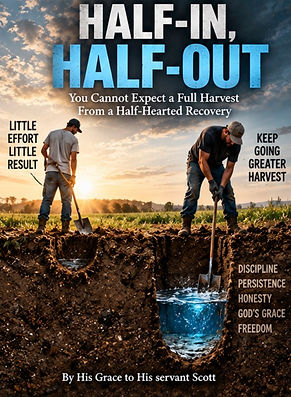
Half-in, Half-out
You Cannot Expect a Full Harvest From a Half-Hearted Recovery
There is a dangerous place in alcohol and drug recovery where a person wants one hundred percent freedom while giving twenty percent participation. They want God to restore everything addiction destroyed, but they approach recovery casually. A little prayer. A little honesty. A meeting when convenient. An inventory when things get bad. Scripture occasionally. Correction only when they agree with it. Surrender—but with certain areas protected. Then they wonder why they remain stuck. Scripture gives us a principle that cannot be negotiated: “Whatever a person sows, this he will also reap” (Galatians 6:7). You cannot continually sow teaspoons and expect to harvest truckloads.
November 15
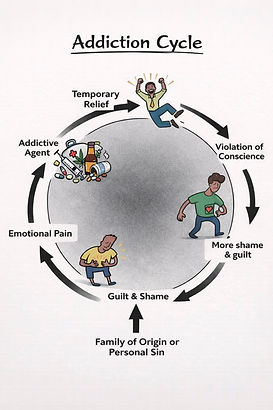
The Addiction Cycle
How Pain, Shame, False Relief, and a Violated Conscience Keep Addiction Alive
Addiction is rarely a single event or simply a bad decision. It is usually a cycle—a repeating pattern in which unresolved pain produces a need for relief, relief is sought in the wrong place, and the consequences create even more pain. What begins as an attempt to feel better eventually becomes bondage. Jesus said, “Everyone who commits sin is a slave of sin” (John 8:34). Understanding the cycle does not excuse our choices; it helps us see where those choices came from and where God wants to interrupt them.
November 14
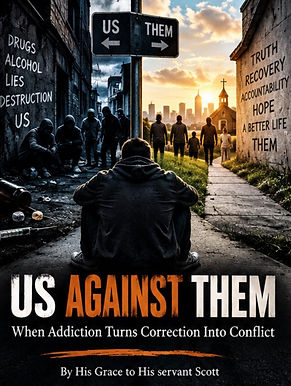
Us Against Them
When Addiction Turns Correction Into Conflict
One of the deepest attitudes carried into recovery is the belief that life is divided into two groups: us and them. Us—the ones who understand the streets, the drugs, the drinking, the hustle, the pain, the consequences, and the survival. Them—the parents, police, judges, employers, pastors, counselors, sponsors, teachers, and “good people” who supposedly do not understand us. Long before some of us became chemically dependent, rebellion had already begun teaching our hearts a dangerous message: Nobody is going to tell me what to do. Addiction did not create every part of that attitude, but it certainly gave it a home.

November 13
The Onion Skin Law
Peeling Back the Layers to Heal the Root of Addiction
In recovery, most people deal first with what can be seen: the drinking, drugs, anger, lying, broken promises, manipulation, isolation, and relapse. Those things are real and must be confronted, but they are often only the outer layer. Scripture says, “God sees not as man sees, since man looks at the outward appearance, but the LORD looks at the heart” (1 Samuel 16:7). People react to what is happening on the outside; God wants to reach what is happening on the inside. Addiction is often not the root—it is the anesthetic used to numb what is buried underneath.

November 12
God Provides For The Moment
When A Surrendered Heart Reaches Its Limit, God Has Not Reached His
One of the greatest lessons in alcohol and drug recovery is learning that God never asked us to be strong enough to carry our future. Addiction trained us to control, manipulate, predict, hide, and survive. Recovery teaches us something completely different: surrender. When our heart is turned toward God and we are doing what He has placed in front of us, He will provide what we do not have. “For God sees not as man sees, since man looks at the outward appearance, but the LORD looks at the heart” (1 Samuel 16:7). God sees beyond our weakness and imperfect progress. He sees whether our heart is reaching for Him.

November 11
Recovery Needs A Family
Turning Institutions Into Communities of Restoration
Addiction does more than destroy behavior; it destroys relationships, trust, belonging, and the ability to live in healthy community. Many men and women enter treatment carrying far more than a drug or alcohol problem. They carry absent fathers, broken homes, rejection, abandonment, betrayal, unhealthy authority, damaged relationships, and years of isolation. Then we place them in an institution and sometimes expect a schedule, a bed, three meals, counseling sessions, and a few classes to rebuild what took years to destroy. Those things have value, but recovery was never designed to happen in isolation. God said from the beginning, “It is not good for the man to be alone” (Genesis 2:18). If addiction drove us into isolation, restoration must teach us how to belong again.
November 10
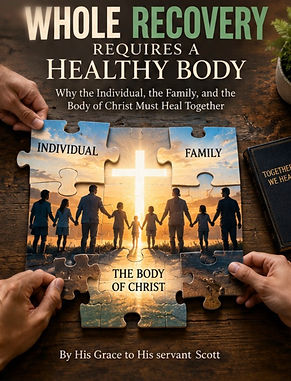
Whole Recovery Requires A Healthy Body
Why the Individual, the Family, and the Body of Christ Must Heal Together
One of the greatest mistakes we can make in alcohol and drug recovery is believing the addict is the only person who needs to change. Addiction may be carried in one person’s body, but its damage travels through relationships. Trust gets broken, communication becomes distorted, boundaries disappear, resentment grows, and families gradually learn unhealthy ways of surviving. That is why we have repeatedly seen at Breaking Free that when the family becomes involved and begins getting healthy, the person struggling with addiction has a much greater opportunity for lasting recovery. We are not blaming the family for the addiction. We are recognizing that God designed healing to happen in relationship.

November 9
Fear May Get You Through The Door
Fear Can Awaken Us to the Consequences, but Only Surrender Can Build a New Life
Most people do not walk into alcohol and drug recovery because life is going wonderfully. Usually something has become frightening enough to finally get their attention. A wife is leaving. Children are being taken away. A judge is talking about prison. The employer has given the last warning. Money is gone. The house is gone. Health is deteriorating. Another overdose almost happened. Homelessness is becoming real. Suddenly the consequences of continuing to use become more frightening than the thought of living without the drug. Fear has entered the room, and although fear is not a foundation upon which we can build lasting recovery, God can use it for a season to wake us up. “The fear of the Lord is the beginning of wisdom” (Proverbs 9:10). Sometimes fear is the alarm that finally gets a sleeping man out of bed.

November 8
When Freedom Needs Walls
The Right Structure Cannot Replace Willingness—but Willingness Must Accept the Structure It Needs
Not everyone struggling with alcohol and drug addiction needs the same recovery environment. Some people can remain in the community and work a strong program while maintaining employment, family responsibilities, meetings, mentoring, Quiet Time, and daily accountability. Others have progressed so deeply into chronic addiction that the freedom around them has become dangerous. They need a residential facility where access is restricted, schedules are established, and someone else temporarily provides the boundaries they have repeatedly been unable to maintain. Still others begin recovery in jail or prison, where those boundaries have been imposed upon them. These environments are very different, but one truth runs through all three: lasting recovery requires willingness. Jesus said, “If anyone wants to come after Me, he must deny himself, take up his cross daily, and follow Me” (Luke 9:23). Recovery begins when “I want what I want” starts surrendering to “God, what do You want?”

November 7
Bitter Or Better
Sobriety Removes the Substance—Surrender Allows God to Heal the Heart
There comes a point in recovery when every person begins traveling in one of two directions: we are either becoming bitter or becoming better. Putting down alcohol and drugs is absolutely necessary, but abstinence alone does not guarantee transformation. A person can be sober for months or even years and still be angry, resentful, judgmental, self-pitying, and miserable. The substance may be gone while the attitudes that helped feed the addiction remain alive. Hebrews 12:15 warns us to see to it “that no root of bitterness springing up causes trouble.” Bitterness is called a root because what we see on the surface is usually connected to something much deeper underneath.

November 6
Relationships Are Mirrors
God Uses Other People to Reveal How We See Them, How We See Ourselves, and What Still Needs Healing
We don’t enter recovery as blank slates. We bring rejection, betrayal, disappointment, wounds, and distorted experiences with us. Long before alcohol or drugs took control, life was already teaching us how to interpret people. If love was inconsistent, we learned to expect abandonment. If correction came through anger or humiliation, we learned to hear correction as rejection. If trust was repeatedly broken, we learned to question motives. Eventually those experiences became more than memories; they became lenses. “For as he thinks within himself, so he is” (Proverbs 23:7). We began seeing today through what happened yesterday.

November 5
When Recovery Becomes An Investigation
Self-Examination Was Meant to Lead You to Surrender—Not Keep You Trapped Inside Yourself
There is a strange trap that can develop in alcohol and drug recovery: we can become so busy investigating ourselves that we never actually learn how to live. Recovery begins with honesty, and honesty requires examination. We must look at our resentments, fears, selfishness, dishonesty, wounds, triggers, relationships, and destructive patterns. Scripture says, “Let us examine and probe our ways, And let us return to the LORD” (Lamentations 3:40). Notice the destination: “return to the LORD.” Examination has a purpose. We look within so we can recognize what needs to be confessed, surrendered, healed, corrected, and brought under the authority of Christ. But eventually we have to stop digging and start living.

November 4
Borrowed Armor
Model the Recovery—But Become the Person God Is Forming
When you first enter recovery from alcohol and drug addiction, you do not know how to live sober. For years addiction trained you how to hide, manipulate, escape, isolate, react, and survive. Now you are being asked to live an entirely different life. That is why God places people in front of us who have already walked some of the road. Paul said, “Be imitators of me, just as I also am of Christ” (1 Corinthians 11:1). There is nothing wrong with looking at someone whose recovery has produced fruit and saying, “I want to learn how he does this.” In fact, early recovery requires it. You need a model before you have enough experience to develop your own.

November 3
Yesterday’s Manna
Yesterday’s Victory Is a Memorial—Not Today’s Walk With God
One of the greatest miracles in recovery is being able to look backward and see where God brought us from. The alcoholic remembers the bottle that once controlled him. The addict remembers the drug he could not put down. We remember the jail cell, broken relationships, withdrawals, insanity, shame, and that moment when God finally broke through. Those victories matter. Never minimize them. “Bless the LORD, my soul, and do not forget any of His benefits” (Psalm 103:2). We should remember what God has done—but there is a dangerous difference between remembering yesterday and living there.

November 2
When The Drug Is Gone But The Damage Remains
Giving the Brain Time to Heal While Trusting God With What We Cannot Repair Ourselves
Getting the alcohol or drugs out of your body does not mean everything they affected immediately returns to normal. This is one of the hardest realities of recovery. A person may stop using but continue battling paranoia, anxiety, depression, distorted thinking, emotional instability, sleeplessness, inability to concentrate, memory problems, or even hallucinations and psychotic symptoms. Some substances can profoundly disrupt the way the brain functions, and after years of feeding the brain chemicals it was never designed to live on, we should not be surprised when healing requires time. “And do not be conformed to this world, but be transformed by the renewing of your mind” (Romans 12:2). Notice the word renewing. God is interested in transformation, but transformation is often a process.

November 1
Relationships: God’s Classroom For Transformation
Recovery Is Not Just Learning How to Treat People Differently—It Is Allowing God to Change the Person Who Is Doing the Relating
God created us for relationships. Before sin entered the world, God said, “It is not good for the man to be alone” (Genesis 2:18). We were designed to know God and to live connected to other people. Addiction attacks both. Alcohol and drugs do not simply damage the body; addiction gradually corrupts the way we see ourselves, God, and everyone around us. As addiction progresses, relationships become filtered through selfishness, fear, manipulation, resentment, insecurity, control, shame, and survival. Eventually, we may believe our distorted way of relating is normal because what we have practiced long enough begins to feel true.
October 31
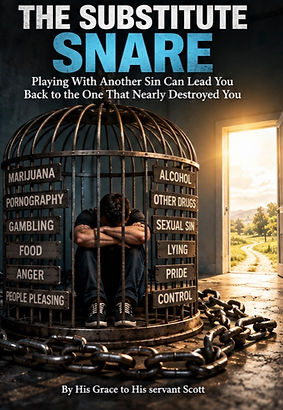
The Substitute Snare
Playing With Another Sin Can Lead You Back to the One That Nearly Destroyed You
One of the most dangerous questions a recovering addict can ask is, “What can I still get away with?” We know alcohol nearly destroyed us, so we stay away from alcohol but begin negotiating with marijuana. We know drugs brought us into bondage, so we avoid our drug of choice while entertaining pornography, sexual sin, gambling, dishonesty, unhealthy relationships, or some other form of escape. We tell ourselves, “At least I’m not using.” But recovery was never supposed to become an experiment in discovering which chains we can safely wear. God did not rescue us from one form of slavery so we could negotiate with another. Scripture says, “Let’s also lay aside every encumbrance and the sin which so easily entangles us” (Hebrews 12:1). Sin entangles. It wraps itself around us one strand at a time.

October 30
God’s Dashboard
Don’t Medicate the Warning Light—Let It Point You Back to God
Imagine driving down the highway when suddenly the oil-pressure light comes on. You could pull over, open the hood, check the oil, and discover what needs attention. Or you could take a piece of black tape and cover the warning light so you no longer have to look at it. Covering the light might make the dashboard look better, but it changes absolutely nothing under the hood. The engine is still in trouble. That is an incredible picture of alcohol and drug addiction. For years many of us did not deal with what was happening inside us; we simply found ways to change how it felt. Anxiety came on, so we smoked. Anger appeared, so we drank. Loneliness showed up, so we got high. Pain surfaced, so we medicated it. We kept trying to fix the dashboard while God wanted to take us underneath the hood.
October 29
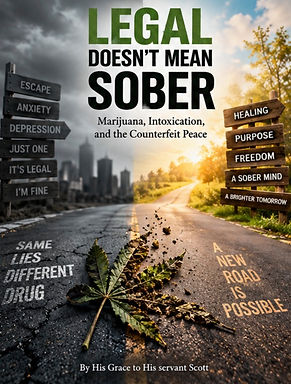
Legal Doesn’t Mean Sober
Marijuana, Intoxication, and the Counterfeit Peace
One of the most dangerous lies in alcohol and drug recovery is believing that a substance must completely destroy your life before it qualifies as a problem. Marijuana often hides behind this argument. “I never overdosed. I never lost my house. I kept my job. I wasn’t lying in a gutter.” Maybe so—but those are measurements of consequences, not measurements of sobriety. The deeper question is not simply, “How badly did marijuana hurt me?” The question is, “Why did I need a substance to change the way I felt?” Marijuana may travel a different road than fentanyl, methamphetamine, cocaine, or alcohol, but when it is used to get high, it still produces intoxication. It alters the internal state God created us to learn to live in through Him.
October 28
Managing The Truth
When Secrecy Becomes Manipulation in Recovery
Addiction does not only teach us how to use drugs and alcohol; it teaches us how to manage information. We learn who to tell, what to tell, how much to tell, and what details to conveniently leave out. We may stop using and still carry this behavior straight into recovery. We tell our counselor one part, our spouse another, our sponsor something else, and our family only what we believe they can handle. Then we defend ourselves by saying, “I never lied.” Maybe not—but if I deliberately withheld information so someone would reach the conclusion I wanted them to reach, I was still manipulating the truth. “He who conceals his transgressions will not prosper, but he who confesses and forsakes them will find compassion” (Proverbs 28:13).

October 27
Sober Is Not The Destination
God Did Not Just Create You to Stop Using—He Created You to Live With Purpose
“For we are His workmanship, created in Christ Jesus for good works, which God prepared beforehand so that we would walk in them.” — Ephesians 2:10
One of the greatest mistakes we can make in alcohol and drug recovery is believing the entire goal is simply getting sober. Certainly we must stop drinking and using. Abstinence is not optional for the addict. But if sobriety were enough, why were we searching so desperately for something in the first place? Long before alcohol or drugs controlled us, something inside was looking for relief, belonging, acceptance, excitement, identity, peace, significance, or purpose. The substance became our counterfeit answer. It changed how we felt for a little while, but it could never answer the deeper question of why we were created.

October 26
The Consequence You Can’t See
Alcohol and Drugs May Have Been the Loudest Consequence, but Every Disobedience Takes Us Somewhere
“Do not be deceived, God is not mocked; for whatever a person sows, this he will also reap.” — Galatians 6:7
One of the greatest lessons alcohol and drug addiction can teach us is that every choice is taking us somewhere. During active addiction, we became experts at watching for consequences. We worried about getting arrested, losing a job, destroying a marriage, running out of money, damaging our health, or finally reaching the point where everyone knew what was happening. We learned to calculate risk. We tried to control the circumstances, hide the evidence, minimize the damage, and somehow protect ourselves from the consequences of our choices. But there is one problem: we can sometimes manipulate circumstances, but we cannot cancel the spiritual law of sowing and reaping.

October 25
When Everything Is Too Small Or Too Big
Healthy Recovery Learns to See Life at Its True Size
One of the greatest problems in alcohol and drug addiction is not simply what we see—it is how we see it. Addiction destroys balance. For years many of us lived between two extremes: minimizing what needed to be taken seriously and maximizing what needed to be handled calmly. We made a mountain into a molehill and five minutes later made a molehill into a mountain. We said, “It isn’t that bad,” when our lives were falling apart, then acted like the world was ending because somebody corrected us. That distorted perception does not automatically disappear when the drugs and alcohol disappear. Sobriety removes the chemical, but discipleship must retrain the person.

October 24
From Testimony To Transformation
A Changed-Life Story Can Start the Journey—Biblical Discipleship Must Teach Us How to Live Free
In the beginning of alcohol and drug recovery, testimony is powerful. A broken man needs to hear another man say, “I was where you are, and God brought me out.” A woman who believes her life is finished needs to see someone who once lived in bondage now standing sober, restored, and alive. Testimony gives hope. Revelation 12:11 says, “And they overcame him because of the blood of the Lamb and because of the word of their testimony.” Never underestimate the power of a changed life. But testimony was never designed to become the entire foundation of recovery. Eventually you must move from hearing what God did in somebody else to allowing God to develop something solid inside you.

October 23
Submission: The Death Of Self-rule
Having a Mentor Is Not the Same as Trusting One
One of the greatest mistakes in alcohol and drug recovery is believing that having a mentor or sponsor automatically means we are accountable. We can have their number in our phone, meet with them every week, tell everybody who our sponsor is, and still remain completely in charge of our own lives. There is a tremendous difference between having someone and submitting ourselves to someone we have learned to trust. “The way of a fool is right in his own eyes, but a wise man is he who listens to counsel” (Proverbs 12:15). God does something much deeper through mentorship than simply giving us somebody to call when we are struggling. He begins attacking the very thing addiction has strengthened for years: the government of self.

October 22
When Kings Go Out To Battle
Sometimes the Dangerous Place Is Simply Where You Weren’t Supposed to Be
“Then it happened in the spring, at the time when kings go out to battle, that David sent Joab and his servants with him and all Israel… But David stayed at Jerusalem.” — 2 Samuel 11:1
One of the most dangerous places in alcohol and drug recovery is not always a bar, drug house, old neighborhood, or party. Sometimes it is a perfectly acceptable place where we simply are not supposed to be at that particular time. David teaches us this painfully. Scripture tells us that it was the season “when kings go out to battle,” yet David stayed in Jerusalem. He was not in some obviously evil environment. He was in his own palace. But the king was supposed to be with his army. David’s fall did not begin when he saw Bathsheba. It began when he stepped away from where responsibility, purpose, and calling said he should be.

October 21
The Door You Can’t Afford To Leave Open
Sexual Sin Can Awaken What Recovery Is Trying to Put to Death
“Flee immorality. Every other sin that a man commits is outside the body, but the immoral man sins against his own body.” — 1 Corinthians 6:18
One of the most underestimated triggers in alcohol and drug recovery has nothing sitting in a bottle, bag, or pipe. It can begin with the eyes, the imagination, the phone, a secret conversation, pornography, sexual fantasy, or the desperate desire to get into a relationship. We often separate sexual sin from substance addiction as though they live in two different rooms. They do not. For many people in recovery, they can operate through the same doors of lust, fantasy, secrecy, instant gratification, emotional escape, and shame. You may not be thinking about getting high at all when the door first opens, but what you awaken internally can eventually start calling for the old anesthetic.

October 20
Get Out Of Yourself
Recovery Must Move Us From Self-Absorption to Serving Others
Alcohol and drug addiction has a way of shrinking our entire world until almost everything revolves around us. How do I feel? What do I need? Who hurt me? Where can I get what I want? Who is getting in my way? How can I escape what I am feeling? We may still love people, but addiction progressively trains us to live self-absorbed. Eventually people become either someone who can help us get what we want or someone standing between us and what we want. Then we enter recovery, remove the alcohol and drugs, and discover something uncomfortable: sobriety does not automatically remove selfishness. We can become sober and still make everything about ourselves. If that never changes, we simply become a whole new level of selfish—without the alcohol and drugs.

October 19
Raise The Net
Catch the Thought Before the Thought Captures You
“We are destroying speculations and every lofty thing raised up against the knowledge of God, and we are taking every thought captive to the obedience of Christ.” — 2 Corinthians 10:5
One of the greatest battles in alcohol and drug recovery happens long before somebody picks up a drink or drug. It happens in the mind. Addiction trained us to live with an undisciplined thought life. We followed lust, fantasy, anger, resentment, fear, self-pity, instant gratification, and whatever promised relief. Drugs taught the brain, “If I feel it, follow it. If I want it, feed it. If it hurts, escape it.” Then we enter recovery and discover that removing the substance does not automatically remove the thinking that surrounded it. God must teach us how to catch a thought before that thought begins carrying us somewhere we never intended to go.

October 18
Peeling Back The Onion
Getting Beneath the Addiction to the Pain We Learned to Numb
When it is all said and done, alcohol and drug addiction is not healed simply because the bottle is gone, the pipe is gone, or the pills are gone. Removing the substance is absolutely necessary, but recovery cannot stop there. Eventually we have to ask a much harder question: What was I trying so desperately not to feel? Addiction becomes an anesthetic. It promises relief, escape, comfort, confidence, sleep, acceptance, or just a few hours when the pain becomes quiet. But anesthesia is not healing. It only keeps us from feeling what is still wounded underneath. “The spirit of a person can endure his sickness, But as for a broken spirit, who can bear it?” (Proverbs 18:14).

October 17
Recovery Without Performance
Grace Produces the Works—Works Do Not Produce the Grace
When we enter alcohol and drug recovery, consequences are waiting for us. Trust has been destroyed, promises broken, money wasted, relationships damaged, and responsibilities abandoned. People have every right to watch our lives before trusting our words again. We may have to spend months or years demonstrating that change is real. “For whatever a person sows, this he will also reap” (Galatians 6:7). Grace does not remove responsibility. We still make amends, repay what we can, become dependable, tell the truth, and accept consequences. But there is a dangerous mistake we can make: we can take the performance mentality required to rebuild human trust and carry it straight into our relationship with God.

October 16
Lord, Teach Me How They Feel
Empathy—When Recovery Begins Moving Beyond Me
One of the most important prayers we can begin praying in alcohol and drug recovery is also one of the hardest: “God, teach me how other people feel.” Addiction trains us to live almost entirely inside ourselves. How do I feel? What do I need? Who hurt me? Why am I uncomfortable? How can I escape? Where can I find relief? Even when we genuinely love people, the obsession surrounding alcohol and drugs can make life revolve around us. Eventually recovery must take us beyond simply asking, “What happened to me?” and give us enough courage to ask, “What happened to others because of me?” Scripture says, “do not merely look out for your own personal interests, but also for the interests of others” (Philippians 2:4). That is empathy beginning to come alive.

October 15
Reprogrammed By The Word
What’s Wrong, What’s Right, How to Get Right, and How to Stay Right
One of the greatest battles in alcohol and drug recovery is not simply getting the substance out of our body; it is getting the old belief system out of our mind. Addiction does more than change behavior. Over time it teaches us how to think, how to justify, how to escape, how to blame, and how to survive without facing truth. We can become so accustomed to distorted thinking that wrong begins to feel right. That is why recovery cannot be built upon feelings alone. We need a standard outside ourselves, and God has given us one. “All Scripture is inspired by God and beneficial for teaching, for rebuke, for correction, for training in righteousness” (2 Timothy 3:16). There is an entire recovery program contained in that verse: God’s Word shows us what is right, shows us what is wrong, shows us how to get right, and trains us how to stay right.

October 14
Facing The Illusion
When the 20% We Want to See Keeps Us From Facing the Other 80%
One of the hardest people we will ever face in recovery is ourselves. Alcohol and drug addiction do more than alter our behavior; over time, they can alter the way we see ourselves. We build an image that allows us to survive without having to look directly at what we have become. The dangerous thing about this illusion is that it usually is not completely false. There is often some truth in it. Maybe we worked hard. Maybe we provided for our family. Maybe we were generous. Maybe we helped people. Maybe we never lost the house, never went to jail, or never used the drugs someone else used. Those things may all be true. But addiction can take that 20% of truth and use it to keep us from facing the other 80%. “All the ways of a man are clean in his own sight, but the LORD weighs the motives” (Proverbs 16:2).

October 13
When Recovery Becomes Abandonment
When I Stop Seeking God for What He Can Give Me and Begin Seeking God for Who He Is
There are many phases in alcohol and drug recovery, and each one has its purpose. In the beginning our prayers are often desperate: “God, get me sober. Keep me from using. Save my family. Restore my marriage. Give me a job. Fix my finances. Help people trust me again. Take away this anxiety. Get me out of this mess.” There is nothing wrong with bringing these needs before God. Many of us came crawling to Him because addiction had stripped us of almost everything. But somewhere along the journey, God begins taking us deeper. Recovery stops being only about what God can repair around us and becomes about what God wants to establish within us. Eventually the cry changes from, “God, give me what I need,” to, “God, I want You. Teach me Your ways.”

October 12
You Can’t Know Where You’re Going Until You Know Where You Are
Where I Came From, Where I Am, What I’m Doing, and Where I’m Going
There are four questions every person in recovery eventually has to answer: Where did I come from? Where am I right now? What am I doing to change? And where am I going? These questions are bigger than whether you drank or used today. They force us to examine the direction of our entire life. Addiction leaves people moving without direction—chasing relief, running from pain, reacting to circumstances, and surviving one crisis after another. Jesus did not rescue us merely to stop us from drinking and drugging. He rescued us to give us a new life, a new direction, and a future with Him.
October 11
Once It Became A Stronghold
You Don’t Have to Touch the Chains Again to Prove You’re Free
There are some things in recovery we simply cannot play with anymore. That is not weakness; that is wisdom. Once alcohol or drugs have become a stronghold in our lives, our history with them matters. Our flesh has experienced what they can do. Our mind remembers the escape, the numbness, the rush, the relief, and the temporary alteration of reality. Someone who has never experienced intoxication does not carry that same history, but once we have traveled that road, we cannot pretend we have never been there. Romans 13:14 says, “But put on the Lord Jesus Christ, and make no provision for the flesh in regard to its lusts.” God does not tell us to see how close we can get to the fire without being burned. He tells us to make no provision for the flesh.
October 10
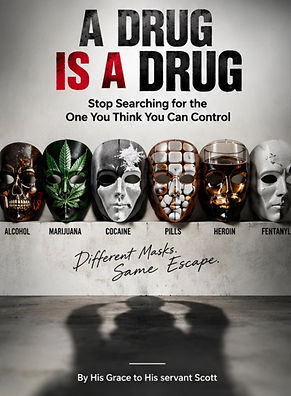
A Drug Is A Drug
Stop Searching for the One You Think You Can Control
There comes a point in real recovery when we have to quit negotiating with addiction. We have to stop changing the names, categories, strengths, and delivery systems and face a simple truth: a drug is a drug, and alcohol is a drug. Marijuana is a drug. Heroin is a drug. Fentanyl is a drug. Cocaine is a drug. Alcohol is a drug. No, they are not equally lethal, equally addictive, or equally destructive to the body and brain. Fentanyl can kill in amounts that other substances cannot. Some drugs produce dependence faster, some destroy the body differently, and some carry greater immediate risks. But the recovering addict cannot use those differences to create an escape clause. The question is not simply, “Which substance is worse?” The deeper question is, “Why am I still looking for something to alter the reality God has given me to walk through?”
October 9
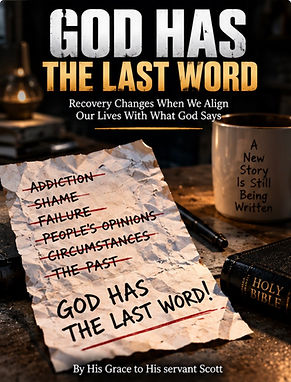
God Has The Last Word
Recovery Changes When We Align Our Lives With What God Says
When it is all said and done, everybody will have something to say. Addiction will speak. Your past will speak. Your emotions will speak. Family members will speak. Counselors, courts, doctors, friends, enemies, and people who remember the worst version of you may speak. Circumstances will sometimes scream so loudly that they appear to be telling you exactly how your story will end. But hear this clearly: none of them get the last word. God does. “The grass withers, the flower fades, but the word of our God stands forever” (Isaiah 40:8). Recovery begins changing when we stop allowing temporary voices to carry eternal authority.

October 8
A Balanced Life
Recovery Means Caring for the Mind, Body, Soul, and Spirit
One of the greatest dangers in alcohol and drug recovery is believing that sobriety by itself automatically means we are healthy. Getting the alcohol out of our hands and the drugs out of our bodies is essential, but that is the beginning of recovery, not the completion of it. Addiction affected the whole person, so recovery must involve the whole person. Paul prayed, “May your spirit and soul and body be preserved complete” (1 Thessalonians 5:23). God is interested in restoring all of us. A healthy recovery lifestyle must continually address the mind, body, soul, and spirit. When one area is neglected or another begins dominating everything, we slowly drift out of balance.

October 7
Complete Defeat
When Bankruptcy Becomes the Beginning of Recovery
Who cares to admit complete defeat? Practically no one. Everything in our natural instinct fights against the words, “I am powerless.” We would rather admit that alcohol caused problems, drugs damaged relationships, our decisions became destructive, or life got out of control than admit the deeper truth: I cannot fix this by myself. Something inside us keeps whispering, “Try harder. Control it. Cut back. Switch substances. Stay away for a while. This time will be different.” Yet for the alcoholic and addict, complete defeat may become one of the greatest gifts God ever allows us to experience. “There is a way which seems right to a person, but its end is the way of death” (Proverbs 14:12).

October 6
Let Your Yes Be Yes And Your No Be No
Recovery Means Learning to Mean What You Say and Live What You Mean
Addiction creates a life full of broken yeses and meaningless noes. “Yes, I’ll stop.” “No, I won’t use again.” “Yes, I’ll come home.” “No, I haven’t been drinking.” “Yes, this is the last time.” We said things because we meant them for the moment, because we wanted someone off our back, because we were ashamed, or because we desperately wanted to believe ourselves. Eventually our words became disconnected from our actions. Other people stopped trusting what we said, and somewhere along the way, we stopped trusting ourselves. Jesus gives us a beautifully simple standard: “But make sure your statement is, ‘Yes, yes’ or ‘No, no’” (Matthew 5:37). Recovery begins restoring that kind of integrity—where my mouth, heart, decisions, and actions start saying the same thing.

October 5
Detach • Reset • Reconnect
Learning to Step Away When Grace Is Absent and Return When Grace Is Present
One of the most important skills we can learn in recovery is how to recognize when grace has left an interaction. Not every disagreement is unhealthy, and grace does not mean everybody agrees with us. Grace means I can remain truthful, respectful, teachable, and Spirit-led even when something is difficult. But there comes a point when conversation becomes reaction, disagreement becomes accusation, concern becomes control, and emotion begins driving the vehicle. Scripture says, “Let your speech always be with grace” (Colossians 4:6). When grace disappears, sometimes the wisest thing we can do is detach.

October 4
When Good Things Go Bad
Recovery Is Learning to Live in God-Created Balance
One of the greatest mistakes we can make in recovery is believing that everything that looks good must be healthy. Alcohol and drugs are obvious problems once they begin destroying our lives, but imbalance can hide inside things that appear completely positive. Exercise is good. Work is good. Relationships are good. Helping people is good. Ministry is good. Rest is good. Even discipline is good. But almost anything good can become destructive when we begin using it to satisfy an unmet need, escape an unresolved wound, control uncomfortable emotions, prove our worth, or replace something God intended to supply another way. Paul said, “All things are permitted for me, but I will not be mastered by anything” (1 Corinthians 6:12). The question is not simply, “Is this activity good?” The deeper question is, “What is this activity doing inside me?”

October 3
The Christian Twelve Steps
Twelve Spiritual Principles for a Way of Life
The Christian Twelve Steps are more than a method for getting someone to stop drinking or using drugs. They are a collection of spiritual principles and biblical truths that, when continually practiced, become a way of life. Each Step introduces and develops a principle that moves us beyond abstinence and toward spiritual maturity. We don’t simply “finish” these Steps. We learn to live them.

October 2
Something Is Building A Home In Me
What I Continually Entertain Will Eventually Try to Live There
In alcohol and drug recovery, we must understand that relapse rarely begins with the first drink or drug. Long before the bottle, needle, pipe, or pill reaches our hand, something has usually been building a home inside us. A resentment enters. Fear enters. Self-pity enters. Isolation enters. Anger enters. Euphoric recall enters. At first these things may only seem like visitors—temporary thoughts, emotions, offenses, or memories. But anything I continually entertain, feed, justify, and refuse to confront eventually begins looking for a permanent address. Scripture warns us, “and do not give the devil an opportunity” (Ephesians 4:27). The question is not only what entered my mind today. The question is: What am I allowing to stay?

October 1
Maturity Is The Goal
Recovery Is Learning How Quickly to Realign With God
The Christian Twelve Steps are not simply twelve things an alcoholic or addict completes so he can stop drinking or using drugs. They are a collection of spiritual principles and biblical truths that, when practiced continually, become a way of life. Surrender, faith, honesty, confession, humility, forgiveness, restitution, prayer, self-examination, accountability, and service are not temporary recovery assignments. They are principles God uses to transform how we think, respond, relate, and live. Jesus said, “Therefore everyone who hears these words of Mine and acts on them, may be compared to a wise man who built his house on the rock” (Matthew 7:24). The power is not merely in hearing truth but in practicing it.

September 30
Too Much Luggage
Settling the Past So We Can Face the Present
One of the hardest things to understand in alcohol and drug recovery is that stopping the substance does not automatically settle the past. We can put down the bottle, the pipe, the needle, or the pills and still carry years of resentment, guilt, shame, rejection, abandonment, anger, fear, and regret. We may be sober physically while emotionally dragging suitcases packed with yesterday everywhere we go. Then today’s problems arrive—a disagreement, financial pressure, loneliness, disappointment, temptation, criticism, or rejection—and suddenly we are not just dealing with what happened today. Everything we have never settled comes rushing into the moment. “Let us examine and probe our ways, And let us return to the LORD.” (Lamentations 3:40)

September 29
Learning To Live With People Again
Recovery Is More Than Putting Down the Drink or Drug—It Is Learning How to Walk With People Again
One of the realities of alcohol and drug addiction is that addiction does not only separate us from God and ourselves—it separates us from people. After years of using, hiding, manipulating, defending, surviving, isolating, and living around others caught in the same lifestyle, we can become completely disconnected from what healthy relationships even look like. Then we enter recovery, put down the alcohol or drugs, and sometimes expect everybody to roll out the red carpet because we finally changed. But recovery does not mean the world suddenly revolves around us. Recovery means God begins teaching us how to live in His world again.

September 28
Thankfulness: The Absolute Gauge
Gratitude Reveals Where You Really Are in Recovery
Thankfulness is more than good manners, positive thinking, or something we practice around a holiday table. In alcohol and drug recovery, thankfulness can become one of the clearest gauges of what is happening inside us. A person can attend meetings, quote Scripture, work a program, and tell everyone he is doing fine, while internally becoming increasingly resentful, entitled, negative, and dissatisfied. Watch the gratitude gauge. “In everything give thanks; for this is God’s will for you in Christ Jesus” (1 Thessalonians 5:18). God does not tell us to give thanks because everything happening to us is good. He tells us to give thanks because He remains good in everything happening to us.

September 27
The Last Place
Recovery Will Eventually Bring You Back to What You Keep Trying to Avoid
One of the hardest truths in recovery is that God will often bring us back to the last place where we chose disobedience over obedience. He may not bring us back to the same person, house, job, relationship, church, or circumstance, but He knows exactly where we stopped following Him. We may have moved geographically, accumulated sober time, learned recovery language, memorized Scripture, and built an entirely new life, yet there can remain one intersection where God said, “Go this way,” and we quietly chose another. Addiction taught us to escape whatever hurt, frightened, exposed, or inconvenienced us. Alcohol and drugs became exits from uncomfortable reality. When the substances are removed, however, that old escape system does not automatically disappear. We can become sober and still run.

September 26
Pain: The Ticket To Freedom
The Doorway We Spent Years Avoiding May Be the Doorway God Uses to Heal Us
For many of us, alcohol and drugs were never really the whole problem. They were our solution to a deeper problem—pain. Somewhere along the road we discovered that a drink could quiet something inside us, a drug could change how we felt, and getting high could temporarily carry us somewhere our memories, shame, rejection, loneliness, anger, fear, or disappointment could not reach us. What began as relief eventually became bondage. We thought we were escaping pain, but we were actually postponing it while creating even more of it. Addiction whispered, “You don’t have to feel this today.” Unfortunately, tomorrow always came. God offers something completely different: “Cast your burden upon the LORD and He will sustain you” (Psalm 55:22). The bottle was never designed to carry our pain. Neither was the needle, the pill, the pipe, or another person. God says, “Bring it to Me.”

September 25
The Twelve Steps: A Death Sentence To The Ego
When “I’ve Got This” Dies, Recovery Can Finally Live
One of addiction’s greatest deceptions is not simply alcohol or drugs—it is the belief that somehow we are still in control. Pride tells us, “I can handle this. I can quit when I want. I don’t need anyone telling me what to do.” Yet pride in the addict does not always look like arrogance. Sometimes it is overcompensation for shame. We know what we have done, whom we have hurt, what we have lost, and how many promises we have broken, so we construct an image stronger than the person hiding underneath it. Ego becomes armor. Pride becomes protection. Control becomes an illusion we desperately defend. “Pride goes before destruction, and a haughty spirit before stumbling” (Proverbs 16:18). Alcohol and drugs may be destroying our lives, yet pride can keep us from reaching for the very help that could save them.
September 24
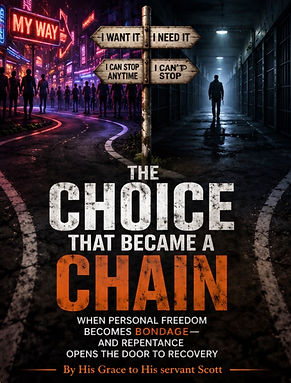
The Choice That Became A Chain
When Personal Freedom Becomes Bondage—and Repentance Opens the Door to Recovery
There is a great deal of discussion surrounding why one person becomes addicted to alcohol or drugs while another person does not. Genetics may matter. Family history may matter. Trauma, personality, environment, rejection, loneliness, emotional pain, exposure, and learned behavior may all help set the stage. Some people undoubtedly seem more vulnerable to addiction than others. Recovery should never ignore those realities. Understanding what influenced us can help us heal, but understanding why we were vulnerable cannot become an excuse for refusing responsibility. There comes a point when we have to stop asking only, “What happened to me?” and courageously ask, “What choices did I make with what happened to me?”
September 23
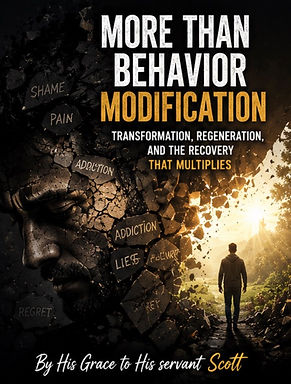
More Than Behavior Modification
Transformation, Regeneration, and the Recovery That Multiplies
One of the greatest dangers in alcohol and drug recovery is confusing changed behavior with a changed life. We can remove the bottle, flush the drugs, change phone numbers, avoid old neighborhoods, attend meetings, follow program rules, and even become very disciplined while the same wounded, selfish, fearful person continues living underneath it all. Those outward changes matter. In early recovery they may even save our life. But Jesus did not come merely to teach us how to behave better while remaining the same person inside. Scripture says, “And do not be conformed to this world, but be transformed by the renewing of your mind” (Romans 12:2). God is after transformation, not simply modification.

September 22
When God Lets You Hit The Field
Sometimes the Breaking Is the Mercy That Saves Your Life
There comes a point in addiction when God is no longer dealing only with alcohol, drugs, cravings, or bad decisions. He is dealing with the rebellion underneath them. Nebuchadnezzar knew something about that kind of rebellion. God had blessed him, elevated him, warned him, and shown him His power, yet the king continued looking at himself instead of looking up. Standing over Babylon, Nebuchadnezzar declared, “Is this not Babylon the great, which I myself have built as a royal residence by the might of my power and for the glory of my majesty?” (Daniel 4:30). Pride had convinced him that what God had allowed him to possess belonged to him alone. Addiction does the same thing. “It’s my life. I’ll drink if I want. I’ll use if I want. I can quit whenever I want. Nobody is going to tell me what to do.” Eventually the greatest obstacle may no longer be the substance—it is the heart that refuses to bow.
September 21
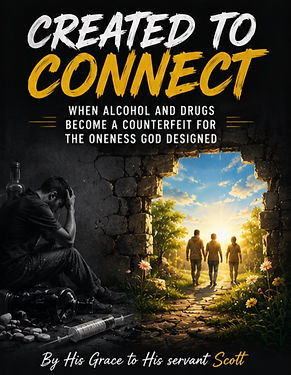
Created To Connect
When Alcohol and Drugs Become a Counterfeit for the Oneness God Designed
Long before alcohol or drugs entered our lives, God created us for connection. We were designed to connect upward with God, outward with others, and inward with ourselves. God said, “It is not good for the man to be alone” (Genesis 2:18). This goes deeper than simply having people around us. We can grow up in a crowded house and still be disconnected. We can have parents, siblings, friends, spouses, church members, and hundreds of contacts in our phones while something deep inside remains painfully alone. Being around people is not necessarily connection. God designed us for something deeper—a relational oneness where we can be known, heard, understood, loved, corrected, comforted, and still remain connected.

September 20
The Three Relationships of Recovery
Restored to God, Restored to Others, Restored to Ourselves
Alcohol and drug addiction is never only about the substance. Somewhere along the journey, addiction begins damaging relationships in every direction. Our relationship with God becomes distant, relationships with other people become broken or unhealthy, and even the relationship we have with ourselves becomes distorted. We may stop drinking or using drugs and still carry those relational wounds into sobriety. This is why recovery has to become more than abstinence. God does not simply want to remove something that was destroying us; He wants to restore our ability to live the way He originally designed us to live—in healthy relationship with Him, with others, and with ourselves.

September 19
Bipolar Christianity
Recovery Is Not Learning How to Stay High—It Is Learning How to Become Synchronized
One of the hidden struggles in alcohol and drug addiction is that many of us never learned how to live emotionally steady. We lived up, down, excited, depressed, angry, restless, anxious, empty, overwhelmed, or completely shut down. Then one day alcohol or drugs entered the picture and something happened: they changed the way we felt. For some, alcohol finally quieted the noise. For others, stimulants created energy, confidence, and focus. Opiates numbed pain. Drugs, sex, relationships, and other compulsive behaviors could temporarily produce comfort, excitement, connection, or escape. Somewhere inside we said, “I like this. This makes me feel different.” What we did not realize was that we were beginning to use something outside ourselves to regulate something happening inside ourselves.

September 18
The Lie of "Just One"
Why Abstinence Is the Only Safe Road in Addiction Recovery
One of the most dangerous thoughts in alcohol and drug recovery can sound completely reasonable: “Maybe I can handle just one now.” After months or years of sobriety, healing, spiritual growth, restored relationships, and clearer thinking, a person may begin believing the problem is behind them. “I’m different now. I’m stronger. I know what addiction did to me. Surely one drink wouldn’t hurt.” But Scripture warns us, “Therefore let the one who thinks he stands watch out that he does not fall” (1 Corinthians 10:12). Confidence is good when our confidence is in Christ; it becomes dangerous when confidence convinces us we no longer need boundaries.