Leadership Devotionals List

January 1, 2027
A New Beginning with the Same God
Walking Into the New Year with Consecration, Vision, and Servant Leadership
"Consecrate yourselves, for tomorrow the Lord will do wonders among you." Joshua 3:5
Every New Year's Day brings with it a sense of anticipation. Calendars are replaced, goals are written, resolutions are made, and people begin talking about fresh starts. There is something inspiring about standing at the threshold of a new year, believing that God still has more to accomplish in and through our lives. Yet the servant leader understands that while the calendar has changed, God has not. His character remains the same. His promises remain true. His calling remains steadfast. The same God who faithfully walked beside you yesterday will faithfully lead you tomorrow. The greatest hope for the coming year is not found in better circumstances, greater opportunities, or larger dreams. It is found in the unchanging presence of the Lord who declares, "Jesus Christ is the same yesterday and today and forever." Hebrews 13:8.

December 31, 2026
Before the Clock Strikes Midnight
A Servant Leader's New Year's Eve Reflection of Renewal, Surrender, and Hope
"Brethren, I do not regard myself as having laid hold of it yet; but one thing I do: forgetting what lies behind and reaching forward to what lies ahead, I press on toward the goal for the prize of the upward call of God in Christ Jesus." Philippians 3:13-14
New Year's Eve has a way of causing people to pause. As one year quietly comes to an end and another begins, people naturally reflect on where they have been and where they hope to go. Calendars change, clocks strike midnight, and resolutions are written with sincere intentions. Yet for the servant leader, New Year's Eve is about something far deeper than turning another page on the calendar. God is not primarily interested in changing dates; He is interested in transforming hearts. A new year does not automatically produce a new life. Spiritual growth comes through daily surrender, faithful obedience, and continual dependence upon Jesus Christ.

December 30, 2026
Guidance Processes – Part 12
Negative Preparation: How God Uses Difficult Seasons to Prepare His Servants
One of the most misunderstood guidance processes in the life of a servant leader is what we will call negative preparation. There are seasons when God uses conflict, disappointment, opposition, hardship, rejection, persecution, loss, closed doors, or unexpected setbacks to prepare His servant for the next phase of His calling. These seasons are rarely enjoyable, yet they are often among God's greatest classrooms. Negative preparation is not God abandoning His servant but God developing His servant. Through these difficult experiences, the Lord loosens unhealthy attachments, exposes hidden motives, deepens dependence upon Him, strengthens character, and prepares the heart for greater obedience. The goal is not escape but release. Not bitterness but readiness. God uses these seasons to shape the servant leader long before He changes the servant leader's assignment.

December 29, 2026
Guidance Processes – Part 11
The Word Process: Receiving Timely Direction Through God's Word
One of the most profound ways God guides a servant leader is through what we will call the Word Process. There are seasons when the Holy Spirit takes a specific word from Scripture, a biblical message, or a Spirit-led statement spoken by another believer and impresses it deeply upon the heart. That word becomes far more than information—it becomes direction. It shapes decisions, strengthens commitment, clarifies calling, reinforces biblical values, influences ministry philosophy, and often marks a defining turning point in the life of a servant leader. These moments are never independent of Scripture. Rather, they are the Holy Spirit faithfully applying God's eternal truth to a specific moment in a leader's journey. The Word Process is not about seeking mystical experiences; it is about recognizing when God personally applies His unchanging Word to our present circumstances.

December 28, 2026
Guidance Processes – Part 10
Divine Affirmation: God's Encouragement to the Servant Leader
One of the most gracious ways God guides a servant leader is through divine affirmation. While much of God's guidance focuses on directing our steps, there are seasons when His greatest guidance is not telling us where to go next but reminding us to keep going where He has already called us. Every servant leader will eventually experience moments of weariness, disappointment, criticism, spiritual warfare, unanswered questions, or even seasons of wondering whether they have truly heard the Lord. It is during these moments that the Holy Spirit often ministers divine affirmation—a gracious work in which God confirms His presence, His calling, His approval, and His continuing purpose. Through Scripture, prayer, worship, the encouragement of other believers, divine contacts, sermons, or the quiet witness of the Holy Spirit, God renews courage, restores peace, and strengthens His servants to continue faithfully serving Him.

December 27, 2026
Guidance Processes – Part 9
Vicarious Learning: How God Guides Through the Written Experiences of Others
One of the often-overlooked ways God guides servant leaders is through what can be called vicarious learning—learning through the recorded experiences, victories, failures, wisdom, and testimonies of others. While the Scriptures always remain the supreme and final authority for faith and practice, God has also preserved countless examples throughout history that help His servants grow in discernment and wisdom. Through biblical accounts, Christian biographies, sound books, journals, sermons, historical writings, and testimonies, the Lord allows us to benefit from lessons that others learned through years of faithful obedience, painful failure, and steadfast perseverance. This is one of God's gracious guidance processes because He enables us to gain wisdom without having to personally experience every lesson ourselves.

December 26, 2026
Guidance Processes – Part 8
The Flesh Act: How God Uses Past Mistakes to Guide Future Decisions
One of the most humbling yet powerful guidance processes God uses in the life of a servant leader is what we will call the flesh act. A flesh act occurs when a leader assumes God's direction and moves ahead without waiting upon the Lord, seeking biblical discernment, or submitting fully to the leadership of the Holy Spirit. These decisions are often driven by pressure, impatience, fear, pride, human reasoning, or the desire to make something happen. Although God is gracious and often redeems the outcome, flesh-driven decisions usually leave consequences that become lasting lessons. In His mercy, God does not waste those failures. Instead, He uses them to develop discernment so that when similar situations arise in the future, the servant leader recognizes the warning signs, slows down, seeks the Lord, and chooses a wiser path.

December 25, 2026
The Servant King
The Christmas Lesson Every Servant Leader Must Learn: Greatness Comes Through Humility
Christmas reveals the greatest leadership lesson the world has ever known. Before Jesus ever preached a sermon, healed the sick, raised the dead, or called His disciples, He demonstrated the foundation of true servant leadership: He was willing to come down.
The world teaches that leadership means rising above others, gaining influence, receiving recognition, and building a name. But Jesus introduced a completely different kingdom. In God’s kingdom, greatness is not measured by how many people serve you; greatness is measured by how many people you are willing to serve.

December 24, 2026
The Holy Night Before the Dawn
What Servant Leaders Learn While Waiting for God to Move
"But the angel said to them, 'Do not be afraid; for behold, I bring you good news of great joy which will be for all the people; for today in the city of David there has been born for you a Savior, who is Christ the Lord.'" Luke 2:10-11
Christmas Eve is unlike any other night in history. It is the evening that stands between centuries of waiting and the fulfillment of God's greatest promise. For generations the prophets had spoken of the coming Messiah. Israel had longed for His arrival. The faithful had prayed, watched, and hoped. Yet as darkness settled over Bethlehem, the world appeared unchanged. Roman soldiers still patrolled the streets. Inns remained crowded. Families gathered as they always had. Most people went to sleep without realizing that before another sunrise, history itself would be forever transformed. Heaven was preparing to send the Savior of the world while earth remained unaware of the miracle unfolding in its midst.

December 23, 2026
Guidance Processes – Part 7
Double Confirmation: Strengthening Confidence in God's Direction
One of the gracious ways God guides a servant leader is through the process of double confirmation. Leadership often involves decisions that affect families, ministries, churches, and future generations. Because of the weight of these responsibilities, the Lord will often confirm His direction through multiple, independent witnesses that faithfully align with His Word. This is not because God is uncertain, but because He is patient with His servants. He understands our humanity, our desire to walk carefully, and our dependence upon Him. Double confirmation becomes one of God's loving ways of strengthening faith while protecting us from acting impulsively, emotionally, or according to personal preference.

December 22, 2026
Guidance Processes – Part 6
Divine Contacts: God's Providential Appointments for the Servant Leader
One of the remarkable ways God guides a servant leader is through what can only be described as divine contacts. These are not ordinary relationships formed merely by coincidence or convenience. They are providential appointments orchestrated by God, where He brings a specific person into a leader's life at a specific time for a specific purpose. Sometimes that person brings encouragement during a difficult season. Sometimes they bring correction that redirects a dangerous path. Sometimes they open doors that could never have been opened otherwise. At other times they simply speak a word of wisdom or confirmation that strengthens a servant leader's confidence in following God's will. While not every relationship is a divine appointment, Scripture clearly demonstrates that God often advances His purposes through people He sovereignly places along our journey.

December 21, 2026
Guidance Processes – Part 5
The Body of Christ: God's Ordained Means of Communal Guidance
One of the greatest misconceptions in leadership is the belief that strong leaders stand alone. While God certainly speaks to His servants in private through His Word, prayer, journaling, and quiet times, He has never intended for servant leaders to walk in isolation. From the beginning of the New Testament Church, God established the Body of Christ as a living community through which He strengthens, refines, encourages, protects, and guides His people. One of God's divine guidance processes is His use of other believers to confirm direction, provide wisdom, offer loving correction, and help servant leaders discern His will. Healthy spiritual guidance is rarely isolated. God often speaks through the community of faith to mature and direct those He has called to serve.

December 20, 2026
Guidance Processes – Part 4
Quietness: Creating Space to Hear God's Voice. Part 4
One of the greatest challenges facing servant leaders today is not a lack of opportunity but a lack of quietness. We live in a culture that celebrates constant activity, endless communication, and relentless productivity. The demands of ministry can easily convince us that if we are not continually doing something, we are accomplishing nothing. Yet throughout Scripture, God consistently reveals a different pattern. Before He sends His servants into seasons of fruitful ministry, He often calls them into seasons of stillness. Before He strengthens their public influence, He deepens their private communion. Quietness and Sabbath rest are not interruptions to leadership; they are essential guidance processes through which God renews the heart, sharpens discernment, and prepares His servants for faithful obedience.

December 19, 2026
Guidance Processes – Part 3
Journaling: Recording the Journey of God's Guidance
One of the most practical yet often overlooked ways God shapes a servant leader is through the discipline of journaling. While many view journaling as simply writing down thoughts or keeping a daily diary, biblical journaling is much more than personal reflection. It is a sacred practice of recording what God is teaching, revealing, correcting, and confirming through His Word and by the work of the Holy Spirit. It creates a place where prayers are remembered, lessons are preserved, convictions are examined, and God's faithfulness is documented for future encouragement. A servant leader who journals learns not only to hear God's voice more clearly but also to recognize the consistent ways God has been leading over time.

December 18, 2026
Guidance Processes – Part 2
Mentors: God's Instrument for Developing Servant Leaders
One of the most overlooked ways God guides a servant leader is through the faithful investment of a godly mentor. While we often pray for direction through miraculous signs or extraordinary experiences, the Lord frequently chooses a much more personal path. He places mature believers in our lives who have already walked roads we have yet to travel. These men and women become instruments of God's guidance, helping us recognize our calling, develop our character, avoid unnecessary failures, and prepare for the responsibilities that lie ahead. Mentoring is not simply a leadership program or a modern ministry strategy—it is one of God's timeless processes for developing servant leaders.

December 17, 2026
Guidance Processes – Part 1
The Word of God: The Servant Leader's Primary Compass
Every servant leader desires to know the will of God. We pray for direction, seek wisdom for difficult decisions, and ask the Lord to reveal the next step. Yet before we look for guidance through circumstances, counsel, opportunities, or the inward prompting of the Holy Spirit, we must first return to the one source of guidance that never changes—the Word of God. The Scriptures are not merely a reference book for ministry; they are the very foundation upon which every servant leader must build his life and leadership. If our lives are not anchored in God's Word, every other form of guidance becomes vulnerable to personal opinion, emotion, and deception.

December 16, 2026
Guidance Processes Intro
Learning How God Leads the Servant Leader
Servant leadership has never been about simply developing better skills, gaining greater influence, or becoming more effective at managing people. Before God ever entrusts a servant with leading others, He first teaches that servant how to follow Him. Throughout Scripture, we discover that the greatest leaders were not those who possessed extraordinary abilities, but those who learned to recognize the voice of God and respond with humble obedience. Moses followed God into the wilderness. Joshua followed God into the Promised Land. Nehemiah followed God in rebuilding Jerusalem. The apostles followed Christ into a mission that changed the world. Their influence was born out of their willingness to be led before they were ever called to lead.

December 15, 2026
When Opposition Drives You to Prayer
Servant Leaders Win the Invisible Battle Before They Fight the Visible One
Every servant leader who faithfully pursues the will of God will eventually discover that opposition is not an interruption to the mission—it is often evidence that the mission matters. Throughout Scripture, the enemy consistently opposes whatever God is building. Moses faced Pharaoh. David faced Goliath. The apostles faced persecution. Jesus Himself faced constant hostility. Nehemiah was no different. As the walls of Jerusalem began to rise, so did the resistance against those doing the work. The enemy understood something that many leaders forget: if he can discourage the builders, he can slow the building. Yet Nehemiah demonstrates one of the greatest leadership principles found anywhere in Scripture. Before responding to the enemy, he responded to God.

December 14, 2026
Carrying the Fire
How Servant Leadership Ignites Dry Souls with the Presence of the Holy Spirit
Leadership, in its truest form, is not about title or control — it’s about carrying something sacred into rooms full of need. Scripture describes the Holy Spirit’s arrival as literal fire: “Divided tongues as of fire appeared among them… and they were all filled with the Holy Spirit” (Acts 2:3-4). A servant leader is someone who has been near that fire long enough that it clings to them — and who walks into the world carrying it, often without announcing it.

December 13, 2026
The Anointing of God Today Can Never Cover the Needed Obedience for Tomorrow
Yesterday's Anointing Does Not Replace Today's Surrender
One of the greatest misconceptions in ministry is the belief that yesterday's anointing is sufficient for tomorrow's assignment. While the gifts and calling of God are irrevocable, His servants are called to live in continual dependence upon Him. God has never intended for us to lead from yesterday's encounters but from today's fellowship. The anointing is not a substitute for obedience; rather, it empowers obedience. Every servant leader must understand that the Lord desires more than moments of power—He desires a life of daily surrender. The question is never, "Was I anointed yesterday?" The question is, "Am I walking in obedience today?"

December 12, 2026
Never Forget Where God Brought You From
The Grace That Saved You Is the Grace That Sends You
One of the greatest safeguards in the life of a servant leader is remembering where the grace of God found him. The moment we begin to forget the pit from which Christ delivered us, we begin to lose the humility, compassion, and dependence that make spiritual leadership effective. Throughout Scripture, God repeatedly called His people to remember. He knew that forgetting His works would eventually lead to pride, self-reliance, and a heart that no longer reflected His own.

December 11, 2026
Never Put People in a Box
Why Servant Leaders Must See People Through God's Redemption Rather Than Their Reputation
One of the greatest disciplines of servant leadership is learning to see people the way God sees them rather than the way their past presents them. Every leader encounters individuals who carry painful histories, poor decisions, damaged reputations, and obvious character defects. The temptation is to quickly categorize them according to what we immediately observe. We place labels upon them such as addict, criminal, liar, difficult, prideful, immature, or unreliable. While those descriptions may reflect certain behaviors, they do not define the person God created. Servant leaders must remember that labels often become barriers to transformation. The moment we place someone inside a box, we unintentionally stop looking for the treasures God has hidden beneath their brokenness. Instead of seeing what God is forming, we begin seeing only what man has become through sin, pain, and failure.

December 10, 2026
Making Room for God
Why Servant Leaders Must Cultivate an Inner Life Spacious Enough to Hear His Voice
One of the greatest dangers servant leaders face is not opposition, persecution, or even failure—it is allowing the pace of ministry to become so crowded that there is no longer room to clearly hear the voice of God. It is entirely possible to spend every day serving Christ while gradually neglecting communion with Christ. Ministry responsibilities, counseling appointments, meetings, sermons, planning sessions, and constant interruptions can slowly fill every available space of the heart until we find ourselves reacting to needs rather than responding to the leadership of the Holy Spirit. God never intended His servants to live from exhaustion or pressure. He calls us to minister from His presence. Before God enlarges a leader's influence, He first desires to enlarge that leader's capacity to walk closely with Him.

December 9, 2026
The Destinational Disease
A Servant Leader’s Journey: Learning to Rest in God While Faithfully Climbing the Mountain
One of the greatest struggles facing servant leaders today is what I call the destinational disease. It is the constant desire to arrive at a certain place where we believe everything will finally become easier, quieter, and more comfortable. We tell ourselves, “If I can just get through this season, then I can rest.” “If I can just accomplish this goal, then I will have peace.” “If I can just reach retirement, then I can finally slow down.” The problem is not having goals, dreams, or seasons of rest. The problem is when we begin believing that a destination can provide what only the presence of God can provide.

December 8, 2026
Christ Formation: The Government of Kingdom Authority
Why Knowledge Can Never Replace Formation or Moment-by-Moment Dependence Upon Christ
One of the greatest dangers facing servant leaders today is believing that spiritual authority can be obtained through knowledge alone. We live in an age overflowing with information. Sermons are readily available, theological libraries fit inside our phones, and conferences teach principles for every imaginable area of ministry. While biblical knowledge is a priceless gift and every servant leader should diligently study God’s Word, Scripture never teaches that information alone produces Kingdom authority. Knowledge may sharpen the intellect, but only the Holy Spirit can shape the character of Christ within a believer. The Kingdom of God has never advanced primarily through educated minds; it has advanced through surrendered hearts. God’s greatest work has always been forming His Son within His servants until their lives become living expressions of His nature, His compassion, His holiness, and His authority.

December 7, 2026
The Leader's Greatest Weapon
When Your Words Become A Fountain of Life
Leadership is not first demonstrated by charisma, talent, intelligence, or position. Those things may attract people for a season, but they will never sustain lasting influence. The true measure of a servant leader is found in the condition of his heart, because the heart always reveals itself through the tongue. Before people witness your leadership in action, they experience it through your words. Every conversation is an opportunity either to impart life or to spread discouragement. Every sentence either builds someone’s faith or slowly tears it down. Scripture repeatedly teaches that our words are never neutral—they carry the power to bless or to wound, to encourage or to destroy, to unite or to divide.

December 6, 2026
The Divine Pivot
Shifting from Our Game Plan to Heaven's Reality
Every servant leader steps into ministry with a carefully crafted game plan. We map out our visions, design our weekly programs, structure our leadership teams, and point our organizations toward clear targets. In our minds, the strategy is flawless. We know exactly how the plays should run, how the team should execute, and what the wins should look like at the end of the quarter. A detailed game plan tells you what you *want* to happen. It represents our human preparation, our strategic foresight, and our structural organization. Preparation honors God because excellence reflects His character, but preparation can never become a substitute for the present, active guidance of the Holy Spirit.

December 5, 2026
The Kingdom Scoreboard
Measuring What Matters Most to God
Every servant leader is keeping score. The question is not whether we are measuring something, but whether we are measuring what God measures. The world celebrates numbers, recognition, influence, and achievement. It applauds those who accumulate the most, build the biggest, or stand on the highest platform. God’s Kingdom operates by an entirely different standard. Heaven is not impressed by what impresses the world. The Lord looks beyond the outward appearance and examines the condition of the heart. “But the Lord said to Samuel, ‘Do not look at his appearance or at the height of his stature…for God sees not as man sees, for man looks at the outward appearance, but the Lord looks at the heart.’” (1 Samuel 16:7)

December 4, 2026
Who Carries the Mantle?
Legacy Is Measured by Christ Formed in Others
Every servant leader who walks with God long enough will eventually stand before one of the most sacred questions of ministry: Lord, who will carry forward what You have entrusted to me when my assignment is complete? The answer to that question will reveal whether we have built according to the wisdom of man or according to the wisdom of God. The world teaches us to think in terms of succession plans, organizational charts, and family inheritance. The Kingdom of God teaches us to think in terms of discipleship, spiritual formation, and faithful stewardship. One seeks to preserve an organization; the other seeks to reproduce the life of Christ. They are not always the same.

December 3, 2026
The Ministry of Decrease
The Greatest Servant Leaders Spend Their Lives Making Much of Christ and Less of Themselves
The world teaches leaders to build platforms, increase influence, protect reputations, and make their names known. God’s Kingdom teaches something altogether different. The greatest servant leaders are not those who become famous but those who become forgotten so that Jesus Christ may be seen more clearly. Every servant leader eventually arrives at a crossroads where they must decide whether they desire recognition or faithfulness. The flesh longs for applause, but the Spirit longs for obedience.

December 2, 2026
Preparation That Catches the Moment
Servant Leadership and the Discipline of Readiness in the Spirit
Preparation is not just discipline for the future—it is spiritual positioning for the present. In the life of a servant leader, preparation is what turns ordinary opportunities into God-appointed moments. Without preparation, moments pass unnoticed. With preparation in Christ, even the smallest interruption can become a divine assignment. Servant leadership is not reactive living; it is Spirit-formed readiness that recognizes what God is doing in real time.

December 1, 2026
The Hidden Cost of Resilience
Why Servant Leaders Must Learn to See Beyond the Scars of the Battle
There is a quiet contradiction in the culture around us. We celebrate resilience, but we often reject the evidence that resilience leaves behind. We applaud those who overcome addiction, abuse, betrayal, failure, grief, and spiritual warfare, yet when we encounter the weariness, guardedness, or emotional scars that remain, we become critical rather than compassionate. We want people to rise from the ashes, but we expect them to emerge without smelling like smoke.

November 30, 2026
The Higher You Climb, the Lonelier the Road Becomes
The Hidden Fellowship of Servant Leaders Who Walk Closely with God
One of the greatest surprises in the life of a servant leader is discovering that the closer you draw to God, the fewer people seem willing to walk beside you. Most believers assume loneliness belongs to the old life before Christ. They imagine that salvation immediately surrounds them with understanding, encouragement, and companionship. While God certainly gives us the gift of His family, there comes a point in every servant leader’s journey where intimacy with Christ leads down a road that few are willing to travel. This is not because God has abandoned His servant, but because He is preparing him for greater usefulness in His Kingdom.

November 29, 2026
Praise in the Pain
The Worship That Shakes Hell and Strengthens a Servant
Every servant leader will eventually arrive at a crossroads where faith is tested beyond words. It is easy to worship when prayers are answered quickly, when ministry is fruitful, when relationships are stable, and when the blessings of God seem to flow without interruption. But God is not merely forming leaders who praise Him in seasons of abundance. He is shaping servants whose worship remains unshaken when life becomes difficult. There is a depth of praise that cannot be learned in comfort. It is forged in the furnace of affliction, where circumstances scream defeat but faith continues to declare that God is good. This kind of worship becomes one of the most powerful weapons a servant leader possesses.

November 28, 2026
Praying Before Possessing
A Servant Leader Establishes God’s Presence Before Building God’s Work
Leadership often tempts us to move before we have prayed. We naturally want to organize, strategize, and begin building the moment God opens a door. Yet throughout Scripture, God consistently reveals a different pattern: His servants first establish His presence before they establish His work. The Kingdom is never advanced by human momentum alone. Every new assignment, ministry, recovery home, church, neighborhood, or nation should first become an altar of prayer before it becomes a place of labor.

November 27, 2026
Being Before Doing
God’s Lifelong Development of the Servant Leader
One of the greatest misconceptions in ministry is believing that God’s primary concern is making us effective leaders. While God certainly desires to use us for His Kingdom, His highest priority has always been something much greater—conforming us into the image of His Son. Before God ever enlarges our ministry, He enlarges our hearts. Before He expands our influence, He deepens our character. Before He entrusts greater authority, He develops greater humility. Servant leaders who understand this truth stop chasing positions and begin pursuing Christ, because they realize that who they become is infinitely more important than what they accomplish.

November 26, 2026
Discerning Spiritual Bondage While Shepherding with Wisdom
A Servant Leader Must Learn to Discern Without Becoming Judgmental
When you step into the sacred calling of a shepherd, you quickly realize that leadership is spiritual before it is ever organizational. It is incredibly easy to get bogged down in the heavy logistics of ministry—the calendars, the budgets, the volunteer schedules, and the messy personality conflicts that inevitably arise. But if we look at the core of our calling through the lens of Scripture, the reality is far more profound.

November 25, 2026
The Thanksgiving Heart of a Servant Leader
Gratitude That Sustains the Call and Glorifies Christ
"Give thanks in all circumstances; for this is God's will for you in Christ Jesus." 1 Thessalonians 5:18
One of the greatest characteristics of a servant leader is not giftedness, intelligence, vision, or even perseverance. It is gratitude. Throughout Scripture, thanksgiving is never presented as an occasional response reserved for seasons of blessing. It is a continual posture of the heart that recognizes God as the source of every good and perfect gift. A thankful leader never loses sight of the One who called him, equipped him, sustained him, corrected him, and carried him through every valley. Gratitude keeps a servant leader humble because it continually reminds him that without Christ he can accomplish nothing of eternal value.

November 24, 2026
Toxic Faith in Leadership
When Spirituality Becomes a Substitute for Intimacy with God
Faith is one of God’s greatest gifts. “And without faith it is impossible to please Him, for he who comes to God must believe that He is and that He is a rewarder of those who seek Him” (Hebrews 11:6). Genuine biblical faith draws us into a deeper dependence upon Christ, produces peace in the midst of storms, and transforms us from the inside out. Yet, like many good gifts, faith can be distorted when it becomes disconnected from truth, humility, and healthy relationships. As servant leaders, we must recognize that not everything appearing deeply spiritual is spiritually healthy. There is a form of faith that is rooted in Christ, and there is a form of spirituality that is rooted in unresolved wounds. One produces freedom; the other produces bondage.
November 23, 2026
The Three Tools in God’s Hands
How God Develops Servant Leaders Through Providential Events, People, and Circumstances
One of the greatest mistakes a servant leader can make is believing that leadership development happens primarily in a classroom. While biblical instruction is essential, God’s greatest lessons are rarely learned behind a desk. They are learned in the ordinary moments of life where His unseen hand is continually shaping our hearts. Before God entrusts greater influence, He develops greater character. Before He enlarges our ministry, He deepens our dependency. His goal has never been simply to produce successful leaders, but faithful servants who reflect the character of Jesus Christ. Scripture reminds us, “For whom He foreknew, He also predestined to become conformed to the image of His Son” (Romans 8:29). Conformity to Christ—not comfort or recognition—is God’s highest objective.

November 22, 2026
The Heart Over the Title
Being over achieving
We live in a culture that is absolutely obsessed with credentials. We love the letters after a name, the plaques on the wall, the reserved parking spots, and the impressive bios. It is incredibly easy to fall into the trap of thinking that authority flows from the position we hold or the degrees we’ve earned. But if we are looking at leadership through the lens of a servant, the truth actually runs in the exact opposite direction. It is not the title and the degrees that make the servant leader; the servant leader makes the title and the degree. A piece of paper can give you permission to manage, but only your character can give you the influence to lead. When a true servant steps into a role, they don't look to that role to give them value. Instead, their humility and integrity bring honor and dignity to the position itself. They elevate the title; the title doesn't elevate them.

November 21, 2026
The Reservoir of the Spirit
Abiding in the Secret Place as the Foundation of Servant Leadership
In the Kingdom of God, we are often tempted to build from the outside in. We draft the mission statements, we organize the facilities, we train the volunteers, and we hope that if we get the structure right, the spirit will follow. But as servant leaders, we have learned the hard way that a structure without a secret life is just a shell. You can have the most sophisticated training school, the most effective leadership curriculum, or the most efficient organizational model, but if you are not drawing your life from the Reservoir of the Spirit, you are simply performing. You are managing, not shepherding. There is a world of difference between the two.

November 20, 2026
The Trap of Knowing Too Much
Why Who You Are Has to Catch Up to What You Know
We are completely flooded with great leadership content today, from endless podcasts and books to nonstop videos, but all this amazing information hides a massive trap for servant leaders: it is incredibly easy to confuse loading up our brains with data with actually changing who we are on the inside. When our gathering of information gets way ahead of our real-life character transformation, we create a dangerous gap, building a giant tower of knowledge on top of a super weak foundation where we can talk a big game about humility and serving others, but our actual behavior stays exactly the same.

November 19, 2026
The Fires That Feed Others
How God Uses Sorrow to Shape Compassionate Servant Leaders
There is something unmistakable about a servant leader who has walked through the fires of sorrow with God. Such leaders possess a depth that cannot be earned through education, ministry experience, or natural ability. It has been forged in the furnace of suffering. They do not rush to judge the broken because they remember when they themselves were broken. They do not offer empty answers because they know some wounds cannot be healed with words alone. Instead, they carry the quiet compassion of Christ. The greatest servant leaders are rarely those who have escaped hardship. They are those who have discovered the presence of God in the middle of it.

November 18, 2026
Beyond Conversion
Why Every Servant Leader Must Lead People from Salvation to Transformation to Multiplication
The greatest tragedy in ministry is not an empty church but a full church of people who have believed yet have never been transformed. Far too often we celebrate decisions while neglecting discipleship, rejoice over professions of faith while overlooking spiritual formation, and count converts while failing to cultivate disciples. Jesus never commissioned His followers to simply make believers. He commanded them, “Go therefore and make disciples of all the nations…teaching them to follow all that I commanded you” (Matthew 28:19-20). The Great Commission is not complete when someone raises a hand, prays a prayer, or walks an aisle. It reaches its fulfillment when a man or woman becomes a fully devoted follower of Jesus Christ who is equipped and empowered to reproduce that same life in someone else.

November 17, 2026
The Afterglow Celebration Phase
When a Lifetime of Faithfulness Reflects the Glory of God
Every servant leader begins with a calling, but very few reach the final phase of leadership development. Many start the journey. Some grow. Some mature. Some discover their gifts and fulfill meaningful assignments. Yet only a small number continue walking faithfully long enough to enter what can be called the Afterglow Celebration Phase. This is not a season defined by greater activity, larger platforms, or increased visibility. It is a season marked by reflection, wisdom, legacy, and the quiet radiance of a life that has been faithfully lived before God. It is the season when decades of obedience begin producing a different kind of fruit. The servant leader’s influence is no longer based primarily on what he does but on who he has become.

November 16, 2026
The Convergence Phase
When Everything God Has Been Building Comes Together
One of the most remarkable moments in the development of a servant leader occurs when years of preparation suddenly begin to make sense. For decades God has been building foundations, shaping character, teaching obedience, refining motives, developing gifts, orchestrating relationships, opening and closing doors, and deepening intimacy. Much of this process often feels disconnected while it is happening. The leader experiences victories, failures, opportunities, disappointments, waiting seasons, wilderness seasons, and seasons of fruitfulness. Yet there comes a point when God begins bringing these separate threads together into one unified purpose. This season can be described as the Convergence Phase.

November 15, 2026
The Life Maturing Phase
When Communion With God Becomes More Important Than Success For God
There comes a point in the development of a servant leader when God begins shifting the focus from ministry effectiveness to personal intimacy with Him. This transition is often subtle at first, yet it marks one of the most significant seasons in a leader’s life. The earlier phases of leadership development are filled with discovery, growth, testing, ministry opportunities, and the identification of gifts and calling. The leader learns to pray, hear God’s voice, develop character, and serve others. He learns valuable lessons through relationships, successes, failures, disappointments, and responsibilities. Yet after years of growth, often fifteen to twenty years or more into God’s development process, a deeper lesson begins to emerge. The leader discovers that God was never primarily interested in building a ministry. He was interested in building a person.

November 14, 2026
The Ministry Maturing Formation Phase
Learning to Minister Out of Who You Are Rather Than What You Do
One of the most important lessons a servant leader will ever learn is that God is far more concerned with developing the leader than developing the leader’s ministry. This truth is often difficult for emerging leaders to understand because they naturally focus on opportunities, responsibilities, effectiveness, growth, and visible fruit. They tend to evaluate their lives by activity and productivity. God evaluates their lives by obedience, faithfulness, character, and spiritual maturity. This difference in perspective creates tension during the third major phase of servant leadership development, which can be called the Ministry Maturing Formation Phase.

November 13, 2026
The Inner Life Growth Phase
How God Develops Character, Discernment, and Obedience in His Servant Leaders
Every servant leader eventually discovers that God is far more concerned with who we are becoming than what we are accomplishing. After the sovereign foundations phase, where God providentially works through family, environment, experiences, and circumstances beyond our control, a second phase begins. This phase is different because it requires participation. In the sovereign foundations phase, God is largely working around us. In the inner life growth phase, He begins working deeply within us. This is where character is formed, discernment is sharpened, obedience is tested, and the servant leader learns what it truly means to walk with God.

November 12, 2026
The Sovereign Foundations of Leadership
How God Prepares His Servants Long Before They Know They Are Being Prepared
One of the most encouraging truths a servant leader can discover is that God’s work in his life did not begin the day he surrendered to Christ, entered ministry, or accepted a leadership position. God’s work began long before that. In fact, Scripture reveals that God was actively involved in shaping, preparing, and forming His servants before they were even aware of His hand. Many leaders spend years focusing on what God is doing in the present while overlooking the powerful reality that He has been working throughout their entire story. The mature servant leader eventually learns to look backward with gratitude and forward with faith, recognizing that God has never wasted a single experience.

November 11, 2026
The Museum Of Crosses
Why Knowing the Cross Is Not the Same as Dying on It
One of the greatest dangers facing servant leaders is not ignorance of truth but familiarity with truth. Over time we can become so accustomed to hearing biblical principles, attending conferences, reading books, and teaching lessons that we begin to mistake knowledge for transformation. We know what humility looks like. We know what servanthood requires. We know the importance of forgiveness, surrender, obedience, purity, sacrifice, and faith. We can explain these truths to others with great clarity. Yet there is a significant difference between understanding a cross and climbing onto it.

November 10, 2026
Patterns, Process, and Principles
Learning to Recognize How God Develops Servant Leaders Over a Lifetime
There is a significant difference between seeing a leader and understanding how that leader was formed. Most people observe the visible aspects of leadership. They see the position, influence, accomplishments, and responsibilities. God, however, sees something much deeper. He sees the pattern He is creating, the process He is using, and the principles He is establishing. A servant leader who desires to understand God’s ways must learn to recognize all three. Leadership development is not random. God does not accidentally raise up leaders. He works intentionally, patiently, and consistently throughout a lifetime. Scripture reminds us, “For My thoughts are not your thoughts, nor are your ways My ways,” declares the Lord. “For as the heavens are higher than the earth, so are My ways higher than your ways and My thoughts than your thoughts” (Isaiah 55:8-9).

November 9, 2026
Learning From Those Who Went Before Us
Discovering God’s Leadership Patterns Through Biography and History
One of the greatest leadership tools available to servant leaders today is also one of the most neglected. We live in a generation that wants quick answers, instant success, and condensed information. We read quotes, watch short videos, and consume leadership principles in bite-sized pieces. Yet many of the greatest lessons God teaches His leaders cannot be learned in a few minutes. They are discovered through studying the lives of those who have gone before us. There is something powerful about reading a biography or autobiography and watching the entire journey of a man or woman whom God used. We see them before the calling, during the preparation, through the failures, in the middle of the battles, and finally at the place where they either finished well or failed to do so. The value is not simply learning what they accomplished. The value is learning how God formed them.

November 8, 2026
Leadership Is a Lifetime Lesson
Why God Develops Servant Leaders Through a Lifetime of Formation, Not a Short Season of Information
One of the greatest misunderstandings in ministry is believing leadership can be mastered through information alone. Many approach leadership as though it were a correspondence course—a collection of lessons, principles, and techniques that can be completed in a few months or years. While knowledge is valuable, God’s method of developing servant leaders has never been centered primarily on information. It has always been centered on transformation. Leadership in the Kingdom of God is not a destination that is reached but a lifelong journey of becoming. The moment a servant leader believes he has arrived is often the moment growth begins to slow.

November 7, 2026
We Minister Out Of What We Are
Why God Spends More Time Developing the Leader Than Developing the Ministry
One of the most important truths an emerging servant leader must understand is that during the early years of leadership, God is usually doing a greater work in the leader than through the leader. While there may be fruitfulness, ministry opportunities, and visible signs of progress, the primary focus of heaven is often not the ministry itself but the person carrying the ministry. Most leaders do not recognize this. They naturally evaluate their lives through activity, productivity, accomplishments, and visible results. They measure success by what they can see. God, however, measures success by what He is forming within them.

November 6, 2026
God’s Customized Training Program
Seeing Beyond the Moment Into God’s Long-Range Development
One of the most liberating moments in the life of a servant leader is when they realize they are enrolled in God’s training program. Until that moment, life often feels random. We celebrate victories, question setbacks, become frustrated with delays, and sometimes wonder why certain challenges continue to appear. Yet Scripture reveals that God is never working randomly. He is intentionally developing His servants through a curriculum uniquely designed for each individual. While we tend to focus on immediate circumstances, God focuses on long-range development. He sees not only where we are but where He intends to take us.

November 5, 2026
The Judas Principle
When Betrayal Becomes God’s Tool for Building a Servant Leader
One of the most difficult lessons a servant leader will ever learn is that not every wound comes from an enemy. Some wounds come from people we loved, invested in, sacrificed for, and helped along the journey. In fact, some of the deepest pain we experience in ministry comes from those we once carried, encouraged, protected, or discipled. While the natural tendency is to view these experiences as interruptions, injustices, or even attacks from the enemy, Scripture reveals a different perspective. God often uses betrayal as one of His most powerful tools for forming Christlike character in His servants. What many leaders call a tragedy, Heaven often calls training.

November 4, 2026
Why Did God Create Evil?
Understanding God’s Goodness in a Broken World
One of the most common questions servant leaders will face is this: “If God created everything, and evil exists, did God create evil?” It is a question that has challenged believers for centuries and one that often becomes a stumbling block for those seeking to understand the character of God. As servant leaders, we are called not only to lead people in spiritual growth but also to help them navigate difficult questions with truth, grace, and biblical wisdom. Peter reminds us, “Sanctify Christ as Lord in your hearts, always being ready to make a defense to everyone who asks you to give an account for the hope that is in you” (1 Peter 3:15). Apologetics is not about winning arguments. It is about removing barriers that keep people from seeing the goodness and glory of Christ.

November 3, 2026
From Information to Formation
Why God Develops the Leader Before He Develops the Leader’s Influence
One of the greatest dangers facing developing servant leaders is confusing information with formation. Information is something we learn. Formation is something we become. Information can be acquired in a moment. Formation often requires years. Information fills the mind, but formation transforms the life. The tragedy is that many leaders receive truth intellectually and assume that because they understand it, they possess it. Yet understanding a principle and embodying a principle are two entirely different things.

November 2, 2026
The Leadership Development Process
Understanding How God Uses Events, People, and Seasons to Shape His Servants
One of the greatest advantages a servant leader can possess is the ability to recognize what God is doing while he is doing it. Many believers spend years frustrated by circumstances they do not understand. They view difficulties as interruptions, delays as obstacles, and hardships as evidence that something has gone wrong. Yet mature leaders eventually discover that many of the very things they prayed against were actually the tools God was using to answer their prayers. The Lord develops leaders through a process, and understanding that process allows us to cooperate with Him rather than resist Him.

November 1, 2026
The Pain Has a Purpose
When Servant Leaders Learn to Recognize the Hand of God in the Process
One of the greatest mistakes servant leaders make is assuming that every problem must be fixed immediately. Out of compassion, concern, and a sincere desire to help, leaders often rush into situations trying to remove pain, eliminate pressure, or rescue people from difficult circumstances. While there are certainly times when intervention is necessary, there are also times when the very thing we are attempting to remove is the very thing God is using. Discernment requires us to recognize the difference.

October 31, 2026
Seeing Beyond the Moment
Developing a Long-Range Perspective in Servant Leadership
One of the greatest challenges facing young servant leaders is learning to see beyond what is directly in front of them. In the early years of ministry, it is easy to interpret circumstances, opportunities, disappointments, and relationships through the lens of the present moment. We often evaluate God’s work by what we can immediately see, immediately understand, and immediately measure. Yet the kingdom of God rarely operates according to our timelines. The Lord is always working on multiple levels simultaneously. While we are focused on today’s challenge, He is shaping tomorrow’s destiny. While we are concerned about immediate results, He is building eternal outcomes.

October 30, 2026
Bringing Hope, Not Building Ourselves
The True Assignment of a Servant Leader
One of the greatest dangers in ministry is that we can begin with the right motives and slowly drift into the wrong mission. We start by wanting to serve Christ and help people, but somewhere along the journey we begin measuring success by numbers, recognition, influence, growth, or reputation. Without realizing it, ministry can become more about what it does for us than what God wants to do through us. The servant leader must constantly remember that our primary assignment is not to build ourselves, build our name, build our platform, or even build a ministry. Our primary assignment is to bring hope to people while pointing them to Christ.
October 29, 2026
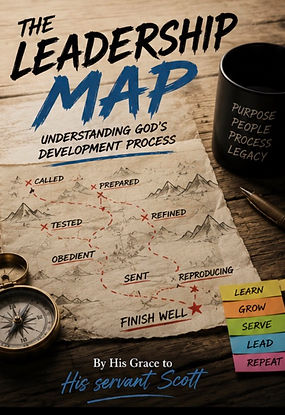
The Leadership Map
Understanding God’s Development Process in the Life of a Servant Leader
One of the greatest gifts God can give an emerging servant leader is an understanding of how He develops leaders. Many believers answer God’s call with passion and excitement, only to become discouraged when the journey unfolds differently than they expected. They envisioned immediate fruitfulness, visible impact, and rapid growth, but instead they encounter waiting seasons, hidden seasons, difficult seasons, and refining seasons. The problem is often not the process itself but the lack of a map. A traveler without a map easily mistakes the path, becomes confused by unexpected turns, and may even abandon the journey altogether. In the same way, servant leaders need a roadmap that helps them understand what God is doing in their lives. Such a map does not predict every detail of the journey, but it helps us recognize God’s hand, organize our experiences, understand our past, anticipate future development, and respond appropriately to His leading.
Throughout Scripture, God consistently develops His servants according to certain principles. While every journey is unique, the patterns are remarkably similar. Moses spent forty years in Pharaoh’s palace, forty years in the wilderness, and forty years leading Israel. Joseph received a dream from God, but before the dream was fulfilled he experienced betrayal, slavery, false accusation, and imprisonment. David was anointed king while still a shepherd boy, yet years passed before he ever sat on the throne. The Lord was not wasting time during those years. He was developing leaders. Proverbs 4:18 says, “But the path of the righteous is like the light of dawn, that shines brighter and brighter until the full day.” God’s development process unfolds progressively. Rarely does He reveal the entire journey at once.
October 28, 2026
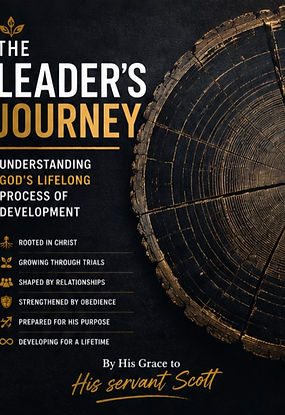
The Leader’s Journey
Understanding God’s Lifelong Process of Development
One of the greatest gifts a servant leader can receive is the understanding that God is developing him for a lifetime. Many enter ministry believing that leadership is primarily about learning skills, gaining knowledge, or finding opportunities to serve. While those things are important, God’s primary concern is not what we do for Him but who we become in Him. The Lord is always far more interested in our character than our platform, our surrender than our success, and our obedience than our accomplishments. When a servant leader understands this truth, he becomes less frustrated by delays, difficulties, and seasons of obscurity because he realizes that development is not a detour from God’s plan—it is God’s plan.
Throughout Scripture, we see that God never rushes the development of His leaders. Abraham received a promise but waited decades before seeing its fulfillment. Joseph received dreams from God, yet his path led through betrayal, slavery, and prison before he ever sat on the throne of Egypt. Moses spent forty years in the wilderness learning dependence before leading Israel out of bondage. David was anointed king while still a shepherd boy, but years passed before he ever wore the crown. Even Jesus spent thirty years in preparation for three years of public ministry. God’s methods have not changed. He still develops leaders through time. James reminds us, “And let endurance have its perfect result, so that you may be perfect and complete, lacking in nothing” (James 1:4). The servant leader who understands this learns to trust God’s timetable instead of demanding his own.

October 27, 2026
The Servant Leader’s Journey
Seeing the Need and Stepping Into the Field
Every great move of God begins the same way. It does not begin with a title, a position, a committee meeting, or a strategic plan. It begins when someone sees a need and refuses to look away. Throughout Scripture, God has consistently raised up servant leaders by allowing them to see what others ignored. Nehemiah saw broken walls while others saw ruins. Moses saw the suffering of God’s people while others accepted it as normal. David saw a giant defying the armies of the living God while trained soldiers saw an impossible problem. Jesus saw crowds that were weary and scattered while others simply saw another multitude. The beginning of servant leadership is not leadership at all—it is compassion. It is allowing your heart to be moved by what moves the heart of God.
Matthew 9:36 says, “Seeing the crowds, He felt compassion for them, because they were distressed and downcast like sheep without a shepherd.” Before Jesus ever solved a problem, He saw the problem. Before He taught, healed, delivered, or fed the multitudes, He allowed Himself to be moved by their condition. Servant leaders do not become effective because they are ambitious. They become effective because they care. The need becomes personal. The burden becomes real. What others pass by, they stop and notice.
Yet seeing the need is only the beginning. A mature servant leader understands that every burden must first be taken to God. The world teaches leaders to act quickly. Heaven teaches leaders to pray first. Before Nehemiah rebuilt Jerusalem’s walls, he spent months fasting and praying. Before Jesus selected His disciples, He spent the night in prayer. Before Moses led Israel, he encountered God at the burning bush. True servant leadership is never fueled by human emotion alone. It is fueled by divine direction. James 1:5 says, “But if any of you lacks wisdom, let him ask of God, who gives to all generously and without reproach.” Prayer transforms compassion into clarity. It turns a burden into an assignment.

October 26, 2026
The Silent Exodus
When Shepherds Grow Weary
There is a crisis quietly unfolding within the Church that many people never see. It does not make headlines. It is not usually connected to scandal, immorality, or public failure. It happens behind closed office doors, in empty sanctuaries after everyone has gone home, and in the hearts of shepherds who have spent years caring for others while neglecting their own souls. Across the world, pastors and ministry leaders are quietly walking away from ministry. Many are not leaving because they no longer love God. They are leaving because they have become exhausted carrying burdens they were never meant to carry alone.
Servant leaders must understand that calling does not eliminate human limitations. Moses was one of the greatest leaders in Scripture, yet even he reached a point where the weight of leadership became too much. His father-in-law Jethro observed what was happening and told him, “What you are doing is not good. You will surely wear out, both yourself and these people who are with you” (Exodus 18:17-18). Jethro was not questioning Moses’ calling. He was warning him that even a God-given assignment can become destructive when carried in an unhealthy way. Many leaders today are attempting to do alone what God designed to be carried in community.

October 25, 2026
Evangelistic Discipleship
The Forgotten Half of Christ’s Final Command
One of the greatest mistakes of modern Christianity is the separation of evangelism from discipleship. Somewhere along the way, many churches began treating salvation as the finish line rather than the starting line. We learned to count professions of faith, baptisms, raised hands, and completed decision cards, but often failed to ask the question Jesus asked: Are we making disciples? As servant leaders, we must constantly return to the pattern of Christ rather than the traditions of men. Jesus never commissioned His followers merely to make converts; He commissioned them to make disciples. The Great Commission was never simply about getting people into heaven. It was about helping people become followers of Christ who learn to obey Him, walk with Him, and eventually help others do the same.
The final command of Jesus before His ascension leaves little room for confusion. He said, “Go, therefore, and make disciples of all the nations, baptizing them in the name of the Father and the Son and the Holy Spirit, teaching them to follow all that I commanded you” (Matthew 28:19-20). Notice that the central command is not “go” but “make disciples.” Going is part of the process. Baptizing is part of the process. Teaching is part of the process. The goal is disciples. Jesus did not separate evangelism from discipleship because He understood that spiritual birth was always intended to lead to spiritual growth.

October 24, 2026
The Judas Principle
When God Uses Betrayal to Shape the Servant Leader
One of the most difficult lessons a servant leader will ever learn is that some of the deepest wounds in ministry come not from enemies but from those we have loved, invested in, discipled, and trusted. The people who hurt us most are rarely strangers. They are often those who have walked closest beside us. They know our sacrifices, have benefited from our encouragement, and have shared our table. Yet Scripture repeatedly reveals that God often uses these painful relationships as instruments of spiritual formation. What feels like an interruption to our calling is often part of God’s preparation for it.
Jesus understood this reality better than anyone. Judas was not an unexpected problem that slipped through the cracks of God’s sovereignty. Judas was present from the beginning. Jesus chose him, loved him, served him, washed his feet, and shared bread with him, fully knowing what would eventually happen. The betrayal was painful, but it was not outside the purposes of God. Jesus said, “Did I Myself not choose you, the twelve, and yet one of you is a devil?” (John 6:70). The Lord was never confused by Judas. Neither is He confused by the difficult people He allows into our lives.

October 23, 2026
Come to Me
The Servant Leader’s Secret: Abiding Before Doing
One of the greatest dangers facing servant leaders is the temptation to substitute activity for intimacy. The longer we serve, the easier it becomes to measure our lives by what we accomplish rather than by our relationship with Christ. We become busy organizing, teaching, counseling, leading, serving, and solving problems. While these things are important, they can quietly become substitutes for the very One we claim to serve. Jesus never intended His followers to build ministries apart from Him. His invitation was never, “Go do great things for Me.” His invitation was first and always, “Come to Me.”
In Matthew 11:28 Jesus said, “Come to Me, all who are weary and burdened, and I will give you rest.” Notice that He did not offer a method, a program, or a strategy. He offered Himself. The answer to spiritual weariness is not trying harder; it is drawing closer. Many servant leaders carry burdens they were never designed to carry because they are attempting to produce spiritual results through human effort. They know how to work, but they have forgotten how to rest in Christ. The kingdom of God was never designed to operate through self-effort. It operates through dependence upon the Lord.

October 22, 2026
Learning the Way of the Sinner Without Learning the Ways of the Sinner
Understanding Bondage So We Can Lead Others to Freedom
One of the greatest challenges facing servant leaders is learning how to minister effectively to broken people without becoming entangled in the very things that enslave them. Jesus modeled this perfectly. He spent time with tax collectors, prostitutes, addicts, outcasts, and those rejected by society, yet He never participated in their sin. He understood their struggles without adopting their lifestyles. He knew the way of the sinner without learning the ways of the sinner. As servant leaders, we are called to do the same. If we are going to help people find freedom, we must understand how they became trapped in the first place. We must learn how wounds become lies, how lies become strongholds, how strongholds become habits, and how habits become bondage.
Jesus said, “It is not those who are healthy who need a physician, but those who are sick; I did not come to call the righteous, but sinners” (Mark 2:17). A physician studies disease in order to bring healing. Likewise, servant leaders must study the spiritual, emotional, and relational diseases that keep people bound. We cannot simply tell people to stop destructive behavior without understanding what is driving it. Behind every addiction, every destructive relationship, every repeated failure, and every stronghold is often a deeper story that must be understood if lasting transformation is to occur.

October 21, 2026
The Courage to Serve Without Applause
Why Servant Leaders Must Be Free From the Need for Everyone’s Approval
One of the greatest challenges a servant leader will ever face is learning how to faithfully serve God when not everyone is cheering them on. Many leaders begin their journey wanting to help people, encourage people, and make a difference in the lives of others. Yet as they grow in their calling, they often discover a difficult reality: not everyone wants to see them succeed. Not everyone celebrates growth. Not everyone rejoices when God opens doors, expands influence, or blesses faithful labor. Some people are inspired by another person’s success, while others become threatened by it.
This reality should not surprise us. Throughout Scripture we see examples of God’s servants facing opposition, criticism, jealousy, and misunderstanding. Joseph’s brothers became jealous because God had given him dreams concerning his future. Rather than celebrating God’s hand upon his life, they sought to destroy what God was building. Genesis 37:4 says, “His brothers saw that their father loved him more than all his brothers; and so they hated him and could not speak to him on friendly terms.” Joseph had done nothing wrong. His only offense was receiving a vision from God. Servant leaders must understand that sometimes opposition is not the result of failure but the consequence of faithfulness.

October 20, 2026
The Window and the Mirror
Why Servant Leaders Must Look Within Before Looking Without
One of the greatest dangers facing servant leaders is the temptation to spend more time looking through the window than looking into the mirror. The window allows us to see everyone else. Through the window we observe people’s attitudes, mistakes, weaknesses, failures, and shortcomings. We see the struggles of our churches, the immaturity of believers, the problems within our families, and the challenges within our ministries. Because servant leaders are called to help people, it is natural to spend time looking outward. However, Jesus taught that if we spend all our time at the window and neglect the mirror, our vision becomes distorted and our service becomes ineffective.
The mirror represents self-examination. It represents humility. It represents inviting God to search our hearts before we attempt to address the hearts of others. One of the marks of spiritual maturity is not becoming better at finding faults in other people but becoming more aware of our own need for God’s grace. The closer a servant leader walks with Christ, the more he understands how much he needs Christ every day.

October 19, 2026
The Servant Leader’s Eye for Gold
Seeing What God Can Build in People
One of the greatest challenges of servant leadership is learning to see people the way God sees them. Most people who come into our lives, ministries, recovery programs, churches, or workplaces arrive carrying visible evidence of brokenness. We see the addiction, the anger, the pride, the fear, the wounds, the immaturity, the failures, and the poor decisions. Sometimes these character defects are so obvious that they can dominate our entire perception of the individual. If we are not careful, we begin defining people by their struggles instead of by God’s purpose for their lives.
Yet servant leaders must develop a different vision. They must learn to see beyond the rubble and discover the treasure hidden beneath it. They must learn to look past the present condition and recognize the image of God that still exists within every person. While the world often evaluates people according to their failures, God evaluates them according to what His grace can accomplish through a surrendered life. This is why the Lord told Samuel, “For God sees not as man sees, for man looks at the outward appearance, but the Lord looks at the heart” (1 Samuel 16:7).

October 18, 2026
Trading Performance for Presence
Why Brokenness Is the Doorway to Grace for Servant Leaders
One of the greatest dangers facing servant leaders is not open rebellion, but subtle self-reliance disguised as spirituality. Throughout Scripture, God consistently opposes pride while giving grace to the humble. Yet pride often wears religious clothing. It appears disciplined, moral, committed, and sincere. It knows the language of faith, attends the meetings, studies the Scriptures, and serves faithfully. Yet beneath the surface, it may be trusting in human effort rather than divine grace. This is the danger of legalism.
Legalism is often man’s attempt to avoid brokenness. Brokenness requires us to admit what our flesh hates to confess: “I cannot do this.” Legalism says, “Try harder.” Brokenness says, “I need a Savior.” Legalism says, “Work harder.” Brokenness says, “Trust deeper.” Legalism focuses on what we can do for God, while grace focuses on what Christ has already done for us.

October 17, 2026
Here Am I, Send Me
The Defining Response of Every Servant Leader
Few statements in Scripture capture the heart of servant leadership more powerfully than Isaiah’s simple response: “Here am I. Send me!” (Isaiah 6:8). These words were not spoken casually. They were not the emotional reaction of a moment. They were the product of a life-changing encounter with the living God. Before Isaiah ever volunteered for service, he experienced revelation, brokenness, cleansing, and surrender. His willingness to be sent was the result of seeing God as He truly is and seeing himself as he truly was. This remains the pathway for every servant leader God uses today.
The story begins with Isaiah entering the temple during a difficult season in Israel’s history. King Uzziah had died, uncertainty filled the nation, and the future seemed unclear. Yet in the midst of earthly instability, Isaiah received a heavenly vision. “I saw the Lord sitting on a throne, lofty and exalted, with the train of His robe filling the temple” (Isaiah 6:1). The first lesson for every servant leader is that effective ministry begins with a vision of God. Many leaders today spend more time looking at problems than they do looking at God. We become consumed with budgets, attendance, programs, conflicts, and responsibilities. Yet servant leadership does not begin with ministry needs. It begins with seeing the Lord high and lifted up.

October 16, 2026
Running With Horses
How God Uses Small Tests to Prepare Servant Leaders for Greater Assignments
One of the most challenging truths a servant leader must learn is that God often prepares us for future assignments through present difficulties. Most leaders desire greater influence, larger opportunities, and wider ministry impact. We pray for God to open bigger doors and entrust us with greater responsibilities. Yet God is often more concerned with our preparation than our promotion. Before He enlarges our assignment, He develops our character. Before He increases our influence, He strengthens our endurance. Before He releases us into greater opportunities, He teaches us how to remain faithful in the smaller battles already before us.
This is the heart of God’s message to Jeremiah when He asked, “If you have run with footmen and they have tired you out, then how can you compete with horses? If you fall down in a land of peace, how will you do in the thicket of the Jordan?” (Jeremiah 12:5). Jeremiah was discouraged. He was struggling with injustice, opposition, and disappointment. Like many servant leaders, he was asking difficult questions about God’s ways. Yet God’s answer was not primarily comfort. Instead, God gave Jeremiah perspective. He challenged him to see his current struggles as preparation for something greater ahead.

October 15, 2026
The Remnant Road
Why Servant Leaders Must Be Willing to Walk Against the Crowd
One of the most difficult lessons a servant leader must learn is that God often does His greatest work through a minority rather than a majority. We naturally assume that if many people are moving in a particular direction, then that direction must be right. Yet Scripture repeatedly demonstrates that truth is not determined by popularity, and obedience is not measured by public opinion. The history of God’s kingdom is often the story of a faithful remnant willing to stand when others sit, speak when others remain silent, and obey when others compromise. Servant leaders must understand this principle because leadership frequently requires walking a path that others neither understand nor appreciate.

October 14, 2026
The Fog After Freedom
Why Wise Servant Leaders Understand the Recovery Phase of Healing
One of the greatest mistakes inexperienced servant leaders make is assuming that breakthrough automatically produces immediate strength. We expect that after confession comes clarity, after repentance comes energy, and after healing comes instant transformation. Yet those who have spent years walking alongside broken people know that reality is often very different. Sometimes the days immediately following a major spiritual breakthrough are marked by exhaustion, emotional sensitivity, confusion, and even what appears to be a lack of direction. Wise servant leaders understand that this season is not necessarily a sign that something is wrong. Often it is evidence that God is doing something very right.

October 13, 2026
Leading Souls Not Decisions
A Servant Leader’s Call to Faithfully Present the Gospel
One of the highest privileges entrusted to a servant leader is the opportunity to introduce someone to Jesus Christ. Yet many leaders feel intimidated when the conversation turns toward salvation. Some fear saying the wrong thing. Others rely upon memorized formulas that may communicate information but fail to communicate the heart of the gospel. Scripture teaches us that leading someone to Christ is neither a sales presentation nor a religious transaction. It is a sacred moment in which a servant leader becomes a faithful messenger of God’s grace. Paul reminded Timothy, “But you, be sober in all things, endure hardship, do the work of an evangelist, fulfill your ministry” (2 Timothy 4:5). Timothy was primarily a pastor, yet Paul expected him to maintain an evangelistic heart. The same is true for every servant leader today.

October 12, 2026
The Lighthouse Leader
Doing the Work of an Evangelist in Everyday Life
One of the dangers servant leaders face is becoming so occupied with serving believers that they slowly lose sight of those who do not yet know Christ. Ministry meetings, counseling appointments, discipleship groups, outreach projects, administration, and leadership responsibilities are all important. Yet in the midst of these good things, it is possible to forget the very mission that brought Jesus from heaven to earth. Paul understood this danger when he wrote his final instructions to Timothy. Although Timothy was primarily a pastor and teacher, Paul gave him a command that reaches beyond his specific gifting: “But you, be sober in all things, endure hardship, do the work of an evangelist, fulfill your ministry” (2 Timothy 4:5). Timothy may not have possessed the same evangelistic gifting as Philip, yet Paul still expected him to maintain the heart and practice of an evangelist.

October 11, 2026
Flowing With Grace
Following God’s Adjustments in Servant Leadership
One of the greatest lessons a servant leader must learn is the difference between making plans and becoming attached to plans. God calls us to be responsible, organized, diligent, and intentional. He is not honored by laziness or carelessness. Yet He never intended for our schedules, strategies, or agendas to become more important than our relationship with Him. Mature servant leaders understand that planning is wise, but remaining sensitive to God’s adjustments is wisdom in action. The kingdom of God often advances through moments that were never written on our calendars. Divine appointments rarely announce themselves in advance. They frequently appear disguised as interruptions, delays, detours, or unexpected opportunities.
Scripture teaches this principle clearly. Proverbs 16:9 says, “The mind of man plans his way, but the Lord directs his steps.” Notice that both planning and divine direction are present. God does not rebuke planning; He simply reminds us that He reserves the right to direct our steps. We may know our destination, but God knows the route. We may know our assignment, but God knows the timing. We may know what He has called us to do, but only He knows who He has positioned along the way.

October 10, 2026
The Law of Achan
The Danger of Success for Servant Leaders
One of the greatest dangers facing servant leaders is not failure but success. Most leaders prepare themselves for battles, criticism, hardship, and opposition. Far fewer prepare themselves for the vulnerabilities that often follow victory. Yet throughout Scripture we see that many defeats occurred not before success but after it.
The story of Achan reveals this principle. Israel had just witnessed one of the greatest miracles in their history. The walls of Jericho had fallen through God’s power. The nation was celebrating a tremendous victory. Yet immediately afterward came a painful defeat at Ai.
Joshua 7:1 says, “But the sons of Israel acted unfaithfully in regard to the things under the ban.” While everyone was focused on the victory, hidden compromise entered the camp. Israel assumed that because God had blessed them at Jericho, success at Ai would naturally follow. They became confident in yesterday’s victory instead of remaining dependent upon God for today’s battle.

October 9, 2026
Forewarned Is Forearmed
How God Prepares Servant Leaders Before the Battle Begins
One of the overlooked principles of servant leadership is found in the simple statement, “Forewarned is forearmed.” While this phrase is not found directly in Scripture, the principle is woven throughout the Bible. God often prepares His servants before He positions them. He warns before He sends. He teaches before He entrusts. He develops before He deploys. Servant leaders who understand this principle learn that God’s warnings are not intended to create fear but to build faith and preparation.
Many leaders assume that if God has called them, the path will be smooth. Yet Scripture reveals something very different. God frequently prepares His servants for challenges before they arrive. Jesus did this with His disciples. Before His crucifixion, He spoke openly about the trials they would face. He said, “These things I have spoken to you, so that in Me you may have peace. In the world you have tribulation, but take courage; I have overcome the world” (John 16:33). Jesus did not hide reality from His followers. He prepared them for reality. His warnings were acts of love.

October 8, 2026
Well Begun Is Half Done, But Well Begun Is Only Half Done
The Servant Leader’s Call to Finish What God Starts
One of the great truths of leadership is found in a simple statement: “Well begun is half done.” There is tremendous wisdom in those words because many people never begin. They spend their lives waiting for perfect conditions, greater confidence, more resources, or complete certainty before taking a step of faith. Yet God’s kingdom has always advanced through ordinary men and women who were willing to obey before they understood everything. Servant leaders learn that beginnings matter. Every ministry, every calling, every act of obedience, and every work of God starts with someone taking a first step.
At the same time, another statement carries equal wisdom: “Well begun is only half done.” This truth reminds us that starting well is not the same as finishing well. While many never begin, others begin enthusiastically but fail to continue when challenges arise. They start with excitement but struggle with endurance. They embrace the vision but abandon the process. Servant leaders must learn both lessons. God calls us not only to begin assignments but to complete them.

October 7, 2026
Knowing Your Moment
Servant Leadership Through Intimacy, Discernment, and Obedience
One of the most important lessons a servant leader will ever learn is that not every moment requires the same response. There are moments when God calls us to sit quietly at His feet, listen to His voice, and receive from His presence. There are other moments when He calls us to rise, serve, lead, work, and pour into others. Spiritual maturity is found in recognizing the difference. Effective servant leaders are not merely people who work hard. They are people who learn to discern what God is asking of them in each season and moment.
The familiar story of Mary and Martha provides a powerful picture of this truth. As Jesus entered their home, Martha immediately became occupied with serving and preparing for her guests. Mary, however, sat at the feet of Jesus listening to His teaching. As Martha became increasingly frustrated, she approached Jesus and asked Him to tell Mary to help her. Jesus responded, “Martha, Martha, you are worried and bothered about so many things; but only one thing is necessary, for Mary has chosen the good part, which shall not be taken away from her” (Luke 10:41-42).
October 6, 2026
Servant Leaders at the Lord’s Table
Remembering Christ, Examining the Heart, and Walking in Love
One of the greatest dangers in servant leadership is becoming so busy serving others that we neglect our own relationship with Christ. Ministry responsibilities, leadership demands, and the needs of people can slowly pull our attention away from the One we are called to serve. This is why the Lord’s Supper is such a precious gift. It is more than a church ordinance; it is an opportunity to pause, remember, reflect, repent, and realign our hearts with Jesus.
In 1 Corinthians 11:23-34, Paul addresses abuses that had developed in the Corinthian church during the Lord’s Supper. What was meant to be a celebration of Christ’s sacrifice and the unity of believers had become marked by selfishness, division, and spiritual carelessness. Through Paul’s correction, we discover powerful lessons for every servant leader. The Lord’s Table teaches us four important directions for spiritual health: look back, look ahead, look within, and look around.

October 5, 2026
God's Leadership Development Process
How God Uses Integrity Checks, Word Checks, Obedience Checks, and Ministry Assignments to Develop Servant Leaders
One of the greatest misunderstandings in leadership is the belief that God develops leaders primarily through positions, titles, platforms, and public ministry. In reality, God develops leaders long before He promotes them. Throughout Scripture, we see a consistent pattern: before God entrusts greater responsibility, He first tests character, faithfulness, obedience, and stewardship. The Kingdom of God does not operate according to human promotion systems. God is far more concerned with who we are becoming than what we are accomplishing. Before He gives influence, He develops integrity. Before He gives authority, He develops humility. Before He expands ministry, He examines the heart.
Many young leaders pray for larger opportunities while overlooking the development process God has placed directly in front of them. Yet the Lord often uses ordinary situations, hidden assignments, and daily acts of obedience as His classroom for leadership development. What appears insignificant to man may be one of the most important seasons in God’s preparation process.

October 4, 2026
The Whole Counsel of God
Servant Leaders Must Teach Both Blessing and Consequence
One of the greatest responsibilities of a servant leader is to faithfully communicate the full truth of God’s Word. In our generation, there is often a tendency to emphasize the blessings of obedience while minimizing or completely ignoring the consequences of disobedience. Messages about favor, breakthrough, provision, promotion, and victory are welcomed by most people because they appeal to what everyone desires. Yet Scripture never presents blessing apart from obedience, nor does it hide the reality that choices carry consequences. A servant leader who desires to build mature disciples must be willing to teach both sides of God’s truth.
The Lord has always been transparent with His people. Throughout Scripture, He never attempted to motivate people through promises alone. He also revealed the dangers of rebellion, compromise, and disobedience. God is not manipulative. He lays out the path of life and the path of destruction and then invites people to choose wisely. Moses demonstrated this when he spoke to Israel before they entered the Promised Land. He did not simply tell them about the blessings awaiting them. He also warned them about the consequences of turning away from God.

October 3, 2026
Life Is the Leadership Classroom
God Develops Servant Leaders Through Training, Trials, Relationships, and Daily Faithfulness
Many people believe leadership is developed primarily through classes, conferences, books, and training programs. While those tools are valuable, God's process for developing servant leaders is much deeper. Leadership development is not merely about learning new skills; it is about becoming the kind of person God can trust with influence and responsibility. In God's Kingdom, leadership is not first about what you do—it is about who you are becoming.
Jesus did not simply train His disciples; He developed them. He taught them truth, but He also allowed them to experience failure, correction, success, disappointment, waiting, and sacrifice. Through everyday life, their faith matured and their character was formed. Jesus understood that leadership emerges through both instruction and experience.
Servant leaders must learn to see life as God's classroom. Every season carries a lesson. Every relationship provides an opportunity for growth. Every challenge can become a tool in the hands of the Master Teacher. God is always at work, shaping our character, deepening our faith, and preparing us for greater usefulness in His Kingdom.

October 2, 2026
Formed in the Fire of Purpose
From Self-Fulfillment to Christ-Formed Development
Servant leadership begins where the culture’s narrative ends. In a generation that often teaches “find yourself,” Scripture calls the believer to something far deeper and far more eternal: be found in Christ. The modern pursuit of self-fulfillment says that peace comes from aligning life with personal desires and emotional satisfaction. Yet Jesus reframes the entire foundation of identity when He says, “If anyone wishes to come after Me, he must deny himself, and take up his cross daily and follow Me” (Luke 9:23). The kingdom does not begin with self-expression but with surrender.
There is a subtle but powerful shift between self-fulfillment and self-development. Self-fulfillment asks, “What makes me feel complete?” Self-development in Christ asks, “What is God forming in me?” One is anchored in emotion; the other is anchored in transformation. Scripture consistently points the believer away from shallow satisfaction and into deep spiritual maturity. “Do not be conformed to this world, but be transformed by the renewing of your mind” (Romans 12:2). Transformation is not instant gratification—it is Spirit-led formation over time.

October 1, 2026
When Serving Becomes a Race Instead of Relationship
A Servant Leadership Devotional on Returning to Abiding in Christ
There is a subtle danger that can creep into the heart of a servant of God. It rarely shows up as open rebellion. More often, it arrives disguised as responsibility. It begins when serving quietly shifts from relationship into race. What once was intimacy with Christ becomes urgency for results. What once was abiding becomes striving. And without realizing it, a servant can be moving for God while slowly drifting from the presence of God.
Jesus never called His disciples into competition. He called them into communion. “Come to Me, all who are weary and burdened, and I will give you rest” (Matthew 11:28). The invitation is not first to work, but to come. Not first to perform, but to rest in Him. This rest is not laziness; it is the settled strength of a heart no longer trying to prove its worth. When that rest is lost, even good works begin to feel heavy.

September 30, 2026
The Exhausted Servant Leader
Leading from Overflow Instead of Empty
One of the greatest dangers facing servant leaders is not failure—it is fatigue. Many leaders are not walking away from God; they are simply wearing themselves out while trying to serve Him. They love Jesus, care deeply about people, and genuinely desire to make a difference. Yet somewhere along the way, ministry becomes a race instead of a relationship.
The challenge is that exhausted leaders often look successful on the outside. They are teaching, mentoring, counseling, preaching, organizing, and helping others. Their schedules are full and their calendars stay busy. People admire their commitment and dedication. Yet behind the scenes, their souls are running on empty.
Many of us have been conditioned to believe that constant activity is a sign of faithfulness. We celebrate being busy. We wear exhaustion like a badge of honor. We feel guilty when we slow down and uncomfortable when we rest. Over time, we can begin measuring our value by what we accomplish rather than by who we are in Christ.
Jesus never modeled that kind of leadership.

September 29, 2026
Broken Places Build Strong Servants
How God Uses Adversity to Shape Servant Leaders
One of the greatest misunderstandings about leadership is the belief that strong leaders are created through constant success. Many people assume servant leaders are people who never struggle, never fail, and never walk through seasons of collapse. Yet throughout Scripture, God consistently used broken, humbled, tested, and refined people to fulfill His purpose.
Servant leaders are often forged in adversity.
Before Joseph stood in authority, he stood in betrayal and imprisonment. Before David wore a crown, he hid in caves while being hunted. Before Moses led a nation, he spent years in obscurity in the wilderness. Before Peter preached boldly, he publicly denied Jesus three times.
God has never required perfection before calling someone. But He does require surrender.

September 28, 2026
The Strength of Leaders Who Stay Teachable
Learning From Naaman and the Courage of Honest Voices
One of the greatest dangers a leader can face is not weakness, opposition, or even failure. One of the greatest dangers is isolation. When a leader slowly surrounds himself with people who only agree, only applaud, and never challenge, pride quietly begins to grow in places humility once lived. Servant leadership is not merely about leading others well; it is about remaining humble enough to receive correction, wisdom, and truth from those around you.

September 27, 2026
The Discipline That Builds A Servant Leader
Choosing the Pain of Growth Over the Pain of Regret
One of the greatest differences between effective servant leaders and ineffective ones is not talent, gifting, charisma, or opportunity. The difference is often found in one hidden area: self-discipline. Every servant leader, whether they realize it or not, will eventually choose between two forms of pain. They will either choose the pain of discipline, which comes through sacrifice, consistency, self-control, and growth, or they will eventually suffer the pain of regret, which comes from wasted time, neglected responsibility, spiritual laziness, and missed opportunities. There is no escaping this reality. The easy road may feel comfortable for the moment, but comfort without discipline eventually produces weakness, while discipline produces strength, endurance, and maturity.

September 26, 2026
Dying To Self: The Hidden Foundation Of Servant Leadership
Following Christ Beyond Feelings, Comfort, and Spiritual Emotion
One of the greatest dangers in the life of a servant leader is learning to love the feelings that come from God more than God Himself. In the beginning of a believer’s walk with Christ, the Lord often allows seasons filled with deep emotion, spiritual excitement, overwhelming peace, and tangible comfort. These moments are beautiful gifts of grace. They strengthen weak hearts, awaken hunger for God, and reassure the believer that the Lord is near. Yet if a servant leader never matures beyond needing emotional reassurance, he will remain spiritually unstable, because his walk with God will be built upon feelings instead of surrender.

September 25, 2026
We Attract Who We Are
Servant Leadership and the People God Allows Around Us
One of the deepest realities a servant leader must eventually come to understand is that ministry is never only about helping transform other people. Many times, while we are pouring into others, God is simultaneously using those same relationships to transform us. As servant leaders, we often think we are simply leading, teaching, correcting, counseling, or discipling others, yet behind the scenes the Lord is using people around us to expose hidden pride, unhealed wounds, insecurity, impatience, control, fear, and areas where our character still needs to be refined into the image of Christ.

September 24, 2026
Goals That Outlive You
Bringing God's Order Into Calling, Stewardship, and Lasting Kingdom Fruit
Passion is a beautiful gift from God. Passion can ignite vision, move us into action, and compel servant leaders to step into places where others may be unwilling to go. Passion often becomes the fuel that pushes us through hard seasons, painful moments, and difficult assignments. Many servant leaders are filled with passion because they genuinely love Jesus and sincerely want to see lives transformed. Passion can put someone on the mission field, move them into recovery ministry, motivate them to disciple people, and inspire them to serve in places where there is little recognition and no applause. Yet while passion is powerful, passion by itself was never designed to sustain the full weight of a calling. Passion without stewardship eventually becomes exhaustion. Vision without structure often becomes frustration. Desire without direction frequently creates scattered energy and unfinished assignments. God never intended for His servant leaders to live only from passion; He intended for them to learn stewardship.