March 15
Trusting God With My Sin And Character Defects
Surrendering What I Cannot Change on My Own
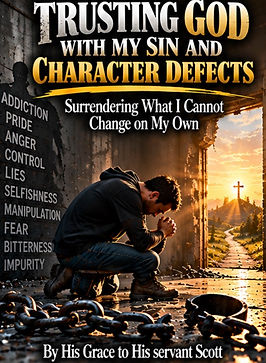
One of the hardest discoveries in recovery is realizing that admitting our sins and character defects is not the same as trusting God to change them. We may honestly acknowledge our dishonesty, resentment, manipulation, selfishness, pride, anger, and need for control, yet still insist on managing how those things are removed. We want transformation, but we want it on our terms. We are willing to admit what is wrong, but surrendering control over what happens next is another matter entirely. This is where Step Six begins taking us beyond self-examination and confession into something deeper: trusting God with the very things we have spent years trying to manage ourselves.
Through our Life Portrait in Step Four, we discovered patterns that developed long before and throughout our addiction. Step Five brought those discoveries into the light. Now Step Six asks whether we are entirely ready to have God remove these defects of character. Notice something important: We are not being asked whether we have finally become capable of fixing ourselves. We are being asked whether we are willing to let God do what we cannot accomplish on our own.
Proverbs 3:5 tells us, “Trust in the LORD with all your heart and do not lean on your own understanding.” For many of us, that is difficult because self-reliance has been our way of surviving. During active addiction, we tried to manage our drinking, control our drug use, hide consequences, manipulate relationships, and convince ourselves we could stop whenever we wanted. Even after entering recovery, we can bring that same controlling mentality into our relationship with God. We begin trying to manage our transformation instead of surrendering to the One who transforms us.
Some of our character defects have become so familiar that we almost consider them part of our personality. “I’ve always had a temper.” “I’m just a private person.” “I don’t trust anybody.” “I have to stay in control.” “That’s just who I am.” But something we have practiced for years is not necessarily who God created us to be. Anger may have become our protection. Dishonesty may have helped us avoid consequences. Manipulation may have secured attention or approval. Isolation may have protected us from rejection. These behaviors served purposes, but they also produced destruction.
Paul wrote, “For you have not received a spirit of slavery leading to fear again, but you have received a spirit of adoption as sons and daughters” (Romans 8:15). Our identity is not determined by our addiction, our past, or our character defects. In Christ, we belong to the Father. God is not trying to destroy who we truly are. He is removing what has kept us from becoming who He created us to be.
But trusting God does not mean sitting back and doing nothing. Surrender is not passivity. We still must practice honesty, accept correction, make responsible decisions, maintain daily inventory, seek wise counsel, and obey what God reveals. Yet we must understand the difference between cooperating with God and attempting to replace Him. Jesus said, “Apart from Me you can do nothing” (John 15:5). Our effort matters, but our effort cannot become our source of transformation. Obedience is our response to grace, not a substitute for grace.
One reason we hesitate to surrender our defects is that we are afraid of what will replace them. If I stop controlling people, who will protect me? If I surrender anger, how will I defend myself? If I stop manipulating, how will my needs be met? If I become honest, what consequences will I face? These are real fears, especially for people whose lives have been shaped by addiction, rejection, abandonment, or trauma. But God is not asking us to exchange unhealthy protection for helplessness. He is teaching us healthier ways to live through truth, boundaries, humility, courage, and dependence upon Him.
Psalm 145:9 says, “The LORD is good to all, and His mercies are over all His works.” We must begin trusting not only God’s power to change us, but also His goodness in the process. The God who asks us to surrender our false security is worthy of our trust when we feel vulnerable without it.
Transformation also requires patience. Many of us want God to remove in one prayer what we spent decades developing. When an old reaction returns, we become discouraged. When we recognize selfishness or manipulation again, we wonder whether anything is changing. But growth is not always immediate, and struggle does not automatically mean surrender has failed. Paul wrote, “He who began a good work among you will complete it” (Philippians 1:6). God is faithful to continue His work, even when the process reveals how much growth is still needed.
Trust does not excuse continued sin or remove our responsibility. When God reveals dishonesty, we must choose truth. When He exposes resentment, we must begin practicing forgiveness. When He confronts manipulation, we must stop using people to get what we want. We cannot claim to trust God with our character while refusing to obey Him in our conduct. Genuine surrender begins changing how we respond.
This morning, ask yourself: Am I trusting God to change me, or am I still trying to control the process? What defect am I afraid to release? What sin am I still defending? What behavior do I believe I cannot live without? Bring those things honestly before Him.
Step Six invites us to become entirely ready, not entirely capable. We do not have to understand every part of God’s process. We must become willing to surrender our resistance and follow His direction.
We came into recovery because we could not control alcohol and drugs. Now God is showing us that we cannot transform our hearts through control either. We can confess our sins, recognize our defects, and take responsibility for our choices, but lasting transformation requires something greater than determination. It requires trusting the God who knows us completely, loves us faithfully, and has the power to change what we cannot change on our own.
By His Grace to His servant Scott
Recent Devotionals

Confiando A Dios Mis Pecados Y Defectos De Carácter
Entregando aquello que no puedo cambiar por mis propias fuerzas
Uno de los descubrimientos más difíciles en la recuperación es comprender que admitir nuestros pecados y defectos de carácter no es lo mismo que confiar en Dios para que los cambie. Podemos reconocer honestamente nuestra deshonestidad, resentimiento, manipulación, egoísmo, orgullo, ira y necesidad de controlar, y aun así insistir en manejar cómo deben ser eliminados. Queremos transformación, pero queremos que suceda bajo nuestras condiciones. Estamos dispuestos a admitir lo que está mal, pero entregar el control sobre lo que sucederá después es algo completamente diferente. Aquí es donde el Paso Seis comienza a llevarnos más allá del autoexamen y la confesión, hacia algo más profundo: confiarle a Dios precisamente aquellas cosas que hemos pasado años intentando controlar por nosotros mismos.
A través de nuestro Retrato de Vida en el Paso Cuatro, descubrimos patrones que se desarrollaron mucho antes de nuestra adicción y también durante ella. El Paso Cinco llevó esos descubrimientos a la luz. Ahora el Paso Seis pregunta si estamos completamente dispuestos a permitir que Dios elimine estos defectos de carácter. Observemos algo importante: No se nos está preguntando si finalmente hemos llegado a ser capaces de arreglarnos a nosotros mismos. Se nos está preguntando si estamos dispuestos a permitir que Dios haga aquello que nosotros no podemos lograr por nuestras propias fuerzas.
Proverbios 3:5 nos dice: “Confía en el SEÑOR con todo tu corazón, y no te apoyes en tu propio entendimiento”. Para muchos de nosotros, esto es difícil porque depender de nosotros mismos ha sido nuestra manera de sobrevivir. Durante la adicción activa, intentamos controlar nuestra manera de beber, manejar nuestro consumo de drogas, esconder las consecuencias, manipular nuestras relaciones y convencernos de que podíamos detenernos cuando quisiéramos. Incluso después de entrar en recuperación, podemos llevar esa misma mentalidad controladora a nuestra relación con Dios. Comenzamos a intentar dirigir nuestra propia transformación en lugar de rendirnos ante Aquel que nos transforma.
Algunos de nuestros defectos de carácter se han vuelto tan familiares que casi los consideramos parte de nuestra personalidad. “Siempre he tenido mal carácter”. “Simplemente soy una persona reservada”. “No confío en nadie”. “Tengo que mantener el control”. “Así soy yo”. Pero algo que hemos practicado durante años no necesariamente es lo que Dios nos creó para ser. La ira puede haberse convertido en nuestra protección. La deshonestidad puede habernos ayudado a evitar consecuencias. La manipulación puede habernos conseguido atención o aprobación. El aislamiento puede habernos protegido del rechazo. Estas conductas cumplieron ciertos propósitos, pero también produjeron destrucción.
Pablo escribió: “Pues ustedes no han recibido un espíritu de esclavitud para volver otra vez al temor, sino que han recibido un espíritu de adopción como hijos” (Romanos 8:15). Nuestra identidad no está determinada por nuestra adicción, nuestro pasado ni nuestros defectos de carácter. En Cristo, pertenecemos al Padre. Dios no está tratando de destruir quienes realmente somos. Él está quitando aquello que nos ha impedido llegar a ser quienes nos creó para ser.
Pero confiar en Dios no significa quedarnos sentados sin hacer nada. La entrega no es pasividad. Todavía debemos practicar la honestidad, aceptar la corrección, tomar decisiones responsables, mantener nuestro inventario diario, buscar consejo sabio y obedecer lo que Dios nos revela. Sin embargo, debemos comprender la diferencia entre cooperar con Dios e intentar reemplazarlo. Jesús dijo: “Separados de Mí nada pueden hacer” (Juan 15:5). Nuestro esfuerzo importa, pero no puede convertirse en la fuente de nuestra transformación. La obediencia es nuestra respuesta a la gracia, no un sustituto de la gracia.
Una razón por la que dudamos en entregar nuestros defectos es que tenemos miedo de lo que los reemplazará. Si dejo de controlar a las personas, ¿quién me protegerá? Si entrego mi ira, ¿cómo me defenderé? Si dejo de manipular, ¿cómo serán satisfechas mis necesidades? Si comienzo a ser honesto, ¿qué consecuencias tendré que enfrentar? Estos temores son reales, especialmente para quienes han vivido marcados por la adicción, el rechazo, el abandono o el trauma. Pero Dios no nos está pidiendo que cambiemos una protección dañina por la indefensión. Nos está enseñando maneras más saludables de vivir mediante la verdad, los límites sanos, la humildad, el valor y la dependencia de Él.
Salmo 145:9 dice: “El SEÑOR es bueno para con todos, y Sus misericordias están sobre todas Sus obras”. Debemos comenzar a confiar no solamente en el poder de Dios para cambiarnos, sino también en Su bondad durante el proceso. El Dios que nos pide entregar nuestra falsa seguridad es digno de nuestra confianza cuando nos sentimos vulnerables sin ella.
La transformación también requiere paciencia. Muchos queremos que Dios elimine mediante una sola oración aquello que desarrollamos durante décadas. Cuando vuelve a aparecer una vieja reacción, nos desanimamos. Cuando reconocemos nuevamente el egoísmo o la manipulación, nos preguntamos si realmente está cambiando algo. Pero el crecimiento no siempre es inmediato, y la lucha no significa automáticamente que nuestra entrega haya fracasado. Pablo escribió: “El que comenzó en ustedes la buena obra, la perfeccionará” (Filipenses 1:6). Dios es fiel para continuar Su obra, incluso cuando el proceso revela cuánto nos falta por crecer.
Confiar no significa justificar el pecado continuo ni eliminar nuestra responsabilidad. Cuando Dios revela deshonestidad, debemos escoger la verdad. Cuando expone resentimiento, debemos comenzar a practicar el perdón. Cuando confronta la manipulación, debemos dejar de utilizar a las personas para conseguir lo que queremos. No podemos afirmar que confiamos a Dios nuestro carácter mientras nos negamos a obedecerlo con nuestra conducta. La verdadera entrega comienza a cambiar nuestra manera de responder.
Esta mañana, pregúntate: ¿Estoy confiando en Dios para que me cambie, o todavía estoy intentando controlar el proceso? ¿Qué defecto tengo miedo de entregar? ¿Qué pecado sigo defendiendo? ¿Sin qué conducta creo que no puedo vivir? Lleva esas cosas honestamente delante de Él.
El Paso Seis nos invita a estar completamente dispuestos, no a ser completamente capaces. No tenemos que comprender cada parte del proceso de Dios. Debemos estar dispuestos a entregar nuestra resistencia y seguir Su dirección.
Llegamos a la recuperación porque no podíamos controlar el alcohol y las drogas. Ahora Dios nos está mostrando que tampoco podemos transformar nuestro corazón mediante el control. Podemos confesar nuestros pecados, reconocer nuestros defectos y asumir la responsabilidad por nuestras decisiones, pero la transformación duradera requiere algo mayor que la determinación. Requiere confiar en el Dios que nos conoce completamente, nos ama fielmente y tiene el poder de cambiar aquello que nosotros no podemos cambiar por nuestras propias fuerzas.
Por Su Gracia a Su siervo Scott
将我的罪和性格缺陷交托给神
交出那些我无法靠自己改变的东西
在康复过程中,最困难的发现之一,就是明白承认自己的罪和性格缺陷,并不等于真正信靠神来改变它们。我们可能诚实地承认自己的不诚实、怨恨、操纵、自私、骄傲、愤怒,以及控制别人的需要,却仍然坚持由自己决定这些问题应该怎样、什么时候被除去。我们渴望生命改变,却希望一切按照自己的条件进行。**我们愿意承认自己哪里出了问题,但把接下来会发生什么的控制权交出去,却是完全不同的一回事。**这正是第六步开始带领我们超越自我省察和认罪,进入更深层次的地方:把那些我们多年来一直试图靠自己管理的问题,真正交托给神。
在第四步中,我们透过“生命画像”发现了许多早在成瘾之前,以及在成瘾过程中逐渐形成的行为模式。第五步则把这些发现带进光中。现在,第六步问我们是否已经完全愿意,让神除去这些性格缺陷。请注意一个重要的区别:神并不是问我们是否终于有能力修复自己,而是在问我们是否愿意让祂完成那些我们无法靠自己完成的改变。
箴言 3:5 告诉我们:“你要专心仰赖耶和华,不可倚靠自己的聪明。”对我们许多人来说,这并不容易,因为依靠自己一直是我们的生存方式。在积极成瘾的日子里,我们试图控制喝酒的数量、管理吸毒的次数、隐藏后果、操纵关系,并说服自己随时都可以戒掉。即使进入康复以后,我们仍然可能把同样的控制心态带进与神的关系中。我们开始试图管理自己的生命转变,而不是向那位真正能够改变我们的神降服。
有些性格缺陷已经变得如此熟悉,以至于我们几乎把它们当作自己个性的一部分。“我的脾气一直不好。”“我只是一个不喜欢向别人敞开心扉的人。”“我不相信任何人。”“我必须掌控一切。”“我就是这样的人。”但是,**我们多年来反复表现出来的行为,并不一定就是神创造我们时所要我们成为的样子。**愤怒可能成为我们的保护;不诚实可能帮助我们逃避后果;操纵可能使我们得到关注或认可;孤立可能保护我们不被拒绝。这些行为曾经满足某些需要,却也带来了破坏。
保罗写道:“你们所受的,不是奴仆的心,仍旧害怕;所受的,乃是儿子的心。”(罗马书 8:15)我们的身份不是由成瘾、过去的经历或性格缺陷来决定的。在基督里,我们属于天父。神并不是要摧毁真正的我们。祂正在除去那些一直阻碍我们活出祂创造我们时所赋予身份的东西。
但是,信靠神并不意味着坐在那里什么都不做。降服不是消极等待。我们仍然必须操练诚实、接受纠正、作出负责任的决定、坚持每日自我省察、寻求有智慧的辅导,并顺服神所显明的真理。然而,我们必须明白,与神同工和试图取代神之间有着根本区别。耶稣说:“因为离了我,你们就不能做什么。”(约翰福音 15:5)我们的努力很重要,但努力本身不能成为生命改变的源头。顺服是我们对恩典的回应,而不是恩典的替代品。
我们之所以犹豫是否交出自己的缺陷,一个重要原因是害怕失去它们以后会发生什么。如果我不再控制别人,谁来保护我?如果我交出愤怒,我该怎样保护自己?如果我停止操纵,我的需要怎样得到满足?如果我开始诚实,我将面对什么后果?这些恐惧是真实的,尤其对于那些生命曾受到成瘾、拒绝、遗弃或创伤影响的人来说更是如此。但神并不是要求我们放弃不健康的保护方式,然后变得毫无防备。祂正在教导我们透过真理、健康的界限、谦卑、勇气,以及对祂的依靠,学习更健康的生活方式。
诗篇 145:9 说:“耶和华善待万民;他的慈悲覆庇他一切所造的。”我们不仅必须相信神有能力改变我们,也必须相信祂在整个改变过程中的良善。那位要求我们交出虚假安全感的神,即使在我们失去旧有保护方式、感到脆弱的时候,仍然完全值得我们信靠。
生命的改变也需要耐心。我们许多人希望神借着一次祷告,就除去自己花了几十年形成的行为模式。当旧有的反应再次出现时,我们便感到灰心。当我们再次发现自己的自私或操纵行为时,就开始怀疑究竟有没有发生改变。但是,成长并不总是立即发生,而挣扎也不自动意味着降服已经失败。保罗写道:“我深信那在你们心里动了善工的,必成全这工。”(腓立比书 1:6)神是信实的,祂必继续祂的工作,即使这个过程不断让我们看见自己还有多少地方需要成长。
信靠神并不意味着可以继续为罪寻找借口,也不意味着我们不再需要承担责任。当神显明我们的不诚实时,我们必须选择说真话;当祂揭露怨恨时,我们必须开始操练饶恕;当祂指出操纵行为时,我们必须停止利用别人来得到自己想要的东西。**如果我们在行为上拒绝顺服神,就不能声称自己已经把性格交托给祂。**真正的降服,会开始改变我们面对事情时的反应。
今天早晨,请问自己:**我是真的信靠神来改变我,还是仍然试图控制整个过程?**我害怕交出哪一种性格缺陷?我还在为哪一种罪辩护?我认为自己没有哪一种行为就无法生活?把这些事情诚实地带到神面前。
第六步邀请我们成为完全愿意的人,而不是完全有能力的人。我们不需要理解神改变我们的每一个步骤,但必须愿意交出自己的抗拒,并跟随祂的带领。
我们进入康复,是因为发现自己无法控制酒精和毒品。如今,神正在让我们明白,我们同样无法靠控制来改变自己的心。我们可以承认自己的罪、认识自己的缺陷,并为自己的选择承担责任,但持久的生命改变需要比个人决心更大的力量。我们需要信靠那位完全认识我们、始终信实地爱我们,并且有能力改变那些我们无法靠自己改变之事的神。
因祂的恩典,赐给祂的仆人 Scott