January 13, 2026
Step Eleven — Staying Close to Jesus
Growing in Daily Fellowship With God Through Prayer, Scripture, Listening, and Obedience
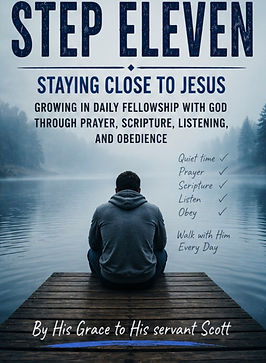
“We sought through prayer, Scripture, and fellowship with Jesus Christ to deepen our relationship with God, praying for knowledge of His will for us and the strength to carry it out.”
By Step Eleven, something important should be changing in our recovery. In the beginning, many of us came to God because our lives were falling apart. Our prayers sounded like, God, get me out of jail. Save my marriage. Help me through withdrawal. Take away this craving. Please give me another chance. There is nothing wrong with crying out to God in desperation. Many of us are alive because we did. But Step Eleven moves us from crisis Christianity into daily fellowship with Jesus. We are no longer interested only in God getting us out of trouble. We want to learn how to walk with Him so closely that we stop returning to the life that continually created the trouble.
Jesus said, “Abide in Me, and I in you. As the branch cannot bear fruit of itself unless it abides in the vine, so neither can you unless you abide in Me” (John 15:4). Notice the word abide. Jesus is describing an ongoing relationship, not an occasional spiritual experience. Yesterday’s prayer was important. Yesterday’s Scripture mattered. Yesterday’s victory should be celebrated. But yesterday’s fellowship cannot replace today’s dependence upon Christ. Recovery becomes dangerous when we begin living from memories of what God did instead of remaining connected to what He is doing in us today.
Step Eleven teaches us that prayer is more than asking God for things. During addiction, prayer may have become an emergency button we pushed whenever consequences became unbearable. Now prayer begins becoming relationship. We talk with Jesus about our fears, temptations, anger, decisions, relationships, gratitude, failures, and desires. We also begin asking a question that addiction rarely allowed us to ask: Jesus, what do You want from me today? Jesus taught us to pray, “Your kingdom come. Your will be done” (Matthew 6:10). That is very different from deciding what we want and then asking God to approve it.
Scripture also becomes essential because addiction trained our thinking for years. We learned to justify, manipulate, minimize, blame, escape, and follow feelings. Those patterns do not disappear simply because alcohol and drugs disappear. Our minds need truth repeated until a new way of thinking develops. “Your word is a lamp to my feet And a light to my path” (Psalm 119:105). We do not read Scripture merely to finish a chapter or check a box on our recovery schedule. We read because we need God’s truth correcting the way we think, react, choose, and live.
Step Eleven also teaches us the discipline of quietness. Many of us lived for years surrounded by noise—chaos, drama, people, phones, music, arguments, cravings, and constant movement. Sometimes noise helped us avoid ourselves. If we stayed busy enough, intoxicated enough, entertained enough, or surrounded by enough people, we never had to become still. Scripture says, “Be still and know that I am God” (Psalm 46:10). Quiet time with Jesus can initially feel uncomfortable because stillness allows things inside us to surface. But instead of running from those things, we learn to bring them to Him.
This is also why journaling becomes valuable. Write down what Scripture speaks to you. Write what you are feeling, where you are struggling, what triggered you, what you are grateful for, where resentment is developing, and what needs surrender. Ask yourself, Where am I vulnerable today? Am I becoming isolated? Am I hiding something? Is there someone I need to forgive? A journal can reveal spiritual drift before that drift becomes relapse.
Because relapse often begins long before the bottle, needle, pill, or drug returns. Prayer begins disappearing. Scripture becomes less important. Accountability weakens. Meetings or healthy community become inconvenient. Resentment grows. Isolation returns. Secrets develop. Pride whispers, You’re doing fine now. You don’t need all this anymore. Step Eleven helps us recognize those warning signs early. Daily fellowship with Jesus keeps the heart awake.
But knowing God’s will is not enough. Step Eleven also asks for the strength to carry it out. Jesus said, “If you love Me, you will keep My commandments” (John 14:15). We are not asking God to show us His will so we can decide whether we like it. We are saying, Jesus, show me what You want, and give me the strength to obey You. Sometimes that means making a phone call, admitting we were wrong, avoiding a person or place connected to our old life, forgiving someone, telling the truth, serving somebody, or simply staying where God has placed us when our emotions tell us to run.
We must also be careful not to turn Step Eleven into another religious checklist. Bible—check. Prayer—check. Journal—check. Spiritual disciplines are important, but they are not the destination. Jesus is. He said, “And this is eternal life, that they may know You, the only true God, and Jesus Christ whom You have sent” (John 17:3). The goal of quiet time is not to become good at quiet time. The goal is to know Christ and learn to recognize His leadership throughout our day.
So before the phone, before social media, before everybody else’s demands, before the chaos begins, learn to seek Jesus. “O God, You are my God; I shall seek You earnestly” (Psalm 63:1). Bring Him your cravings, victories, fears, relationships, money, decisions, wounds, temptations, and plans. Nothing is too ordinary to place before Him.
Step Eleven moves us from visiting Jesus when life collapses to walking with Jesus every day. Prayer keeps the relationship open. Scripture keeps us grounded in truth. Stillness helps us listen. Journaling helps us examine. Obedience turns what we are learning into a new way of living.
The greatest protection against returning to the old life is not merely remembering how terrible addiction became. It is developing a life with Jesus that we no longer want to leave.
By His Grace to His servant Scott
Recent Devotionals

Paso Once — Permaneciendo Cerca de Jesús
Creciendo en Comunión Diaria con Dios por Medio de la Oración, la Escritura, el Escuchar y la Obediencia
“Buscamos, por medio de la oración, la Escritura y la comunión con Jesucristo, profundizar nuestra relación con Dios, pidiendo conocer Su voluntad para nosotros y la fortaleza para llevarla a cabo.”
Al llegar al Paso Once, algo importante debería estar cambiando en nuestra recuperación. Al principio, muchos acudimos a Dios porque nuestra vida se estaba derrumbando. Nuestras oraciones sonaban así: Dios, sácame de la cárcel. Salva mi matrimonio. Ayúdame a soportar la abstinencia. Quita este deseo de consumir. Por favor, dame otra oportunidad. No hay nada malo en clamar a Dios en medio de la desesperación. Muchos seguimos vivos porque lo hicimos. Pero el Paso Once nos lleva de un cristianismo de crisis a una comunión diaria con Jesús. Ya no queremos solamente que Dios nos saque de los problemas. Queremos aprender a caminar tan cerca de Él que dejemos de regresar a la vida que continuamente producía esos problemas.
Jesús dijo: “Permanezcan en Mí, y Yo en ustedes. Como el sarmiento no puede dar fruto por sí mismo si no permanece en la vid, así tampoco ustedes si no permanecen en Mí” (Juan 15:4). Observa la palabra permanezcan. Jesús está describiendo una relación continua, no una experiencia espiritual ocasional. La oración de ayer fue importante. La Escritura de ayer tuvo valor. La victoria de ayer merece celebrarse. Pero la comunión de ayer no puede reemplazar nuestra dependencia de Cristo hoy. La recuperación se vuelve peligrosa cuando comenzamos a vivir de los recuerdos de lo que Dios hizo en lugar de permanecer conectados con lo que Él está haciendo en nosotros hoy.
El Paso Once nos enseña que la oración es mucho más que pedirle cosas a Dios. Durante la adicción, quizá la oración se convirtió en un botón de emergencia que presionábamos cuando las consecuencias eran insoportables. Ahora la oración comienza a convertirse en relación. Hablamos con Jesús acerca de nuestros temores, tentaciones, ira, decisiones, relaciones, gratitud, fracasos y deseos. También comenzamos a hacer una pregunta que la adicción rara vez nos permitía hacer: Jesús, ¿qué quieres Tú de mí hoy? Jesús nos enseñó a orar: “Venga Tu reino. Hágase Tu voluntad” (Mateo 6:10). Eso es muy diferente de decidir primero lo que queremos y después pedirle a Dios que lo apruebe.
La Escritura también se vuelve esencial porque la adicción entrenó nuestra manera de pensar durante años. Aprendimos a justificar, manipular, minimizar, culpar, escapar y seguir nuestros sentimientos. Esos patrones no desaparecen simplemente porque desaparezcan el alcohol y las drogas. Nuestra mente necesita la verdad repetidamente hasta desarrollar una nueva manera de pensar. “Lámpara es a mis pies Tu palabra, Y luz para mi camino” (Salmo 119:105). No leemos la Escritura solamente para terminar un capítulo o marcar una casilla en nuestro programa de recuperación. Leemos porque necesitamos que la verdad de Dios corrija nuestra manera de pensar, reaccionar, decidir y vivir.
El Paso Once también nos enseña la disciplina de la quietud. Muchos vivimos durante años rodeados de ruido: caos, drama, personas, teléfonos, música, discusiones, deseos de consumir y movimiento constante. Algunas veces el ruido nos ayudaba a escapar de nosotros mismos. Si permanecíamos suficientemente ocupados, intoxicados, entretenidos o rodeados de personas, nunca teníamos que quedarnos quietos. La Escritura dice: “Estén quietos, y sepan que Yo soy Dios” (Salmo 46:10). Al principio, el tiempo de quietud con Jesús puede resultar incómodo porque permite que salgan a la superficie cosas que llevamos dentro. Pero en lugar de huir de ellas, aprendemos a llevarlas ante Él.
Por eso también es tan valioso escribir un diario. Anota lo que la Escritura te está diciendo. Escribe lo que sientes, dónde estás luchando, qué activó tus deseos de consumir, por qué estás agradecido, dónde está creciendo el resentimiento y qué necesitas entregar. Pregúntate: ¿Dónde estoy vulnerable hoy? ¿Estoy comenzando a aislarme? ¿Estoy escondiendo algo? ¿Hay alguien a quien necesito perdonar? Un diario puede revelar un alejamiento espiritual antes de que ese alejamiento se convierta en una recaída.
Porque muchas veces la recaída comienza mucho antes de que regresen la botella, la aguja, la pastilla o la droga. La oración comienza a desaparecer. La Escritura pierde importancia. La rendición de cuentas se debilita. Las reuniones o la comunidad saludable comienzan a parecernos inconvenientes. Crece el resentimiento. Regresa el aislamiento. Aparecen secretos. El orgullo susurra: Ahora estás bien. Ya no necesitas todo esto. El Paso Once nos ayuda a reconocer temprano esas señales de advertencia. La comunión diaria con Jesús mantiene despierto nuestro corazón.
Pero conocer la voluntad de Dios no es suficiente. El Paso Once también pide la fortaleza para llevarla a cabo. Jesús dijo: “Si ustedes me aman, guardarán Mis mandamientos” (Juan 14:15). No le pedimos a Dios que nos muestre Su voluntad para después decidir si nos gusta. Estamos diciendo: Jesús, muéstrame lo que Tú quieres y dame la fortaleza para obedecerte. Algunas veces eso significará hacer una llamada, admitir que estuvimos equivocados, alejarnos de una persona o lugar relacionado con nuestra antigua vida, perdonar a alguien, decir la verdad, servir a otra persona o simplemente permanecer donde Dios nos ha colocado cuando nuestras emociones nos dicen que huyamos.
También debemos tener cuidado de no convertir el Paso Once en otra lista religiosa. Biblia—listo. Oración—listo. Diario—listo. Las disciplinas espirituales son importantes, pero no son el destino. Jesús lo es. Él dijo: “Y esta es la vida eterna: que te conozcan a Ti, el único Dios verdadero, y a Jesucristo, a quien has enviado” (Juan 17:3). La meta del tiempo de quietud no es volvernos expertos en tener tiempo de quietud. La meta es conocer a Cristo y aprender a reconocer Su dirección durante todo nuestro día.
Así que antes del teléfono, antes de las redes sociales, antes de las exigencias de los demás y antes de que comience el caos, aprende a buscar a Jesús. “Oh Dios, Tú eres mi Dios; te buscaré con diligencia” (Salmo 63:1). Llévale tus deseos de consumir, victorias, temores, relaciones, dinero, decisiones, heridas, tentaciones y planes. Nada es demasiado pequeño para ponerlo delante de Él.
El Paso Once nos lleva de visitar a Jesús cuando nuestra vida se derrumba a caminar con Jesús todos los días. La oración mantiene abierta la relación. La Escritura nos mantiene arraigados en la verdad. La quietud nos ayuda a escuchar. El diario nos ayuda a examinarnos. La obediencia convierte lo que estamos aprendiendo en una nueva manera de vivir.
La mayor protección contra regresar a nuestra antigua vida no es solamente recordar lo terrible que llegó a ser la adicción. Es desarrollar una vida con Jesús que ya no queramos abandonar.
Por Su Gracia, a Su siervo Scott
第十一步——与耶稣保持亲近
借着祷告、圣经、聆听和顺服,每天加深与上帝的相交
“我们借着祷告、圣经以及与耶稣基督的相交,寻求与上帝建立更深的关系,祈求明白祂对我们的旨意,并得到遵行祂旨意的力量。”
到了第十一步,我们的康复应该开始发生一个重要的变化。刚开始时,我们许多人来到上帝面前,是因为生命已经崩塌。我们的祷告可能是:上帝,让我离开监狱。拯救我的婚姻。帮助我熬过戒断反应。除去我想喝酒或吸毒的欲望。求祢再给我一次机会。 在绝望中向上帝呼求并没有错,我们很多人今天仍然活着,就是因为曾经这样呼求过祂。但是第十一步要把我们从危机中的信仰带进每天与耶稣的相交。 我们不再只希望上帝把我们从麻烦中救出来,而是要学习与祂如此亲近地同行,使我们不再回到那个不断制造麻烦的旧生活。
耶稣说:“你们要常在我里面,我也常在你们里面。枝子若不常在葡萄树上,自己就不能结果子;你们若不常在我里面,也是这样。”(约翰福音 15:4)注意“常在”这个词。耶稣所描述的是一种持续的关系,而不是偶尔出现的属灵经历。昨天的祷告很重要,昨天读过的圣经很重要,昨天的得胜也值得庆祝。但是昨天与上帝的相交,不能代替今天对基督的倚靠。当我们开始依赖过去上帝做过什么,而不再与今天仍在我们里面工作的耶稣保持连接时,康复就进入了危险地带。
第十一步教导我们,祷告不只是向上帝要东西。在成瘾时期,祷告可能像一个紧急按钮,只有当后果变得无法承受时我们才按下去。现在,祷告开始成为一种关系。我们与耶稣谈自己的恐惧、试探、愤怒、决定、关系、感恩、失败和愿望。我们也开始问一个成瘾时期很少问的问题:耶稣,祢今天要我做什么? 耶稣教导我们祷告:“愿你的国降临;愿你的旨意行在地上。”(马太福音 6:10)这与我们先决定自己想做什么,然后求上帝祝福我们的决定完全不同。
圣经也成为康复中不可缺少的部分,因为成瘾多年来训练了我们的思想。我们学会为自己辩护、操纵别人、淡化问题、责怪别人、逃避现实,以及跟随感觉生活。这些模式不会因为酒精和毒品消失就自动消失。我们的思想需要不断接受真理,直到一种新的思考方式逐渐形成。“你的话是我脚前的灯,是我路上的光。”(诗篇 119:105)我们读圣经,不只是为了读完一章,也不是为了在康复计划上打一个勾。我们读圣经,是因为我们需要上帝的真理不断纠正我们的思想、反应、选择和生活。
第十一步也教导我们操练安静。许多人曾经多年生活在噪音里面——混乱、戏剧性事件、手机、音乐、争吵、人群、毒瘾以及不停的活动。有时候,噪音其实是我们逃避自己的一种方法。只要足够忙、足够醉、足够兴奋,或者身边总有人,我们就不必安静下来面对自己。圣经说:“你们要休息,要知道我是上帝。”(诗篇 46:10)刚开始时,与耶稣安静相处可能让我们感到不舒服,因为安静会使里面隐藏的东西浮现出来。但现在我们不再逃跑,而是学习把它们带到耶稣面前。
这也是为什么写日记如此重要。写下圣经对你说了什么,写下你的感受、挣扎、什么触发了想喝酒或吸毒的欲望、你为什么感恩、哪里正在产生怨恨,以及什么需要降服。问自己:我今天在哪些地方比较脆弱?我是不是开始孤立自己?我有没有隐藏什么?有没有一个人是我需要饶恕的? 日记能够帮助我们在属灵的偏离变成真正的复发之前,就发现问题。
因为复发往往早在酒瓶、针头、药片或毒品重新出现以前就已经开始。祷告慢慢消失,圣经变得不再重要,监督关系逐渐减弱,聚会和健康的群体开始变得“麻烦”,怨恨开始增长,孤立重新出现,秘密又开始产生。然后骄傲低声说:你现在已经没事了,你不再需要这些东西。 第十一步帮助我们尽早认出这些警告。每天与耶稣相交,使我们的心保持警醒。
但是,仅仅知道上帝的旨意还不够。第十一步也要求我们祈求力量去遵行祂的旨意。耶稣说:“你们若爱我,就必遵守我的命令。”(约翰福音 14:15)我们不是求上帝告诉我们祂的旨意,然后再决定自己喜不喜欢。我们是在说:耶稣,让我知道祢要我做什么,并赐给我力量去顺服。 有时候这意味着打一个电话、承认自己错了、远离与过去生活有关的人或地方、饶恕一个人、说出真话、服事别人,或者当情绪叫我们逃跑时,仍然留在上帝要我们留下的地方。
我们也必须小心,不要把第十一步变成另一张宗教任务清单。读圣经——完成。祷告——完成。写日记——完成。 属灵操练非常重要,但它们不是终点。耶稣才是。 祂说:“认识你独一的真神,并且认识你所差来的耶稣基督,这就是永生。”(约翰福音 17:3)安静时间的目标,不是让我们变成一个很会进行安静时间的人,而是认识基督,并学习在一天的生活中认出祂的带领。
所以,在拿起手机以前,在打开社交媒体以前,在别人的要求和一天的混乱开始以前,学习先寻求耶稣。“上帝啊,你是我的上帝,我要切切地寻求你。”(诗篇 63:1)把你的毒瘾、得胜、恐惧、关系、金钱、决定、伤口、试探和计划都带到祂面前。没有任何事情小到不值得交给祂。
第十一步把我们从生命崩塌时才去寻找耶稣,带到每天与耶稣同行。 祷告使我们保持与祂相交,圣经使我们扎根于真理,安静帮助我们聆听,日记帮助我们省察,顺服则把我们所学习的变成一种新的生活方式。
防止我们回到旧生活最有力量的保护,不只是记住成瘾曾经有多么可怕。而是与耶稣建立一种新的生活,使我们再也不愿意离开祂。
因祂的恩典,写给祂的仆人 Scott