November 10
Whole Recovery Requires A Healthy Body
Why the Individual, the Family, and the Body of Christ Must Heal Together
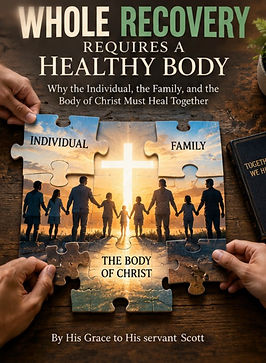
One of the greatest mistakes we can make in alcohol and drug recovery is believing the addict is the only person who needs to change. Addiction may be carried in one person’s body, but its damage travels through relationships. Trust gets broken, communication becomes distorted, boundaries disappear, resentment grows, and families gradually learn unhealthy ways of surviving. That is why we have repeatedly seen at Breaking Free that when the family becomes involved and begins getting healthy, the person struggling with addiction has a much greater opportunity for lasting recovery. We are not blaming the family for the addiction. We are recognizing that God designed healing to happen in relationship.
God said from the beginning, “It is not good for the man to be alone” (Genesis 2:18). Isolation has always been dangerous territory for the addict. Addiction thrives in secrecy, shame, disconnection, and independence. Recovery moves in the opposite direction. It brings things into the light, restores relationships, teaches honesty, develops trust, and reconnects people. An addict can stop using drugs and still remain relationally sick. He may be sober but controlling, clean but dishonest, abstinent but isolated, or drug-free while still unable to receive correction, express emotions, establish boundaries, or love another person properly. Sobriety is necessary, but sobriety alone is not wholeness.
This is why family involvement can become so important. When one person changes while everyone else continues functioning exactly as before, tremendous pressure develops. But when the family begins learning healthy communication, appropriate boundaries, forgiveness, responsibility, and how to stop enabling destructive behavior, the entire environment begins changing. “Bear one another’s burdens, and thereby fulfill the law of Christ” (Galatians 6:2). Recovery becomes something the family participates in rather than something they stand outside and watch.
But what happens when the biological family cannot provide what is needed? What about the man whose father abandoned him? What about the woman who never experienced healthy parental love? What about someone whose family remains trapped in addiction, dysfunction, abuse, or complete separation? This is where we begin to understand one of God’s great purposes for the Body of Christ.
Christ never designed His church to be a building people visit once a week. Scripture says, “Now you are Christ’s body, and individually members of it” (1 Corinthians 12:27). Christ is the Head, and every member has a function. “But now God has arranged the members, each one of them in the body, just as He desired” (1 Corinthians 12:18). When that Body is functioning correctly under Christ, something remarkable happens: God can begin supplying relationally what has been missing in someone’s life.
A man who never had a healthy father may encounter a mature spiritual father. Someone who never experienced brotherhood can learn it through healthy Christian men. A person who resisted every form of authority can experience leadership that corrects without controlling. Another person may finally encounter someone who listens without manipulating, loves without enabling, confronts without rejecting, and stays when things become difficult. Mentors, pastors, sponsors, brothers, sisters, mothers, fathers, and mature believers can each supply something different. No single person has to become everything because God created a Body.
Ephesians describes “the whole body, being fitted and held together by what every joint supplies” (Ephesians 4:16). Notice those words: EVERY JOINT SUPPLIES. This is enormous for recovery. Addiction leaves missing pieces. Some were damaged through addiction; others were missing long before the first drink or drug. God can use His people to help relationally develop those areas. The recovering addict begins learning things he may never have learned at home: trust, submission, boundaries, responsibility, healthy affection, conflict resolution, serving, receiving correction, keeping commitments, and loving people without using them.
That is holistic recovery. We are not simply trying to remove alcohol, cocaine, methamphetamine, opioids, marijuana, or another substance. We are asking Christ to restore the whole person. “Therefore if anyone is in Christ, this person is a new creation; the old things passed away; behold, new things have come” (2 Corinthians 5:17). God is rebuilding the spiritual, emotional, relational, mental, and practical areas of life.
The goal is not merely a sober individual. The goal is a transformed person learning to live within healthy relationships. Whenever possible, we want a healing individual connected to a healing family, surrounded by a healthy Body, with Jesus Christ governing all of it as the Head.
You were never created to recover alone. God created a Body because every part needs the others. Allow Christ to place healthy people around you. Let them love you, confront you, teach you, walk with you, and help develop what addiction stole or life never gave you. Recovery becomes stronger when the individual gets healthy. It becomes stronger when the family gets healthy. And it becomes something beautiful when both are planted inside a healthy Body of Christ where every joint supplies what God designed it to supply.
Whole recovery requires a healthy body—and Christ must always be the Head.
By His Grace to His servant Scott
Recent Devotionals

La Recuperación Integral Requiere Un Cuerpo Saludable
Por Qué el Individuo, la Familia y el Cuerpo de Cristo Deben Sanar Juntos
Uno de los mayores errores que podemos cometer en la recuperación del alcoholismo y la drogadicción es creer que el adicto es la única persona que necesita cambiar. La adicción puede estar presente en el cuerpo de una persona, pero su daño se extiende a través de las relaciones. La confianza se rompe, la comunicación se distorsiona, los límites desaparecen, el resentimiento crece y las familias gradualmente aprenden maneras poco saludables de sobrevivir. Por eso hemos visto repetidamente en Breaking Free que cuando la familia se involucra y comienza a sanar, la persona que lucha contra la adicción tiene una oportunidad mucho mayor de alcanzar una recuperación duradera. No estamos culpando a la familia por la adicción. Estamos reconociendo que Dios diseñó la sanidad para ocurrir dentro de las relaciones.
Dios dijo desde el principio: “No es bueno que el hombre esté solo” (Génesis 2:18). El aislamiento siempre ha sido un territorio peligroso para el adicto. La adicción prospera en el secreto, la vergüenza, la desconexión y la independencia. La recuperación avanza en la dirección opuesta. Saca las cosas a la luz, restaura relaciones, enseña honestidad, desarrolla confianza y vuelve a conectar a las personas. Un adicto puede dejar de consumir drogas y aun permanecer enfermo en sus relaciones. Puede estar sobrio pero ser controlador, limpio pero deshonesto, abstinente pero aislado, o libre de drogas mientras todavía es incapaz de recibir corrección, expresar emociones, establecer límites o amar correctamente a otra persona. La sobriedad es necesaria, pero la sobriedad por sí sola no es integridad.
Por eso la participación de la familia puede llegar a ser tan importante. Cuando una persona cambia mientras todos los demás continúan funcionando exactamente como antes, se desarrolla una enorme presión. Pero cuando la familia comienza a aprender comunicación saludable, límites apropiados, perdón, responsabilidad y cómo dejar de facilitar comportamientos destructivos, todo el ambiente comienza a cambiar. “Lleven los unos las cargas de los otros, y cumplan así la ley de Cristo” (Gálatas 6:2). La recuperación se convierte en algo en lo que la familia participa, en lugar de algo que observa desde afuera.
Pero ¿qué sucede cuando la familia biológica no puede proporcionar lo que se necesita? ¿Qué pasa con el hombre cuyo padre lo abandonó? ¿Qué pasa con la mujer que nunca experimentó un amor paternal o maternal saludable? ¿Qué pasa con alguien cuya familia permanece atrapada en la adicción, la disfunción, el abuso o la separación completa? Aquí comenzamos a comprender uno de los grandes propósitos de Dios para el Cuerpo de Cristo.
Cristo nunca diseñó Su iglesia simplemente como un edificio que las personas visitan una vez por semana. La Escritura dice: “Ahora bien, ustedes son el cuerpo de Cristo, y cada uno individualmente un miembro de él” (1 Corintios 12:27). Cristo es la Cabeza, y cada miembro tiene una función. “Ahora bien, Dios ha colocado a cada uno de los miembros en el cuerpo según le agradó” (1 Corintios 12:18). Cuando ese Cuerpo funciona correctamente bajo Cristo, sucede algo extraordinario: Dios puede comenzar a suplir relacionalmente aquello que ha estado ausente en la vida de una persona.
Un hombre que nunca tuvo un padre saludable puede encontrar un padre espiritual maduro. Alguien que nunca experimentó hermandad puede aprenderla a través de hombres cristianos saludables. Una persona que rechazó toda forma de autoridad puede experimentar un liderazgo que corrige sin controlar. Otra persona puede finalmente encontrar a alguien que escucha sin manipular, ama sin facilitar el pecado, confronta sin rechazar y permanece cuando las cosas se ponen difíciles. Mentores, pastores, padrinos, hermanos, hermanas, madres, padres y creyentes maduros pueden aportar algo diferente. Ninguna persona tiene que convertirse en todo para alguien, porque Dios creó un Cuerpo.
Efesios describe “todo el cuerpo, estando bien ajustado y unido por la cohesión que las coyunturas proveen” (Efesios 4:16). Observa esas palabras: CADA COYUNTURA PROVEE. Esto es enorme para la recuperación. La adicción deja piezas faltantes. Algunas fueron dañadas por la adicción; otras faltaban mucho antes de la primera bebida o la primera droga. Dios puede utilizar a Su pueblo para ayudar a desarrollar relacionalmente esas áreas. El adicto en recuperación comienza a aprender cosas que quizás nunca aprendió en casa: confianza, sumisión, límites, responsabilidad, afecto saludable, resolución de conflictos, servir, recibir corrección, cumplir compromisos y amar a las personas sin utilizarlas.
Eso es recuperación integral. No estamos simplemente tratando de eliminar el alcohol, la cocaína, la metanfetamina, los opioides, la marihuana u otra sustancia. Estamos pidiendo a Cristo que restaure a la persona completa. “De modo que si alguno está en Cristo, nueva criatura es; las cosas viejas pasaron; ahora han sido hechas nuevas” (2 Corintios 5:17). Dios está reconstruyendo las áreas espirituales, emocionales, relacionales, mentales y prácticas de la vida.
La meta no es simplemente un individuo sobrio. La meta es una persona transformada que está aprendiendo a vivir dentro de relaciones saludables. Siempre que sea posible, queremos a un individuo que está sanando conectado con una familia que está sanando, rodeado por un Cuerpo saludable, con Jesucristo gobernándolo todo como la Cabeza.
No fuiste creado para recuperarte solo. Dios creó un Cuerpo porque cada parte necesita de las demás. Permite que Cristo coloque personas saludables a tu alrededor. Permíteles amarte, confrontarte, enseñarte, caminar contigo y ayudarte a desarrollar aquello que la adicción te robó o que la vida nunca te dio. La recuperación se fortalece cuando el individuo sana. Se fortalece cuando la familia sana. Y se convierte en algo hermoso cuando ambos son plantados dentro de un Cuerpo de Cristo saludable, donde cada coyuntura aporta aquello que Dios diseñó que aportara.
La recuperación integral requiere un cuerpo saludable, y Cristo siempre debe ser la Cabeza.
Por Su Gracia a Su siervo Scott
完整的康复需要一个健康的身体
为什么个人、家庭和基督的身体必须一起得到医治
在酒精和毒品成瘾康复中,我们可能犯的最大错误之一,就是认为只有成瘾者本人需要改变。成瘾也许发生在一个人的身体里,但它所造成的伤害却会蔓延到各种关系之中。信任被破坏,沟通变得扭曲,界限逐渐消失,怨恨不断增加,整个家庭也会慢慢学会用不健康的方式来生存。这就是为什么在 Breaking Free,我们一次又一次看到:当家人参与进来,并且他们自己也开始变得健康时,那个正在与成瘾争战的人,就有更大的机会获得持久的康复。我们不是把成瘾的责任归咎于家庭,而是在承认一个事实:神设计我们,让医治发生在关系之中。
从起初神就说:“那人独居不好。”(创世记 2:18)孤立对成瘾者来说,一直都是危险的地方。成瘾在秘密、羞耻、隔绝和自我依赖中滋长,而康复却朝着完全相反的方向前进。康复把隐藏的事情带到光中,恢复关系,教导诚实,建立信任,使人与人重新连接。一个成瘾者可以停止吸毒,却仍然在人际关系上处于病态之中。他可能戒酒了,却仍然喜欢控制别人;不再吸毒了,却仍然不诚实;保持戒断,却仍然把自己孤立起来;甚至已经远离毒品,却仍然无法接受纠正、表达情绪、建立健康界限,或正确地去爱别人。保持清醒是必要的,但仅仅保持清醒并不等于完整。
这就是为什么家庭的参与如此重要。当一个人正在改变,而其他家庭成员仍然完全按照过去的方式生活时,就会产生巨大的压力。但当整个家庭开始学习健康的沟通、适当的界限、饶恕、承担责任,并学习如何停止纵容破坏性的行为时,整个家庭环境就开始改变。“你们各人的重担要互相担当,如此,就完全了基督的律法。”(加拉太书 6:2)康复不再只是家人站在外面观看一个人成长,而成为整个家庭共同参与的过程。
但是,如果亲生家庭无法提供一个人所需要的东西,又该怎么办?那个被父亲遗弃的男人怎么办?那个从来没有经历过健康父爱或母爱的女人怎么办?如果一个人的家庭仍然陷在成瘾、功能失调、虐待或完全破裂的关系中,又该怎么办?正是在这里,我们开始明白神设立基督身体的一个伟大目的。
基督从来没有把祂的教会设计成一栋让人每周去一次的建筑物。圣经说:“你们就是基督的身子,并且各自作肢体。”(哥林多前书 12:27)基督是头,每一个肢体都有自己的功用。“但如今,神随自己的意思把肢体俱各安排在身上了。”(哥林多前书 12:18)当这个身体在基督的带领下正确地运作时,一件奇妙的事情就会发生:神能够开始透过关系,供应一个人生命中长期缺失的部分。
一个从未拥有健康父亲的男人,可以遇到一位成熟的属灵父亲。一个从未经历真正弟兄情谊的人,可以透过成熟的基督徒弟兄学习什么是健康的弟兄关系。一个一直抗拒权柄的人,可以经历一种会纠正他、却不会控制他的健康领导。另一个人也许终于能够遇见这样的人:倾听他却不操纵他,爱他却不纵容他,指出他的错误却不拒绝他,并且在困难的时候仍然陪伴他。导师、牧者、辅导者、弟兄、姐妹、属灵父亲、属灵母亲以及成熟的信徒,每一个人都能够供应不同的部分。没有任何一个人必须成为另一个人的全部,因为神创造的是一个身体。
以弗所书描述“全身都靠祂联络得合式,百节各按各职”(以弗所书 4:16)。请注意这个真理:每一个连接的部分都在供应。 这对于戒瘾康复极其重要。成瘾会在生命中留下许多缺失的部分。有些是被成瘾破坏的,而另一些甚至在第一次喝酒或第一次吸毒之前就已经缺失了。神能够使用祂的百姓,透过健康的关系帮助一个人重新发展这些领域。康复中的成瘾者开始学习一些他可能从未在家里学过的东西:信任、顺服、界限、责任、健康的情感表达、解决冲突、服事别人、接受纠正、信守承诺,以及爱别人而不是利用别人。
这才是完整的、全人的康复。我们的目标不仅仅是除掉酒精、可卡因、冰毒、阿片类药物、大麻或其他物质。我们是在邀请基督恢复整个人。“若有人在基督里,他就是新造的人,旧事已过,看哪,都变成新的了。”(哥林多后书 5:17)神正在重建一个人生命中属灵、情感、人际关系、思想以及实际生活的每一个领域。
我们的目标不仅仅是一个保持清醒的人。我们的目标是一个被改变的人,正在学习如何活在健康的关系之中。只要条件允许,我们希望看到一个正在得到医治的人,与一个正在得到医治的家庭连接,又被一个健康的基督身体所围绕,并且让耶稣基督作为元首管理这一切。
你从来都不是被创造来独自康复的。神创造了一个身体,因为每一个部分都需要其他部分。让基督把健康的人放在你的生命周围。让他们爱你、纠正你、教导你、与你同行,并帮助你重新发展那些被成瘾夺走的,或者你过去生命中从未得到过的东西。当个人变得健康时,康复就会更加坚固;当家庭变得健康时,康复会更加坚固;而当个人和家庭一起扎根在一个健康的基督身体中,让每一个肢体都供应神所设计它供应的部分时,康复就会成为一幅美丽的生命图画。
完整的康复需要一个健康的身体——而基督必须永远是头。
因祂的恩典,献给祂的仆人 Scott