March 13
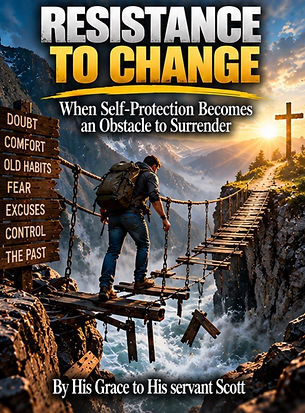
Resistance To Change
When Self-Protection Becomes an Obstacle to Surrender

One of the most dangerous things about resistance is that it rarely announces itself. It does not always sound like rebellion against God. Sometimes it sounds reasonable, responsible, or even spiritual. “I need more time.” “I’m still working through it.” “God knows my heart.” “I’m just not ready.” We can spend years explaining why we cannot change while convincing ourselves that our explanations are wisdom. In addiction recovery, resistance is not always refusing to do what is right. Sometimes it is finding acceptable reasons to keep doing what is wrong. And as we enter Step Six, God begins confronting the things we have learned to protect.
Through our Life Portrait in Step Four, we examined the patterns beneath our drinking and drugging. Step Five brought those discoveries into the light through confession. We identified dishonesty, resentment, manipulation, selfishness, fear, control, pride, and destructive behaviors that followed us through addiction. Now Step Six asks whether we are entirely ready to have God remove these defects of character. But here is where we discover something uncomfortable: We can admit something is wrong without being willing to give it up.
Jesus told His disciples, “Keep watching and praying, so that you do not come into temptation; the spirit is willing, but the flesh is weak” (Matthew 26:41). That describes a struggle many of us know well. Part of us wants to change, while another part still wants the comfort of familiar behaviors. We want healthy relationships but resist honesty. We want peace but protect resentment. We want freedom but insist on control. We want God’s direction while keeping the final decision for ourselves.
Some resistance developed long before we ever picked up alcohol or drugs. Perhaps anger helped us avoid feeling powerless. Lying protected us from consequences. Manipulation helped us get attention or approval. Isolation kept us from experiencing rejection. Control made unpredictable situations feel manageable. These behaviors may have begun as attempts to protect ourselves, but over time they became destructive patterns. What once helped us survive may now be preventing us from learning how to live.
Proverbs 14:12 warns, “There is a way which seems right to a person, but its end is the way of death.” Something can feel familiar, reasonable, and safe while leading us toward destruction. That was true of our addiction, and it can remain true of our character defects. We must stop assuming that because a behavior feels natural, it must be necessary.
One of the most subtle forms of resistance is selective surrender. We tell God, “You can have my drinking, my drug use, and my dishonesty, but don’t touch my anger. Don’t ask me to forgive that person. Don’t challenge my need to control. Don’t interfere with the way I protect myself.” We may surrender the things that have become painful while holding tightly to the things that still seem useful. But partial surrender can become another way of remaining in control.
Elijah confronted Israel with a question: “How long are you going to struggle with the two choices? If the LORD is God, follow Him” (1 Kings 18:21). Step Six brings that same question into our hearts. Are we willing to follow God even when His direction threatens the behaviors we have depended upon? God is not demanding instant perfection. He is asking for honest willingness rather than endless negotiation.
Resistance is often strengthened by fear of loss. We wonder what will happen if we stop controlling people, expressing anger, manipulating situations, or hiding behind excuses. Who will protect us? How will we get our needs met? What if people take advantage of us? Jesus said, “Whoever loses his life for My sake will find it” (Matthew 16:25). What we are afraid to surrender may be the very thing standing between us and the life Christ wants to give us.
Another form of resistance is endless analysis. We can become experts at explaining our behavior without ever changing it. We know our family history, childhood wounds, emotional triggers, addictive patterns, and reasons for reacting the way we do. Understanding these things matters. But understanding must eventually lead to responsibility and obedience. James wrote, “But prove yourselves doers of the word, and not just hearers who deceive themselves” (James 1:22). Insight without obedience can become another hiding place.
We can even use our Life Portrait to defend ourselves rather than surrender. “I act this way because of my childhood.” “I manipulate because I’ve been betrayed.” “I get angry because nobody listens.” These statements may contain genuine explanations, but explanations are not permission to continue destructive behavior. God wants to heal what happened to us while also changing what has been coming out of us.
This morning, ask yourself: Where am I still resisting God while telling myself I am surrendering? What have I repeatedly postponed? What behavior do I continue defending? What am I afraid will happen if I let it go? Do not answer with what sounds spiritual. Answer with what is true.
Step Six does not require us to pretend resistance is absent. It invites us to bring that resistance into God’s presence. We can pray, “Lord, I know this needs to change, but part of me still wants to keep it. Show me what I am protecting. Help me become willing to surrender what I cannot change on my own.”
Resistance loses its hidden power when we stop defending it and begin confessing it. God already knows where we struggle. He is not waiting for a perfect performance. He is calling us into honest surrender.
We came into recovery because alcohol and drugs were destroying our lives. Now we must recognize that some of the attitudes and behaviors we still protect can continue that destruction even in sobriety. The question is no longer simply, “Do I know what needs to change?” The question is, “Am I willing to stop resisting the God who wants to change me?” Freedom begins when our excuses end and surrender becomes more important than self-protection.
By His Grace to His servant Scott
Recent Devotionals
Resistencia Al Cambio
Cuando la autoprotección se convierte en un obstáculo para la entrega
Una de las cosas más peligrosas de la resistencia es que rara vez se anuncia. No siempre parece una rebelión contra Dios. A veces suena razonable, responsable o incluso espiritual. “Necesito más tiempo”. “Todavía estoy trabajando en eso”. “Dios conoce mi corazón”. “Simplemente no estoy preparado”. Podemos pasar años explicando por qué no podemos cambiar, mientras nos convencemos de que nuestras explicaciones son sabiduría. En la recuperación de la adicción, resistirse no siempre significa negarse a hacer lo correcto. A veces significa encontrar razones aceptables para seguir haciendo lo incorrecto. Y al entrar en el Paso Seis, Dios comienza a confrontar las cosas que hemos aprendido a proteger.
A través de nuestro Retrato de Vida en el Paso Cuatro, examinamos los patrones que estaban detrás de nuestro consumo de alcohol y drogas. El Paso Cinco llevó esos descubrimientos a la luz mediante la confesión. Identificamos la deshonestidad, el resentimiento, la manipulación, el egoísmo, el temor, el control, el orgullo y las conductas destructivas que nos acompañaron durante nuestra adicción. Ahora el Paso Seis pregunta si estamos completamente dispuestos a permitir que Dios elimine estos defectos de carácter. Pero aquí descubrimos algo incómodo: podemos admitir que algo está mal sin estar dispuestos a abandonarlo.
Jesús les dijo a Sus discípulos: “Velen y oren para que no entren en tentación; el espíritu está dispuesto, pero la carne es débil” (Mateo 26:41). Esto describe una lucha que muchos conocemos muy bien. Una parte de nosotros quiere cambiar, mientras otra todavía desea la comodidad de las conductas familiares. Queremos relaciones saludables, pero nos resistimos a la honestidad. Queremos paz, pero protegemos el resentimiento. Queremos libertad, pero insistimos en mantener el control. Queremos la dirección de Dios, pero nos reservamos la decisión final.
Parte de nuestra resistencia se desarrolló mucho antes de que comenzáramos a consumir alcohol o drogas. Tal vez la ira nos ayudaba a evitar sentirnos impotentes. Mentir nos protegía de las consecuencias. La manipulación nos ayudaba a conseguir atención o aprobación. El aislamiento nos impedía experimentar el rechazo. El control hacía que las situaciones impredecibles parecieran manejables. Estas conductas pudieron comenzar como intentos de protegernos, pero con el tiempo se convirtieron en patrones destructivos. Aquello que alguna vez nos ayudó a sobrevivir puede estar impidiéndonos aprender a vivir.
Proverbios 14:12 advierte: “Hay camino que al hombre le parece derecho, pero al final es camino de muerte”. Algo puede parecernos familiar, razonable y seguro mientras nos conduce hacia la destrucción. Esto fue cierto durante nuestra adicción, y puede seguir siendo cierto con nuestros defectos de carácter. Debemos dejar de suponer que, porque una conducta nos parece natural, necesariamente la necesitamos.
Una de las formas más sutiles de resistencia es la entrega selectiva. Le decimos a Dios: “Puedes llevarte mi manera de beber, mi consumo de drogas y mi deshonestidad, pero no toques mi ira. No me pidas que perdone a esa persona. No cuestiones mi necesidad de controlar. No interfieras con la manera en que me protejo”. Podemos entregar las cosas que se han vuelto dolorosas mientras nos aferramos a aquellas que todavía parecen útiles. Pero la entrega parcial puede convertirse en otra manera de mantener el control.
Elías confrontó a Israel con una pregunta: “¿Hasta cuándo vacilarán entre dos opiniones? Si el SEÑOR es Dios, síganlo” (1 Reyes 18:21). El Paso Seis trae esa misma pregunta a nuestro corazón. ¿Estamos dispuestos a seguir a Dios incluso cuando Su dirección amenaza las conductas de las que hemos dependido? Dios no está exigiendo perfección inmediata. Está pidiendo una disposición honesta en lugar de negociaciones interminables.
La resistencia muchas veces se fortalece por el temor a perder algo. Nos preguntamos qué sucederá si dejamos de controlar a las personas, expresar nuestra ira, manipular situaciones o escondernos detrás de excusas. ¿Quién nos protegerá? ¿Cómo conseguiremos satisfacer nuestras necesidades? ¿Y si otros se aprovechan de nosotros? Jesús dijo: “El que pierda su vida por causa de Mí, la hallará” (Mateo 16:25). Aquello que tememos entregar puede ser precisamente lo que se interpone entre nosotros y la vida que Cristo quiere darnos.
Otra forma de resistencia es el análisis interminable. Podemos convertirnos en expertos en explicar nuestra conducta sin llegar nunca a cambiarla. Conocemos nuestra historia familiar, las heridas de la infancia, nuestros desencadenantes emocionales, los patrones adictivos y las razones por las que reaccionamos de cierta manera. Comprender estas cosas es importante. Pero el entendimiento debe conducir finalmente a la responsabilidad y la obediencia. Santiago escribió: “Sean hacedores de la palabra y no solamente oidores que se engañan a sí mismos” (Santiago 1:22). El conocimiento sin obediencia puede convertirse en otro escondite.
Incluso podemos utilizar nuestro Retrato de Vida para defendernos en lugar de rendirnos. “Actúo así por mi infancia”. “Manipulo porque me han traicionado”. “Me enojo porque nadie me escucha”. Estas afirmaciones pueden contener explicaciones verdaderas, pero las explicaciones no nos dan permiso para continuar con conductas destructivas. Dios quiere sanar lo que nos sucedió y también cambiar aquello que ha estado saliendo de nosotros.
Esta mañana, pregúntate: ¿En qué áreas sigo resistiéndome a Dios mientras me digo a mí mismo que estoy rendido a Él? ¿Qué he pospuesto repetidamente? ¿Qué conducta sigo defendiendo? ¿Qué temo que suceda si la abandono? No respondas con lo que suena espiritual. Responde con lo que es verdad.
El Paso Seis no requiere que finjamos que no existe resistencia. Nos invita a llevar esa resistencia a la presencia de Dios. Podemos orar: “Señor, sé que esto necesita cambiar, pero una parte de mí todavía quiere conservarlo. Muéstrame lo que estoy protegiendo. Ayúdame a estar dispuesto a entregar aquello que no puedo cambiar por mis propias fuerzas”.
La resistencia pierde su poder oculto cuando dejamos de defenderla y comenzamos a confesarla. Dios ya conoce nuestras luchas. Él no está esperando una actuación perfecta. Nos está llamando a una entrega honesta.
Llegamos a la recuperación porque el alcohol y las drogas estaban destruyendo nuestras vidas. Ahora debemos reconocer que algunas de las actitudes y conductas que todavía protegemos pueden continuar causando esa destrucción, incluso estando sobrios. La pregunta ya no es simplemente: “¿Sé lo que necesita cambiar?”. La pregunta es: “¿Estoy dispuesto a dejar de resistirme al Dios que quiere cambiarme?”. La libertad comienza cuando terminan nuestras excusas y la entrega se vuelve más importante que la autoprotección.
Por Su Gracia a Su siervo Scott
抗拒改变
当自我保护成为降服的障碍
抗拒改变最危险的地方之一,就是它很少会明显地表现出来。它不一定看起来像是在悖逆神。有时候,它听起来甚至很合理、很负责任,或者很属灵。“我还需要一点时间。”“我还在处理这个问题。”“神知道我的心。”“我只是还没有准备好。”我们可能花了多年时间解释自己为什么无法改变,同时不断说服自己,认为这些解释就是智慧。**在成瘾康复中,抗拒并不总是直接拒绝做正确的事。有时候,它是为继续做错误的事寻找听起来可以接受的理由。**当我们进入第六步时,神开始面对那些我们已经习惯保护的东西。
在第四步中,我们透过“生命画像”省察了隐藏在喝酒和吸毒行为背后的各种模式。第五步则借着认罪,把这些发现带进光中。我们认出了不诚实、怨恨、操纵、自私、恐惧、控制欲、骄傲,以及那些在成瘾过程中一直伴随着我们的破坏性行为。现在,第六步问我们是否已经完全愿意,让神除去这些性格上的缺陷。但就在这里,我们发现了一个令人不安的事实:我们可以承认某件事是错误的,却仍然不愿意放弃它。
耶稣对门徒说:“总要警醒祷告,免得入了迷惑;你们心灵固然愿意,肉体却软弱了。”(马太福音 26:41)这正描述了我们许多人非常熟悉的内心挣扎。我们里面有一部分渴望改变,另一部分却仍然贪恋熟悉行为所带来的安慰。我们想要健康的关系,却抗拒诚实;想要平安,却保护怨恨;想要自由,却坚持控制;想要神的带领,却仍然把最后的决定权留给自己。
有些抗拒早在我们开始喝酒或吸毒之前就已经形成。也许愤怒帮助我们避免感到无助;说谎保护我们免于承担后果;操纵帮助我们得到关注或认可;孤立使我们不必面对被拒绝的痛苦;控制让无法预测的环境显得比较容易应付。这些行为最初可能是为了保护自己,但随着时间过去,它们逐渐变成破坏性的模式。那些曾经帮助我们生存的方式,如今可能正在阻碍我们学习如何真正生活。
箴言 14:12 警告我们:“有一条路,人以为正,至终成为死亡之路。”有些事情虽然让我们觉得熟悉、合理、安全,却可能正在把我们带向毁灭。过去我们的成瘾就是如此,而今天我们的性格缺陷也可能如此。我们必须停止认为,只因为某种行为让我们觉得自然,就代表我们一定需要它。
抗拒最隐蔽的表现之一,就是选择性降服。我们对神说:“祢可以拿走我的酗酒、吸毒和不诚实,但不要碰我的愤怒。不要要求我饶恕那个人。不要挑战我控制别人的需要。不要干涉我保护自己的方式。”我们可能愿意交出那些已经让自己痛苦的东西,却紧紧抓住那些仍然看起来有用的行为。但是,部分降服也可能成为我们继续掌控一切的另一种方式。
以利亚曾向以色列人提出一个问题:“你们心持两意要到几时呢?若耶和华是神,就当顺从耶和华。”(列王纪上 18:21)第六步也把同样的问题带到我们心里。当神的带领威胁到我们长期依赖的行为时,我们是否仍然愿意跟随祂?神并没有要求我们立刻达到完美。祂所要的是诚实的愿意,而不是无休止地讨价还价。
抗拒常常因为害怕失去某些东西而变得更加强烈。我们会想,如果不再控制别人、不再发泄愤怒、不再操纵局面,或者不再躲在借口后面,会发生什么?谁来保护我们?我们的需要该怎样得到满足?如果别人利用我们的软弱怎么办?耶稣说:“凡为我丧掉生命的,必得着生命。”(马太福音 16:25)那些我们最害怕交出去的东西,可能正是阻挡我们进入基督所赐新生命的障碍。
另一种抗拒,就是无休止地分析自己。我们可能变得非常擅长解释自己的行为,却始终没有真正改变。我们了解自己的家庭背景、童年创伤、情绪触发因素、成瘾模式,以及为什么会产生某些反应。理解这些事情确实重要,但理解最终必须带领我们进入责任与顺服。雅各写道:“只是你们要行道,不要单单听道,自己欺哄自己。”(雅各书 1:22)只有认识却没有顺服,也可能成为另一个隐藏自己的地方。
我们甚至可能利用自己的“生命画像”为自己辩护,而不是向神降服。“我这样做是因为我的童年。”“我操纵别人是因为我曾经被背叛。”“我发怒是因为没有人愿意听我说话。”这些话可能包含真实的解释,但解释并不代表我们有权继续做出破坏性的行为。神既要医治那些发生在我们身上的伤害,也要改变那些后来从我们里面表现出来的错误行为。
今天早晨,请问自己:**我在哪些方面仍然抗拒神,却告诉自己已经向祂降服了?**我一再拖延的是什么?我还在为哪一种行为辩护?如果放弃它,我究竟害怕会发生什么?不要用听起来很属灵的话来回答,而要用真实的答案面对自己。
第六步并不要求我们假装内心没有抗拒。它邀请我们把抗拒诚实地带到神面前。我们可以这样祷告:“主啊,我知道这件事需要改变,但我里面仍然有一部分想要保留它。求祢让我看见自己正在保护什么。帮助我愿意交出那些我无法靠自己改变的东西。”
当我们停止为抗拒辩护,开始诚实地承认它时,抗拒就失去了隐藏的力量。神早已知道我们在哪些地方挣扎。祂并不是等待我们表现得完美无缺,而是在呼召我们真实地降服。
我们进入康复,是因为酒精和毒品正在摧毁我们的生命。如今,我们必须认识到,即使已经戒酒戒毒,那些我们仍然保护的态度和行为,也可能继续造成同样的破坏。现在的问题不再只是:“我知道自己需要改变什么吗?”而是:“我是否愿意停止抗拒那位想要改变我的神?”当我们的借口结束,当降服变得比自我保护更加重要时,真正的自由就开始了。
因祂的恩典,赐给祂的仆人 Scott