April 26
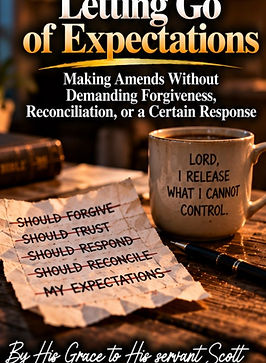
Letting Go of Expectations
Making Amends Without Demanding Forgiveness, Reconciliation, or a Certain Response
Recovery from alcohol and drug addiction teaches us that doing right does not guarantee getting what we want. We may admit the lies and broken promises that wounded our families. We may approach someone with remorse and encounter silence or anger. Step Nine calls us to make direct amends wherever possible, except when doing so would injure others. It does not promise the response we hope for. David wrote, “Commit your way to the LORD, Trust also in Him, and He will do it” (Psalm 37:5). Obedience belongs to us; another person’s response does not.
During addiction, expectations became a hidden form of manipulation. We apologized expecting another chance or promised sobriety expecting trust. When people refused, we accused them of being unforgiving. But an amends conversation is not a transaction. An apology does not buy access to someone’s life. Recovery does not entitle us to reconciliation. Jeremiah 17:7 says, “Blessed is the man who trusts in the LORD And whose trust is the LORD.” Our hope must rest in God, not in the response we imagine receiving.
Picture a mother who spent years choosing drugs over her children. Now sober, she writes her daughter, owning missed birthdays, frightening nights, and broken promises. She waits for a call that never comes. The old thinking whispers, “After everything I’ve done to change, she should at least answer.” But silence is not a debt to collect. The mother can honor her daughter by respecting the silence and continuing to live differently.
Expectations often hide inside good intentions. We say we want to make things right, but secretly want forgiveness, reassurance, or relief from guilt. These desires can turn amends into control. Love gives others room to feel what they feel. Scripture says, “Now the Lord is the Spirit, and where the Spirit of the Lord is, there is freedom” (2 Corinthians 3:17). Genuine love does not corner a wounded person into giving the answer we need.
Releasing expectations does not mean refusing responsibility. If we owe money, we should pursue appropriate repayment. If we repeatedly lied, we must practice honesty when nobody applauds. Forgiveness may come without restored trust. We must honor requests for no contact. Making amends must never create another injury.
Control can grow louder at night. We replay conversations and imagine the response that might bring relief. Psalm 4:8 says, “In peace I will both lie down and sleep, For You alone, LORD, have me dwell in safety.” Peace is possible before reconciliation happens.
Humility asks a difficult question: Would I still do what is right if nobody thanked me? Jesus praised the “good and faithful slave” (Matthew 25:21), not the servant who managed everyone else’s reaction. Faithfulness is measured by obedience, not applause. James 4:10 says, “Humble yourselves in the presence of the Lord, and He will exalt you.” Another person’s healing may move at a pace we cannot understand.
Tonight write down the expectations you have attached to your amends: “They should forgive me.” “They should trust me now.” “They should see how much I’ve changed.” Bring each one before God. Ask Him to replace demands with compassion, resentment with patience, and fear with trust. Keep doing the next right thing each day, even if the relationship remains unresolved.
Step Nine is not about getting our lives back on our terms. It is about making things right without making someone else’s response the price of our obedience. Through Christ, we can release the outcome, respect the wounded person’s freedom, and continue walking in integrity. Our future no longer has to be ruled by control.
By His Grace to His servant Scott
Recent Devotionals

Dejando Ir las Expectativas
Reparando el Daño Sin Exigir Perdón, Reconciliación ni una Respuesta Determinada
La recuperación de la adicción al alcohol y las drogas nos enseña que hacer lo correcto no garantiza obtener lo que deseamos. Podemos reconocer las mentiras y las promesas incumplidas que lastimaron a nuestras familias. Podemos acercarnos a alguien con verdadero arrepentimiento y encontrarnos con silencio o enojo. El Noveno Paso nos llama a reparar directamente el daño siempre que sea posible, excepto cuando hacerlo pudiera perjudicar a otras personas. No nos promete la respuesta que esperamos. David escribió: “Encomienda al SEÑOR tu camino, confía en Él, que Él actuará” (Salmo 37:5). La obediencia es nuestra responsabilidad; la respuesta de otra persona no lo es.
Durante la adicción, las expectativas se convirtieron en una forma oculta de manipulación. Pedíamos disculpas esperando otra oportunidad o prometíamos mantenernos sobrios esperando recuperar la confianza. Cuando las personas se negaban, las acusábamos de no querer perdonarnos. Pero una conversación para reparar el daño no es una transacción. Una disculpa no compra el derecho de volver a formar parte de la vida de alguien. La recuperación no nos da derecho a exigir reconciliación. Jeremías 17:7 dice: “Bendito es el hombre que confía en el SEÑOR, cuya confianza es el SEÑOR”. Nuestra esperanza debe descansar en Dios, no en la respuesta que imaginamos recibir.
Imagina a una madre que durante años escogió las drogas por encima de sus hijos. Ahora, viviendo en sobriedad, escribe una carta a su hija, reconociendo los cumpleaños a los que faltó, las noches llenas de temor y las promesas que rompió. Espera una llamada que nunca llega. Los viejos pensamientos le susurran: “Después de todo lo que he hecho para cambiar, por lo menos debería contestarme”. Pero el silencio no es una deuda que podamos cobrar. La madre puede honrar a su hija respetando su silencio y continuando viviendo de una manera diferente.
Las expectativas frecuentemente se esconden detrás de las buenas intenciones. Decimos que queremos reparar el daño, pero secretamente deseamos recibir perdón, palabras de tranquilidad o alivio de nuestra culpa. Estos deseos pueden convertir la reparación en otra forma de control. El amor permite que los demás tengan libertad para sentir lo que realmente sienten. La Escritura dice: “Ahora bien, el Señor es el Espíritu; y donde está el Espíritu del Señor, hay libertad” (2 Corintios 3:17). El amor genuino no acorrala a una persona herida para obligarla a darnos la respuesta que necesitamos.
Dejar ir las expectativas no significa abandonar nuestra responsabilidad. Si debemos dinero, debemos procurar una restitución apropiada. Si mentimos repetidamente, debemos practicar la honestidad incluso cuando nadie nos felicite. El perdón puede llegar sin que la confianza sea restaurada. Debemos respetar las peticiones de no establecer contacto. Nuestros intentos de reparar el daño nunca deben convertirse en una nueva herida.
El deseo de controlar puede intensificarse durante la noche. Repetimos mentalmente las conversaciones e imaginamos la respuesta que finalmente podría traernos alivio. Salmo 4:8 dice: “En paz me acostaré y así también dormiré; porque solo Tú, SEÑOR, me haces habitar seguro”. La paz es posible incluso antes de que ocurra la reconciliación.
La humildad nos hace una pregunta difícil: ¿Seguiría haciendo lo correcto aunque nadie me diera las gracias? Jesús elogió al “siervo bueno y fiel” (Mateo 25:21), no al siervo que logró controlar las reacciones de los demás. La fidelidad se mide por la obediencia, no por los aplausos. Santiago 4:10 dice: “Humillaos en la presencia del Señor y Él os exaltará”. La sanidad de otra persona puede avanzar a un ritmo que nosotros no comprendemos.
Esta noche, escribe las expectativas que has relacionado con tus intentos de reparar el daño: “Deberían perdonarme”. “Ya deberían confiar en mí”. “Deberían reconocer cuánto he cambiado”. Presenta cada una delante de Dios. Pídele que reemplace las exigencias con compasión, el resentimiento con paciencia y el temor con confianza. Continúa haciendo lo correcto cada día, aunque la relación permanezca sin resolverse.
El Noveno Paso no consiste en recuperar nuestra vida bajo nuestras propias condiciones. Consiste en reparar el daño sin convertir la respuesta de otra persona en el precio de nuestra obediencia. Por medio de Cristo, podemos entregar los resultados, respetar la libertad de quienes hemos lastimado y continuar caminando en integridad. Nuestro futuro ya no tiene que estar gobernado por el control.
Por Su Gracia, a Su siervo Scott.
放下期待
弥补过错时,不强求原谅、和好或特定的回应
从酒精和毒品成瘾中康复,使我们明白一个重要的真理:做正确的事情,并不保证我们能够得到自己想要的结果。我们可能已经承认那些伤害家人的谎言和失信行为,也可能带着真诚的悔意走到某个人面前,却只得到沉默或愤怒的回应。第九步呼召我们在可能的情况下,直接向受伤害的人弥补过错,除非这样做会给他们或其他人带来进一步的伤害。但第九步从未保证我们一定会得到期待的回应。大卫写道:“当将你的事交托耶和华,并倚靠他,他就必成全。”(诗篇 37:5)顺服是我们的责任,但别人的回应不是我们能够掌控的。
在成瘾期间,期待常常成为一种隐藏的操纵方式。我们道歉,是因为期待再得到一次机会;我们承诺戒酒戒毒,是因为期待别人重新信任我们。当他们拒绝时,我们就指责他们不愿意饶恕。然而,弥补过错的谈话不是一场交易。道歉不能换取重新进入别人生活的权利,康复也不能使我们有资格要求别人必须与我们和好。耶利米书 17:7 说:“倚靠耶和华、以耶和华为可靠的,那人有福了!”我们的盼望必须建立在神身上,而不是建立在我们想象中别人会给予的回应上。
想象一位母亲,多年来她一次又一次选择毒品,而忽略了自己的孩子。如今,她已经戒毒并保持清醒,便写信给女儿,承认自己错过的生日、那些让孩子充满恐惧的夜晚,以及曾经违背的承诺。她等待女儿打电话回来,但电话始终没有响起。过去的思维开始在她心里低语:“我已经付出这么多努力来改变,她至少应该回复我吧!”然而,别人的沉默不是我们有权追讨的债务。这位母亲可以通过尊重女儿的沉默,并继续以不同的方式生活,来表达真正的尊重。
期待往往隐藏在良好的动机之中。我们说自己想要弥补过错,但内心深处可能仍然渴望得到原谅、安慰,或者从内疚中获得解脱。这些愿望可能使弥补过错再次变成控制别人的手段。真正的爱会给别人空间,让他们自由地表达自己的感受。圣经说:“主就是那灵;主的灵在哪里,那里就得以自由。”(哥林多后书 3:17)真正的爱不会把一个受伤的人逼到角落,迫使他给出我们想要的答案。
放下期待,并不意味着放弃责任。如果我们欠了钱,就应该努力作出适当的偿还。如果我们曾经反复撒谎,就必须学习诚实,即使没有人因此称赞我们。别人可能愿意原谅,却仍然无法恢复信任。如果有人明确要求我们不要再联系,就必须尊重这个界限。我们弥补过错的努力,绝不能成为造成新伤害的理由。
到了夜晚,想要控制结果的欲望有时会变得更加强烈。我们在脑海中不断重复过去的谈话,想象什么样的回应才能最终带来安慰。诗篇 4:8 说:“我必安然躺下睡觉,因为独有你耶和华使我安然居住。”即使关系尚未和好,我们仍然可以拥有平安。真正的安全感不是来自事情终于按照我们的期待解决,而是来自我们对神的信靠。
谦卑会向我们提出一个艰难的问题:即使没有人感谢我,我是否仍然愿意做正确的事情?耶稣称赞的是“又良善又忠心的仆人”(马太福音 25:21),而不是那个能够控制所有人反应的仆人。忠心的标准是顺服,而不是掌声。雅各书 4:10 说:“务要在主面前自卑,主就必叫你们升高。”别人的医治可能按照我们无法理解的速度进行。我们不能因为自己已经改变,就要求他们立刻从过去的伤害中恢复。
今晚,请把那些与弥补过错有关的期待写下来:“他们应该原谅我。”“他们现在应该信任我了。”“他们应该看见我已经改变了多少。”把每一个期待带到神面前。求神用怜悯代替要求,用忍耐代替怨恨,用信靠代替恐惧。即使关系仍然没有恢复,也要继续每天做正确的事情。
第九步不是要我们按照自己的条件重新夺回过去的生活,而是教导我们真诚地弥补过错,不把别人的回应当作自己是否继续顺服的条件。 借着基督,我们能够交托结果,尊重受伤之人的自由,并继续行在正直之中。我们的未来不必再被控制欲支配。
靠着祂的恩典,献给祂的仆人 Scott。