March 8
What Happens When The Story Is Brought Into The Light
From Shame to Healing
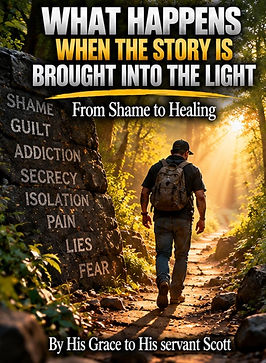
For years, many of us survived addiction by hiding. We hid the bottles, the drugs, the money, the relationships, the places we went, the things we did, and eventually even the way we felt. We learned how to give different people different versions of ourselves. Step Four began tearing down that system by helping us honestly examine our Life Portrait. Step Five takes us somewhere even more uncomfortable: what we discovered privately must begin coming into the light relationally. “If we walk in the Light as He Himself is in the Light, we have fellowship with one another” (1 John 1:7). Notice that walking in the light produces fellowship. God never intended recovery to become another private life.
Something powerful happens when what has been hidden is finally spoken to a safe person. The past does not change. Consequences do not magically disappear. Broken trust may still require rebuilding, restitution may still need to be made, and relationships may take time to heal. But our relationship with the secret begins changing. What controlled us because it had to remain hidden has now been exposed to truth and grace. Shame loses one of its greatest weapons: secrecy.
Shame has always told us, “If anybody really knew you, they would reject you.” That lie keeps people isolated long after alcohol and drugs are removed. We can attend meetings, church, recovery groups, counseling, and Bible studies while still carrying an internal room that nobody is allowed to enter. Step Five begins opening that room. James writes, “Therefore, confess your sins to one another, and pray for one another so that you may be healed” (James 5:16). Confession is connected to relationship, prayer, and healing.
Many of us understood forgiveness intellectually before we ever experienced it relationally. We knew Jesus forgave sin. We could quote Scriptures about grace. Yet somewhere inside we still believed, “If somebody knew everything about me, they would never look at me the same.” Then we tell the truth to a spiritually mature person and something unexpected happens. They do not leave. They do not panic. They do not humiliate us. They may confront us, but they also remind us of grace. Suddenly forgiveness becomes more than theology. We begin experiencing forgiveness, not merely believing in it.
This is also where we begin separating conviction from condemnation. Conviction says, “What you did was wrong. Own it, confess it, and bring it to God.” Condemnation says, “What you did proves that you are worthless and beyond redemption.” Those are completely different voices. Scripture declares, “Therefore there is now no condemnation at all for those who are in Christ Jesus” (Romans 8:1). God can confront our behavior without destroying our identity. Grace does not pretend our choices did not matter; grace gives us somewhere safe to take responsibility for them.
Do not be surprised, however, if confession produces emotions you were not expecting. Some people feel tremendous relief. Others cry. Some experience grief, sadness, fear, anger, peace, exhaustion, or even temporary numbness. Healing does not always feel like healing while it is happening. We may have spent twenty years drinking, using drugs, running, suppressing emotions, and protecting painful memories. Speaking the truth once does not mean every emotion instantly settles into place.
God often heals in layers. “He heals the brokenhearted and binds up their wounds” (Psalm 147:3). He may expose shame first, grief later, resentment after that, and eventually show us how these wounds influenced relationships, decisions, cravings, and addictive behavior. This is why we cannot judge the success of Step Five by how we feel immediately afterward. The question is not simply, “Do I feel better?” The deeper question is, “Am I moving out of hiding and learning to live in truth?”
Confession also begins relieving us of the exhausting work of maintaining multiple lives. Addiction made us professional managers of information. We remembered who knew what, what story we told, what needed to remain hidden, and how much truth each person could handle without discovering the rest. That lifestyle consumes enormous emotional energy. When truth enters the light, we no longer have to constantly protect the false version of ourselves.
But confession does not eliminate responsibility. We may still need to make restitution, rebuild trust, change behavior, accept consequences, establish boundaries, and demonstrate consistency over time. Grace removes condemnation; grace does not remove responsibility. In fact, grace gives us the courage to finally become responsible because we no longer have to defend ourselves against the truth.
Eventually something beautiful begins happening. The part of our story that once screamed, “Hide this!” can become part of a redeemed testimony. We are not glorifying addiction, trauma, prison, broken relationships, or sin. We are glorifying the God who met us there and refused to leave us there.
Step Four helped us see it. Step Five helps us say it. Now God begins teaching us how to live differently because of it.
The light does not change what happened—but it changes what darkness is allowed to keep doing with it. What once produced shame can become a testimony of grace, and what we once carried alone can become a place where healing, freedom, and restoration finally begin.
By His Grace to His servant Scott
Recent Devotionals

Lo Que Sucede Cuando La Historia Es Llevada A La Luz
De la vergüenza a la sanidad
Durante años, muchos de nosotros sobrevivimos a la adicción escondiéndonos. Escondíamos las botellas, las drogas, el dinero, las relaciones, los lugares a donde íbamos, las cosas que hacíamos y, con el tiempo, hasta la manera en que nos sentíamos. Aprendimos a presentar diferentes versiones de nosotros mismos a diferentes personas. El Paso Cuatro comenzó a derribar ese sistema ayudándonos a examinar honestamente nuestro Retrato de Vida. El Paso Cinco nos lleva a un lugar aún más incómodo: lo que descubrimos en privado debe comenzar a salir a la luz dentro de una relación. “Si andamos en la Luz, como Él está en la Luz, tenemos comunión los unos con los otros” (1 Juan 1:7). Observemos que caminar en la luz produce comunión. Dios nunca tuvo la intención de que la recuperación se convirtiera en otra vida privada.
Algo poderoso sucede cuando aquello que ha permanecido escondido finalmente se expresa ante una persona segura. El pasado no cambia. Las consecuencias no desaparecen mágicamente. La confianza rota quizá todavía tenga que reconstruirse, puede ser necesario hacer restitución y algunas relaciones necesitarán tiempo para sanar. Pero nuestra relación con el secreto comienza a cambiar. Aquello que nos controlaba porque tenía que permanecer escondido ahora ha sido expuesto a la verdad y a la gracia. La vergüenza pierde una de sus armas más poderosas: el secreto.
La vergüenza siempre nos ha dicho: “Si alguien realmente supiera quién eres, te rechazaría.” Esa mentira mantiene a las personas aisladas mucho después de haber dejado el alcohol y las drogas. Podemos asistir a reuniones, iglesias, grupos de recuperación, consejería y estudios bíblicos mientras todavía cargamos dentro de nosotros una habitación a la cual nadie tiene permiso de entrar. El Paso Cinco comienza a abrir esa habitación. Santiago escribe: “Por tanto, confiésense sus pecados unos a otros, y oren unos por otros para que sean sanados” (Santiago 5:16). La confesión está conectada con la relación, la oración y la sanidad.
Muchos de nosotros entendíamos intelectualmente el perdón antes de experimentarlo dentro de una relación. Sabíamos que Jesús perdona el pecado. Podíamos citar Escrituras acerca de la gracia. Sin embargo, en algún lugar de nuestro interior todavía creíamos: “Si alguien supiera todo acerca de mí, nunca volvería a mirarme de la misma manera.” Entonces decimos la verdad a una persona espiritualmente madura y sucede algo inesperado. No se va. No entra en pánico. No nos humilla. Quizá nos confronte, pero también nos recuerda la gracia. De repente, el perdón se convierte en algo más que teología. Comenzamos a experimentar el perdón, no solamente a creer en él.
Aquí también comenzamos a separar la convicción de la condenación. La convicción dice: “Lo que hiciste estuvo mal. Reconócelo, confiésalo y llévalo ante Dios.” La condenación dice: “Lo que hiciste demuestra que no vales nada y que estás más allá de toda redención.” Son voces completamente diferentes. La Escritura declara: “Por tanto, ahora no hay condenación para los que están en Cristo Jesús” (Romanos 8:1). Dios puede confrontar nuestra conducta sin destruir nuestra identidad. La gracia no pretende que nuestras decisiones no tuvieron importancia; la gracia nos da un lugar seguro donde finalmente podemos asumir responsabilidad por ellas.
Sin embargo, no debemos sorprendernos si la confesión produce emociones que no esperábamos. Algunas personas sienten un enorme alivio. Otras lloran. Algunas experimentan dolor, tristeza, temor, enojo, paz, agotamiento o incluso un período de insensibilidad emocional. La sanidad no siempre se siente como sanidad mientras está ocurriendo. Quizá pasamos veinte años bebiendo, usando drogas, huyendo, reprimiendo emociones y protegiendo recuerdos dolorosos. Decir la verdad una vez no significa que cada emoción inmediatamente encuentre su lugar.
Dios muchas veces sana por capas. “Él sana a los quebrantados de corazón, y venda sus heridas” (Salmo 147:3). Quizá primero exponga la vergüenza, después el dolor, luego el resentimiento y, con el tiempo, nos muestre cómo esas heridas influyeron en nuestras relaciones, decisiones, deseos y conductas adictivas. Por eso no podemos juzgar el éxito del Paso Cinco solamente por cómo nos sentimos inmediatamente después. La pregunta no es simplemente: “¿Me siento mejor?” La pregunta más profunda es: “¿Estoy saliendo de mi escondite y aprendiendo a vivir en la verdad?”
La confesión también comienza a liberarnos del agotador trabajo de mantener múltiples vidas. La adicción nos convirtió en expertos administradores de información. Recordábamos quién sabía qué, qué historia habíamos contado, qué debía permanecer escondido y cuánta verdad podía conocer cada persona sin descubrir el resto. Ese estilo de vida consume una enorme cantidad de energía emocional. Cuando la verdad entra en la luz, ya no tenemos que proteger constantemente una versión falsa de nosotros mismos.
Pero la confesión no elimina la responsabilidad. Quizá todavía tengamos que hacer restitución, reconstruir la confianza, cambiar nuestra conducta, aceptar consecuencias, establecer límites y demostrar consistencia con el paso del tiempo. La gracia elimina la condenación; la gracia no elimina la responsabilidad. De hecho, la gracia nos da el valor para finalmente asumir responsabilidad porque ya no tenemos que defendernos de la verdad.
Con el tiempo, algo hermoso comienza a suceder. La parte de nuestra historia que antes gritaba: “¡Esconde esto!” puede convertirse en parte de un testimonio redimido. No estamos glorificando la adicción, el trauma, la prisión, las relaciones destruidas ni el pecado. Estamos glorificando al Dios que nos encontró allí y se negó a dejarnos allí.
El Paso Cuatro nos ayudó a verlo. El Paso Cinco nos ayuda a decirlo. Ahora Dios comienza a enseñarnos cómo vivir de una manera diferente a causa de ello.
La luz no cambia lo que sucedió, pero sí cambia lo que las tinieblas pueden seguir haciendo con ello. Lo que antes producía vergüenza puede convertirse en un testimonio de gracia, y aquello que una vez cargamos solos puede convertirse en un lugar donde finalmente comienzan la sanidad, la libertad y la restauración.
Por Su Gracia a Su siervo Scott
当我们的故事被带进光中,会发生什么
从羞耻走向医治
多年以来,我们许多人都是靠着隐藏来维持成瘾的生活。我们隐藏酒瓶、毒品、金钱、关系、去过的地方、做过的事情,到最后,甚至连自己的真实感受也隐藏起来。我们学会在不同的人面前呈现不同版本的自己。第四步开始拆毁这种生活方式,帮助我们诚实地审视自己的“生命画像”。而第五步则把我们带到一个更加不舒服的地方:我们在私下发现的真相,现在必须开始在关系中被带进光里。“我们若在光明中行,如同神在光明中,就彼此相交。”(约翰一书 1:7)请注意,在光中行会带来彼此相交。神从来没有打算让康复变成另一种隐藏而孤立的生活。
当那些长期隐藏的事情,终于向一个安全、值得信任的人说出来时,会发生一些非常重要的改变。过去并不会因此改变,后果也不会神奇地消失。破裂的信任可能仍然需要重建,我们可能仍然需要作出赔偿,有些关系也需要时间才能恢复。但是,我们与那个秘密之间的关系开始改变了。**那些因为必须隐藏而一直控制我们的事情,现在已经被带到了真理和恩典面前。**羞耻因此失去了它最强大的武器之一——秘密。
羞耻一直告诉我们:“如果别人真正知道你是什么样的人,他们一定会拒绝你。”即使酒精和毒品已经离开我们的生活,这个谎言仍然可能让我们长期处于孤立之中。我们可以参加聚会、去教会、参加康复小组、接受辅导、参加查经,却仍然在心里面保留着一个任何人都不准进入的房间。第五步开始打开这个房间。雅各写道:“所以你们要彼此认罪,互相代祷,使你们可以得医治。”(雅各书 5:16)认罪与关系、祷告和医治是连接在一起的。
我们许多人在真正从关系中经历饶恕以前,早已经在头脑里明白什么是饶恕。我们知道耶稣赦免罪,也能够背诵关于恩典的经文。然而,在内心深处,我们可能仍然相信:**“如果有人知道关于我的一切,他一定再也不会用同样的眼光看我。”**可是,当我们终于把真相告诉一个属灵成熟的人时,却可能发生一件意想不到的事情——他没有离开,没有惊慌,也没有羞辱我们。他也许会面对我们的问题,但同时也会提醒我们神的恩典。突然之间,饶恕不再只是一套神学知识。我们开始亲身经历饶恕,而不只是相信饶恕。
也正是在这里,我们开始学习分辨责备自己的定罪感和圣灵所带来的责备。圣灵的责备说:“你所做的是错的。承认它,认罪,并把它带到神面前。”定罪却说:“你所做的事情证明你毫无价值,也永远不可能被挽回。”这是完全不同的两个声音。圣经宣告:“如今,那些在基督耶稣里的就不定罪了。”(罗马书 8:1)神可以面对我们的行为,而不摧毁我们的身份。恩典并不是假装我们的选择无关紧要;恩典乃是给我们一个安全的地方,使我们终于能够为自己的选择承担责任。
然而,如果认罪之后出现一些我们没有预料到的情绪,不要感到惊讶。有些人会感到巨大的释放,有些人会哭泣;有些人会经历悲伤、忧愁、恐惧、愤怒、平安、疲惫,甚至暂时感觉麻木。**医治正在发生的时候,并不总是让人感觉像医治。**我们可能花了二十年喝酒、吸毒、逃避、压抑情绪,并保护那些痛苦的记忆。一次把真相说出来,并不意味着所有的情绪都会立刻恢复正常。
神常常是一层一层地医治我们。“祂医好伤心的人,裹好他们的伤处。”(诗篇 147:3)祂可能先处理羞耻,然后处理悲伤,再处理怨恨,之后逐渐让我们看见这些伤口如何影响了我们的关系、决定、渴望以及成瘾行为。因此,我们不能只根据第五步之后那一刻的感觉,来判断它是否有效。真正的问题并不只是:“我现在感觉好一点了吗?”更深的问题是:“我是否正在走出隐藏,并学习活在真理中?”
认罪也开始把我们从维持多重生活的疲惫中释放出来。成瘾曾经使我们成为管理信息的“专家”。我们记得谁知道什么、我们对谁说过什么版本、哪些事情必须继续隐藏,以及每个人能够知道多少真相而不会发现其他部分。这样的生活消耗了巨大的情感和精神力量。当真相进入光中时,我们终于不需要继续保护那个虚假的自己。
但是,认罪并不会消除责任。我们可能仍然需要赔偿、重建信任、改变行为、接受后果、建立新的界限,并且用时间证明我们的改变。**恩典除去定罪,但恩典并不除去责任。**事实上,正是恩典给了我们勇气,使我们终于能够承担责任,因为我们不再需要逃避或防卫真相。
慢慢地,一件美好的事情开始发生。我们生命中那个曾经不断喊着:**“把这个藏起来!”**的部分,现在可以成为被神救赎的见证。我们不是在荣耀成瘾、创伤、监狱、破裂的关系或罪;我们是在荣耀那位曾经在那里遇见我们,并且拒绝让我们继续停留在那里之神。
第四步帮助我们**看见它。第五步帮助我们说出它。**现在,神开始教导我们,因为这些真相已经进入光中,我们应该怎样活出一个不同的人生。
光不会改变已经发生的事情,但光会改变黑暗还能继续利用那些事情对我们做什么。曾经制造羞耻的故事,可以成为恩典的见证;曾经由我们独自背负的重担,可以成为医治、自由与恢复终于开始涌流的地方。
因祂的恩典,赐给祂的仆人 Scott