February 16
Giving God All Of My Yesterdays
Surrendering My Past, My Present, and the Life I Still Hope to Live
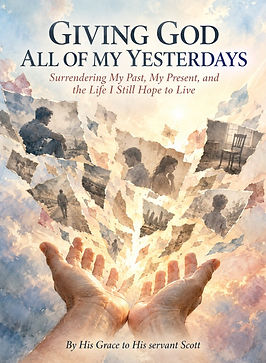
When we decide to turn our will and our life over to the care of God, we do not arrive empty-handed. We come carrying years. Some hold hope; others hold disgrace, loss, broken promises, and tears nobody saw. Addiction added its own weight: words we cannot take back, people we disappointed, and mornings we wished had never come. Surrender means bringing our entire selves to Him. We cannot offer God our desire to stay sober while keeping our wounded history locked away from His care.
Jesus says, “Come to Me, all who are weary and heavy-laden, and I will give you rest” (Matthew 11:28). He does not tell us to straighten out yesterday before coming. He invites the weary person carrying it. That includes the shame of what we did while drinking or using, the grief of what others did to us, and the loneliness we tried to silence with chemicals. We bring Him the broken dreams that died in broken relationships. We bring the failures we hide and the successes we use to prove we do not need help. Nothing in our story belongs outside His reach.
Many of us surrendered the substance before we surrendered the pain beneath it. We stopped drinking, but kept rehearsing the betrayal. We stopped using, but continued punishing ourselves for the damage. We asked God for a new life while allowing yesterday to direct today’s choices. Sobriety is a beginning, but God desires our heart. “Trust in the LORD with all your heart And do not lean on your own understanding” (Proverbs 3:5). All means the part that believes and the part that trembles, the part that hopes and the part still expecting rejection.
Giving God our past does not mean pretending it never happened. It means trusting Him with what happened and obeying Him in what happens next. Some consequences remain. Some relationships require patient rebuilding. Some losses must be grieved rather than explained away. We may need counseling, treatment, a sponsor, or a mature believer who will help us face what we have avoided. God’s care often reaches us through people. Surrender opens the door to honest confession, appropriate amends, and healing; it does not excuse another broken promise or demand that someone immediately trust us again.
Shame says, “This is who you will always be.” Grace calls us to confess our sin and receive a new beginning. “If we confess our sins, He is faithful and righteous to forgive us our sins and to cleanse us from all unrighteousness” (1 John 1:9). We take responsibility without making our worst moments our permanent identity. There is a difference between admitting, “I did something wrong,” and declaring, “I am beyond redemption.” The first can lead us into truth. The second keeps us trapped in despair. Christ has not asked us to become our own savior. He asks us to come into the light.
We also surrender what we want today. Sometimes we want God to restore a relationship on our schedule, remove every painful feeling, or give us back everything addiction cost us. Turning our will over means letting Him shape those desires. We can tell Him what we hope for while praying, “Yet not My will, but Yours be done” (Luke 22:42). Recovery grows when obedience no longer depends on getting our preferred outcome. Today we can tell the truth, accept help, keep a commitment, and refuse to use pain as permission to return to destruction.
Bring Him every yesterday and its scars. Bring the tears, the loneliness, the words you regret, and the dreams you are afraid to dream again. You do not have to understand how He will work before placing your life in His care. Begin with an honest prayer: “Father, I give You all of me. Help me face my past truthfully, live this day obediently, and trust You with what comes next.” Yesterday cannot be rewritten, but it can be placed in hands wiser and more loving than ours. Let surrender become today’s way of living.
By His Grace to His servant Scott.
Recent Devotionals

Entregándole A Dios Todo Mi Ayer
Rindiendo mi pasado, mi presente y la vida que todavía espero vivir
Cuando decidimos entregar nuestra voluntad y nuestra vida al cuidado de Dios, no llegamos con las manos vacías. Llegamos cargando años. Algunos contienen esperanza; otros, deshonra, pérdidas, promesas rotas y lágrimas que nadie vio. La adicción añadió su propio peso: palabras que no podemos retirar, personas a quienes decepcionamos y mañanas que deseábamos que nunca hubieran llegado. Rendirse significa llevarle todo lo que somos. No podemos ofrecerle a Dios nuestro deseo de mantenernos sobrios mientras mantenemos nuestra historia herida encerrada, fuera de Su cuidado.
Jesús dice: «Venid a Mí, todos los que estáis cansados y cargados, y Yo os haré descansar» (Mateo 11:28). No nos dice que arreglemos el ayer antes de acercarnos. Invita a la persona cansada que viene cargándolo. Eso incluye la vergüenza de lo que hicimos mientras bebíamos o consumíamos drogas, el dolor de lo que otros nos hicieron y la soledad que intentábamos silenciar con sustancias. Le entregamos los sueños rotos que murieron en relaciones quebrantadas. Le entregamos los fracasos que escondemos y los éxitos que usamos para demostrar que no necesitamos ayuda. Nada de nuestra historia queda fuera de Su alcance.
Muchos de nosotros entregamos la sustancia antes de entregar el dolor que había debajo. Dejamos de beber, pero seguimos repasando la traición. Dejamos de consumir, pero continuamos castigándonos por el daño causado. Le pedimos a Dios una vida nueva mientras permitíamos que el ayer dirigiera nuestras decisiones de hoy. La sobriedad es un comienzo, pero Dios desea nuestro corazón. «Confía en el SEÑOR con todo tu corazón, y no te apoyes en tu propio entendimiento» (Proverbios 3:5). Todo incluye la parte que cree y la parte que tiembla, la parte que espera y la que todavía teme ser rechazada.
Entregarle a Dios nuestro pasado no significa fingir que nunca ocurrió. Significa confiarle lo sucedido y obedecerle en lo que viene después. Algunas consecuencias permanecen. Algunas relaciones requieren una reconstrucción paciente. Algunas pérdidas necesitan ser lloradas en lugar de buscar explicaciones que borren su dolor. Quizás necesitemos consejería, tratamiento, un padrino de recuperación o un creyente maduro que nos ayude a enfrentar lo que hemos evitado. Muchas veces, el cuidado de Dios nos alcanza por medio de otras personas. La rendición abre la puerta a la confesión sincera, a reparar el daño de manera apropiada y a la sanidad; no justifica otra promesa rota ni exige que alguien vuelva a confiar en nosotros inmediatamente.
La vergüenza dice: «Esto es lo que siempre serás». La gracia nos llama a confesar nuestro pecado y recibir un nuevo comienzo. «Si confesamos nuestros pecados, Él es fiel y justo para perdonarnos los pecados y para limpiarnos de toda maldad» (1 Juan 1:9). Asumimos nuestra responsabilidad sin convertir nuestros peores momentos en nuestra identidad permanente. Hay una diferencia entre admitir: «Hice algo malo», y declarar: «No hay redención para mí». Lo primero puede llevarnos a la verdad. Lo segundo nos mantiene atrapados en la desesperación. Cristo no nos ha pedido que seamos nuestros propios salvadores. Nos pide que salgamos a la luz.
También rendimos lo que queremos hoy. A veces queremos que Dios restaure una relación según nuestro calendario, elimine todo sentimiento doloroso o nos devuelva todo lo que la adicción nos costó. Entregar nuestra voluntad significa permitirle moldear esos deseos. Podemos decirle lo que esperamos mientras oramos: «Pero no se haga Mi voluntad, sino la Tuya» (Lucas 22:42). La recuperación crece cuando la obediencia deja de depender de obtener el resultado que preferimos. Hoy podemos decir la verdad, aceptar ayuda, cumplir un compromiso y negarnos a usar el dolor como permiso para volver a la destrucción.
Entrégale todo tu ayer y sus cicatrices. Entrégale las lágrimas, la soledad, las palabras que lamentas y los sueños que tienes miedo de volver a soñar. No tienes que comprender cómo obrará antes de poner tu vida bajo Su cuidado. Comienza con una oración sincera: «Padre, te entrego todo lo que soy. Ayúdame a enfrentar mi pasado con honestidad, a vivir este día en obediencia y a confiarte lo que viene después». El ayer no puede reescribirse, pero puede ponerse en manos más sabias y amorosas que las nuestras. Que la rendición se convierta en tu manera de vivir hoy.
Por Su gracia a Su siervo Scott.
把所有的昨天交给神
交托我的过去、现在,以及我仍然盼望活出的生命
当我们决定把自己的意志和生命交托给神,让祂看顾时,我们并不是空着手来到祂面前。我们带着多年的人生经历而来。有些岁月充满盼望;另一些却留下羞辱、失去、破碎的承诺,以及无人看见的眼泪。成瘾又加上了沉重的负担:无法收回的话语、被我们辜负的人,还有那些我们宁愿从未到来的清晨。降服,就是把完整的自己带到祂面前。我们不能只把保持清醒、不再酗酒或吸毒的愿望交给神,却把受伤的过去锁起来,不让祂看顾。
耶稣说:“凡劳苦担重担的人可以到我这里来,我就使你们得安息。”(马太福音11:28)祂没有要求我们先把昨天的一切处理好,才来到祂面前。祂邀请的,正是那个背着过去、疲惫不堪的人。这包括我们在酗酒或吸毒时所做之事带来的羞耻,别人伤害我们所留下的痛苦,以及我们曾试图用酒精和毒品压下去的孤独。我们把那些随着破裂的关系而破灭的梦想交给祂,也把隐藏的失败,以及用来证明自己不需要帮助的成功交给祂。我们生命故事中的任何一部分,都在祂能够触及的范围之内。
我们许多人先放下了酒精和毒品,却还没有交出藏在成瘾背后的痛苦。我们停止饮酒,却不断回想被背叛的经历;我们停止吸毒,却仍因自己造成的伤害而惩罚自己。我们求神赐下新生命,却继续让昨天支配今天的选择。戒除酒精和毒品是一个开始,但神所要的是我们的心。“你要全心信靠耶和华,不可倚靠自己的聪明。”(箴言3:5)全心,就是把相信的部分和颤抖的部分都交给祂,把怀着盼望的部分和仍然害怕被拒绝的部分都交给祂。
把过去交给神,并不意味着假装那些事情从未发生,而是把已经发生的事交托给祂,并在接下来的日子里顺服祂。有些后果仍然存在,有些关系需要耐心重建,有些失去需要我们经历哀伤,而不是用几句解释把痛苦掩盖过去。我们可能需要心理辅导、成瘾治疗、康复导师,或一位成熟的信徒,帮助我们面对一直逃避的事情。神的看顾常常借着他人临到我们。降服为诚实认罪、适当地弥补伤害和医治打开道路;它不能成为再次违背承诺的借口,也不能要求别人立刻重新信任我们。
羞耻说:“你永远都是这样的人。”恩典却呼召我们承认自己的罪,接受一个新的开始。“我们若承认自己的罪,祂是信实的,是公义的,必赦免我们的罪,洗净我们一切的不义。”(约翰一书1:9)我们承担自己的责任,却不把最糟糕的时刻变成永久的身份。承认“我做错了事”,与断言“我已经无可救赎”,是两回事。前者能够带领我们面对真相,后者却使我们困在绝望里。基督没有要求我们做自己的救主,祂呼召我们走进光中。
我们也要交出今天所想要的。有时,我们希望神按照我们的时间表恢复一段关系,消除每一种痛苦的感受,或归还成瘾夺走的一切。交出自己的意志,意味着让祂塑造这些愿望。我们可以诚实地告诉祂自己的盼望,同时祷告:“然而,不要成就我的意思,只要成就你的意思。”(路加福音22:42)当顺服不再取决于能否得到自己想要的结果时,康复就会不断成长。今天,我们可以说实话、接受帮助、履行承诺,并拒绝把痛苦当作重返自我毁灭之路的理由。
把所有的昨天,以及昨天留下的伤痕,都交给祂。把眼泪、孤独、令你后悔的话语,以及那些你不敢再次拥有的梦想,都交给祂。你不必先明白祂将如何工作,才把生命交在祂的看顾之下。就从一个诚实的祷告开始:“天父,我把完整的自己交给祢。求祢帮助我诚实地面对过去,顺服地活好今天,并把接下来的一切交托给祢。”昨天无法改写,却可以交在比我们更有智慧、更有慈爱的手中。让降服成为你今天的生活方式。
蒙祂恩典,祂的仆人 Scott。