December 14
Peace on the Back Row
Learning Where You Are and Trusting God with Where You Belong
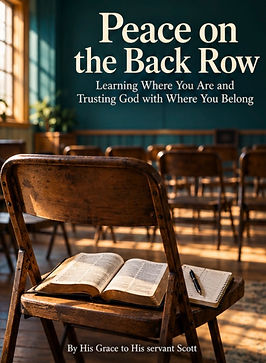
After years of alcohol and drug addiction, we may feel an urgent need to prove we are no longer the person others remember. Having lived so long with shame, we assume moving to the front will finally quiet it. But a better seat cannot settle a heart still searching for worth through approval. Recovery invites us to become faithful where we are, without requiring an audience to confirm that our life matters.
Sometimes we learn more on the back row because we finally stop trying to be the voice everyone hears. We observe, listen, and discover how much we still need to learn. The lesson is not about a literal chair; it is about a teachable spirit. “Everyone must be quick to hear, slow to speak and slow to anger” (James 1:19). When we stop preparing our next impressive answer, we can hear the correction that helps us grow. Quiet time becomes a place to listen to God instead of rehearsing what we want Him to arrange.
Jesus noticed people choosing places of honor and taught them to take the lower place (Luke 14:7–11). We can prepare for responsibility and accept opportunities without pushing others aside or demanding recognition. God’s direction is not always upward in the eyes of people. Sometimes He leads us toward an unnoticed task or a person who needs patient attention. In your journal, ask: Am I seeking an opportunity to serve, or a position that will make me feel important?
Contentment must be learned. Paul wrote, “I have learned to be content in whatever circumstances I am” (Philippians 4:11). Addiction trained many of us to reach for an immediate change in how we felt. Now we want a title, relationship, or achievement to relieve the discomfort. Peace grows as we bring that hunger to Christ and practice today’s responsibilities. Contentment does not require accepting abuse or refusing healthy growth. It means our worth does not wait for our circumstances to improve.
As we mature, we can become more attentive to Jesus in the back roads of life. Read the Gospels and notice where He stops: beside a well, along a roadside, at a table others criticize. He sees people whom the crowd overlooks. The ordinary conversation, the quiet prayer, and the unrecognized act of kindness can become places of fellowship with Him. We may miss these gifts when our eyes are fixed only on getting somewhere more important.
Use your DMI, your Daily Moral Inventory, to examine what happens when you feel overlooked. Did I become resentful because someone else was chosen? Did I withdraw because nobody thanked me? Did I turn another person’s progress into a judgment against myself? Those reactions deserve honest attention, not self-hatred. Tell a trusted mentor what you notice before wounded pride becomes isolation or an excuse to drink or use. God’s grace meets us in the truth and teaches us to respond differently.
Memorize this: “He who is faithful in a very little thing is faithful also in much” (Luke 16:10). Practice it by keeping a promise, cleaning up without being asked, or listening without turning the conversation toward yourself. Small acts of faithfulness have value even if they never lead to a public role. Serving quietly is not a strategy for earning a spotlight. It is an opportunity to love. If greater responsibility comes, carry the same willingness to listen, receive correction, and do unnoticed work.
Tonight, journal this question: If my position stayed the same, how could I keep growing with Jesus? Thank Him for one opportunity you might have dismissed because it seemed too small. Return to Scripture and let His example shape tomorrow’s choices. You do not have to reach the top to leave addiction behind. You can grow in honesty, patience, and love right where you stand. Let God direct where you sit, and give Him your faithful attention there. Peace comes from walking with Christ, not from being seen at the front.
By His Grace to His servant Scott
Recent Devotionals

Paz en la última fila
Aprender donde estás y confiar en Dios para el lugar que te corresponde
Después de años de adicción al alcohol y las drogas, podemos sentir una necesidad urgente de demostrar que ya no somos la persona que otros recuerdan. Tras vivir tanto tiempo con vergüenza, suponemos que llegar al frente finalmente la silenciará. Pero un mejor asiento no puede aquietar un corazón que sigue buscando su valor en la aprobación ajena. La recuperación nos invita a ser fieles donde estamos, sin necesitar un público que confirme que nuestra vida importa.
A veces aprendemos más en la última fila porque finalmente dejamos de intentar ser la voz que todos escuchan. Observamos, escuchamos y descubrimos cuánto nos falta por aprender. La lección no se trata de una silla literal, sino de un espíritu dispuesto a recibir enseñanza. “Cada uno sea pronto para oír, tardo para hablar, tardo para la ira” (Santiago 1:19). Cuando dejamos de preparar nuestra próxima respuesta impresionante, podemos escuchar la corrección que nos ayuda a crecer. El tiempo a solas con Dios se convierte en un espacio para escucharlo, en lugar de repasar lo que queremos que Él acomode a nuestro gusto.
Jesús observó que las personas escogían los lugares de honor y les enseñó a ocupar el lugar más humilde (Lucas 14:7–11). Podemos prepararnos para asumir responsabilidades y aceptar oportunidades sin desplazar a otros ni exigir reconocimiento. La dirección de Dios no siempre nos lleva hacia arriba a los ojos de la gente. A veces nos guía hacia una tarea desapercibida o hacia alguien que necesita atención paciente. En tu diario, pregunta: ¿Estoy buscando una oportunidad para servir, o una posición que me haga sentir importante?
El contentamiento se aprende. Pablo escribió: “He aprendido a contentarme cualquiera que sea mi situación” (Filipenses 4:11). La adicción nos enseñó a muchos a buscar un cambio inmediato en cómo nos sentíamos. Ahora queremos un título, una relación o un logro que alivie la incomodidad. La paz crece cuando llevamos esa necesidad a Cristo y cumplimos las responsabilidades de hoy. Estar contentos no exige aceptar el abuso ni rechazar un crecimiento saludable. Significa que nuestro valor no depende de que nuestras circunstancias mejoren.
A medida que maduramos, podemos volvernos más atentos a Jesús en los caminos poco transitados de la vida. Lee los Evangelios y observa dónde se detiene: junto a un pozo, al borde de un camino, en una mesa que otros critican. Él ve a las personas que la multitud pasa por alto. La conversación cotidiana, la oración silenciosa y el acto de bondad que nadie reconoce pueden convertirse en lugares de comunión con Él. Podemos perdernos estos regalos cuando nuestros ojos están puestos solamente en llegar a un lugar que parezca más importante.
Utiliza tu DMI, tu Inventario Moral Diario, para examinar lo que sucede cuando sientes que no te toman en cuenta. ¿Me resentí porque escogieron a otra persona? ¿Me aparté porque nadie me dio las gracias? ¿Convertí el progreso de alguien más en una condena contra mí mismo? Esas reacciones merecen atención honesta, no desprecio hacia nosotros mismos. Cuéntale a un mentor de confianza lo que reconoces, antes de que el orgullo herido se convierta en aislamiento o en una excusa para beber o consumir drogas. La gracia de Dios nos encuentra en la verdad y nos enseña a responder de otra manera.
Memoriza esto: “El que es fiel en lo muy poco, es fiel también en lo mucho” (Lucas 16:10). Practícalo cumpliendo una promesa, limpiando sin que te lo pidan o escuchando sin dirigir la conversación hacia ti mismo. Los pequeños actos de fidelidad tienen valor aunque nunca conduzcan a una función pública. Servir discretamente no es una estrategia para ganarse el protagonismo. Es una oportunidad para amar. Si llegan mayores responsabilidades, conserva la misma disposición para escuchar, recibir corrección y realizar trabajos que nadie nota.
Esta noche, escribe en tu diario: Si mi posición siguiera siendo la misma, ¿cómo podría continuar creciendo con Jesús? Dale gracias por una oportunidad que quizá habrías descartado por parecer demasiado pequeña. Vuelve a la Escritura y permite que Su ejemplo forme las decisiones de mañana. No tienes que llegar a la cima para dejar atrás la adicción. Puedes crecer en honestidad, paciencia y amor allí mismo donde estás. Deja que Dios dirija dónde debes sentarte y préstale allí tu atención fiel. La paz viene de caminar con Cristo, no de que los demás te vean al frente.
Por Su gracia a Su siervo Scott
后排的平安
在所在之处学习,相信神为你安排的位置
经历多年的酒精和毒品成瘾之后,我们可能急切地想证明:自己已经不再是别人记忆中的那个人。长期背负羞耻,使我们以为,只要走到前排,那份羞耻就会消失。然而,一个更显眼的位置,无法安定一颗仍然靠别人认可来寻找价值的心。康复邀请我们在所在之处忠心,不需要观众来证明我们的生命有意义。
有时候,我们在后排反而学得更多,因为我们终于不再争着成为人人都要听见的声音。我们观察、聆听,也发现自己还有多少需要学习。这里所说的,不是一张实际的椅子,而是一颗受教的心。“各人都要快快地听,慢慢地说,慢慢地动怒”(雅各书1:19)。当我们不再忙着准备下一句令人印象深刻的话,就能听见帮助自己成长的纠正。安静亲近神的时间,也就成为聆听祂的机会,而不是反复盘算要祂怎样替我们安排。
耶稣看见人们挑选尊贵的座位,就教导他们选择较低的位置(路加福音14:7–11)。我们可以为承担责任做好准备,也可以接受机会,却不必排挤别人或强求认可。在人的眼中,神的引导不一定总是向上。有时候,祂带领我们去做一件不起眼的事,或陪伴一个需要耐心关怀的人。在日记中问自己:我是在寻找服事的机会,还是寻找一个能让我觉得自己重要的位置?
知足是需要学习的。保罗写道:“我已经学会,无论在什么处境都可以知足”(腓立比书4:11)。成瘾使我们许多人习惯立即改变自己的感受。如今,我们可能改为寻求一个头衔、一段关系,或某项成就,好减轻内心的不安。当我们把这份渴求带到基督面前,并忠心履行今天的责任时,平安就逐渐成长。知足不要求我们接受虐待,也不意味着拒绝健康的成长,而是承认:我们的价值不必等到环境改善后才成立。
随着生命成熟,我们可以更加留意耶稣在那些少有人走的生活小路上的同在。阅读福音书,看看祂在哪里停下脚步:井旁、路边,或别人批评的一张饭桌旁。祂看见那些被人群忽略的人。平常的谈话、安静的祷告,以及无人称赞的善行,都可以成为与祂相交的机会。如果我们只顾着到达一个看起来更重要的地方,就可能错过这些礼物。
运用你的DMI,也就是每日道德省察,察看自己感到被忽略时会怎样回应。别人被选中时,我是否心生怨恨?没有人感谢我时,我是否退缩疏远?我是否把别人的进步,当成否定自己的理由?这些反应需要诚实面对,而不是用来自我厌恶。把你察觉的情况告诉一位值得信任的导师,不要等到受伤的自尊变成孤立自己,或成为饮酒、吸毒的借口。神的恩典在真实中与我们相遇,教导我们作出不同的回应。
请背诵这句话:“人在最小的事上忠心,在大事上也忠心”(路加福音16:10)。借着履行一个承诺、主动清理环境,或聆听别人而不把话题转回自己身上,将它付诸实践。小事上的忠心,即使从未带来公开的职位,也仍然有价值。默默服事,不是换取聚光灯的策略,而是去爱的机会。如果将来承担更大的责任,也要保持同样的态度:愿意聆听、接受纠正,并完成无人留意的工作。
今晚,在日记中写下这个问题:如果我的位置没有改变,我可以怎样继续与耶稣一同成长?为一个你可能因它太小而忽略的机会感谢祂。回到圣经,让祂的榜样塑造明天的选择。你不必爬到顶端,才能告别成瘾的旧生活。就在你现在所在之处,你也能在诚实、忍耐和爱中成长。让神引导你坐在哪里,并在那里忠心地留意祂。平安来自与基督同行,而不是让别人看见自己坐在前排。
因祂的恩典,赐予祂的仆人 Scott