December 4
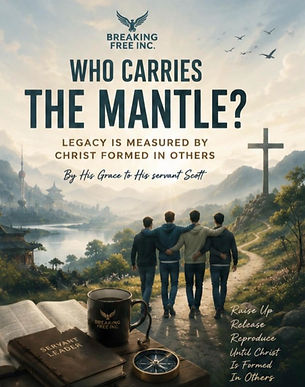
Who Carries the Mantle?
Legacy Is Measured by Christ Formed in Others

Every servant leader who walks with God long enough will eventually stand before one of the most sacred questions of ministry: Lord, who will carry forward what You have entrusted to me when my assignment is complete? The answer to that question will reveal whether we have built according to the wisdom of man or according to the wisdom of God. The world teaches us to think in terms of succession plans, organizational charts, and family inheritance. The Kingdom of God teaches us to think in terms of discipleship, spiritual formation, and faithful stewardship. One seeks to preserve an organization; the other seeks to reproduce the life of Christ. They are not always the same.
Throughout Scripture, God consistently overturned man’s expectations regarding leadership. When the prophet Samuel entered Jesse’s house, everyone assumed the oldest and strongest sons would surely become Israel’s next king. Yet the Lord stopped Samuel before he made his decision, saying, “Do not look at his appearance or at the height of his stature… for God sees not as man sees, for man looks at the outward appearance, but the Lord looks at the heart” (1 Samuel 16:7). David was not the obvious choice according to human reasoning, but he was God’s choice because his heart had already been shaped in the secret place. Servant leadership always begins where no one is watching.
The Kingdom has never advanced through human entitlement. It advances through surrendered hearts. Moses did not pass the leadership of Israel to one of his sons. The Lord raised up Joshua, a man who had spent years quietly serving, remaining in the tent of meeting, learning obedience before ever receiving authority. Elijah’s mantle was not inherited by family but entrusted to Elisha, whose devotion had already been proven through faithful service. Jesus did not build His Church upon biological relatives but upon ordinary men who had left everything to follow Him. Paul invested his life into Timothy, calling him “my true child in the faith,” demonstrating that spiritual sons are formed through discipleship rather than birth.
One of the greatest dangers facing every ministry is confusing ownership with stewardship. The ministry never belonged to us. The people never belonged to us. The vision never belonged to us. Everything has always belonged to Christ. We are simply servants entrusted with His work for a season. Jesus reminded His disciples, “You did not choose Me but I chose you, and appointed you that you would go and bear fruit, and that your fruit would remain” (John 15:16). Notice His desire was not merely fruit, but fruit that remains. Lasting fruit is produced when Christ is formed within people, not when personalities are exalted.
Servant leaders must continually guard their hearts against the subtle temptation to build around themselves. Ministries built around gifted personalities often struggle when those personalities are gone. Ministries built around Christ continue because He never changes. Paul understood this when he wrote, “The things which you have heard from me in the presence of many witnesses, entrust these to faithful men who will be able to teach others also” (2 Timothy 2:2). Paul did not instruct Timothy to find the most charismatic, educated, or influential individuals. He simply said, “faithful.” Faithfulness is the soil where God grows leaders.
Modern culture often celebrates gifting before character, influence before humility, and platform before preparation. The Kingdom reverses that order. God develops leaders in hidden places before He reveals them publicly. David learned worship in lonely fields before he ever wore a crown. Joseph learned integrity in prison before he governed a nation. Moses spent forty years in the wilderness before leading Israel. Even our Lord lived approximately thirty years in quiet preparation before three years of public ministry. Servant leaders must never despise God’s seasons of preparation because hidden faithfulness becomes the foundation for lasting influence.
Legacy is not measured by how many buildings bear our name, how many books we publish, or how large our ministry becomes. Legacy is measured by whether Christ has been deeply formed within those we disciple. Paul expressed the cry of every servant leader when he wrote, “My children, with whom I am again in labor until Christ is formed in you” (Galatians 4:19). Notice that Paul’s goal was not dependence upon himself but transformation into the likeness of Christ. This is the heart of discipleship. We are not creating followers of ourselves; we are pointing people to Jesus until they hear His voice more clearly than ours.
This also requires humility from every servant leader. There may come a day when God chooses someone we would not have expected. His choice may not fit our preferences, our traditions, or even our family expectations. Yet servant leaders recognize that God’s ways are always higher than ours. Our responsibility is not to control the future but to faithfully prepare those whom God is shaping. We plant. We water. God gives the growth. We train. We encourage. We correct. We model. But ultimately, Christ alone appoints those who will carry His work forward.
The servant leader who finishes well understands that releasing the ministry is just as holy as receiving it. Open hands have always marked those who truly belong to Christ. We came into ministry with empty hands, and we will leave with empty hands. Everything in between has been His grace. What remains after we are gone will reveal whether we built with wood, hay, and straw, or with gold, silver, and precious stones. The fire will test every work.
May our greatest desire never be that people remember our name, but that they remember the Savior we faithfully pointed them toward. May they see our lives and discover the beauty of humility, obedience, prayer, and sacrificial love. May they inherit neither our position nor our reputation, but our passion for Christ. For when Christ is formed in another life, the mantle has truly been passed, and the legacy of a servant leader continues long after his voice has fallen silent.
Recent Devotionals
¿quién Lleva El Manto?
El Legado Se Mide Por Cristo Formado En Los Demás.
Todo líder servidor que camina con Dios el tiempo suficiente acabará enfrentándose a una de las preguntas más sagradas del ministerio: Señor, ¿quién llevará adelante lo que me has confiado cuando haya cumplido mi misión? La respuesta a esa pregunta revelará si hemos edificado según la sabiduría humana o según la sabiduría de Dios. El mundo nos enseña a pensar en planes de sucesión, organigramas y herencias familiares. El Reino de Dios nos enseña a pensar en discipulado, formación espiritual y mayordomía fiel. Uno busca preservar una organización; el otro, reproducir la vida de Cristo. No siempre son lo mismo.
A lo largo de las Escrituras, Dios trastocó una y otra vez las expectativas humanas respecto al liderazgo. Cuando el profeta Samuel entró en la casa de Isaí, todos suponían que sus hijos mayores y más fuertes serían, sin duda, los próximos reyes de Israel. Sin embargo, el Señor detuvo a Samuel antes de que tomara su decisión y le dijo:
El Reino nunca ha avanzado gracias a privilegios heredados. Avanza por medio de corazones rendidos. Moisés no entregó el liderazgo de Israel a uno de sus hijos. El Señor levantó a Josué, un hombre que había pasado años sirviendo en silencio, permaneciendo en la tienda de reunión y aprendiendo a obedecer antes de recibir autoridad. El manto de Elías no fue heredado por un familiar, sino confiado a Eliseo, cuya devoción ya había quedado demostrada mediante su servicio fiel. Jesús no edificó Su Iglesia sobre sus parientes biológicos, sino sobre hombres comunes que habían dejado todo para seguirlo. Pablo invirtió su vida en Timoteo y lo llamó «mi verdadero hijo en la fe», mostrando que los hijos espirituales se forman mediante el discipulado, no por nacimiento.
Uno de los mayores peligros que enfrenta todo ministerio es confundir la propiedad con la mayordomía. El ministerio nunca nos perteneció. Las personas nunca nos pertenecieron. La visión nunca nos perteneció. Todo ha pertenecido siempre a Cristo. No somos más que siervos a quienes se les ha confiado Su obra por un tiempo. Jesús les recordó a sus discípulos:
Los líderes servidores deben proteger constantemente su corazón de la sutil tentación de edificar en torno a sí mismos. Los ministerios que giran alrededor de personalidades carismáticas suelen tener dificultades cuando estas ya no están. Los ministerios edificados sobre Cristo perduran porque Él nunca cambia. Pablo lo comprendió cuando escribió:
La cultura actual suele celebrar los dones antes que el carácter, la influencia antes que la humildad y la plataforma antes que la preparación. El Reino invierte ese orden. Dios forma a los líderes en lugares ocultos antes de hacerlos visibles en público. David aprendió a adorar en campos solitarios mucho antes de llevar una corona. José aprendió integridad en la prisión antes de gobernar una nación. Moisés pasó cuarenta años en el desierto antes de guiar a Israel. Incluso nuestro Señor vivió cerca de treinta años en una etapa de preparación silenciosa antes de ejercer tres años de ministerio público. Los líderes servidores nunca deben menospreciar los tiempos de preparación de Dios, porque la fidelidad en lo oculto se convierte en el cimiento de una influencia duradera.
El legado no se mide por cuántos edificios llevan nuestro nombre, cuántos libros publicamos ni cuán grande llega a ser nuestro ministerio. El legado se mide por si Cristo se ha formado profundamente en aquellos a quienes discipulamos. Pablo expresó el clamor de todo líder servidor cuando escribió:
Esto también requiere humildad de parte de todo líder servidor. Puede llegar el día en que Dios elija a alguien a quien no habríamos esperado. Su elección quizá no coincida con nuestras preferencias, nuestras tradiciones ni siquiera con las expectativas de nuestra familia. Sin embargo, los líderes servidores reconocen que los caminos de Dios siempre son más altos que los nuestros. Nuestra responsabilidad no es controlar el futuro, sino preparar fielmente a quienes Dios está formando. Nosotros plantamos. Nosotros regamos. Dios da el crecimiento. Nosotros enseñamos. Alentamos. Corregimos. Damos ejemplo. Pero, en última instancia, solo Cristo designa a quienes llevarán adelante Su obra.
El líder servidor que termina bien comprende que entregar el ministerio es tan sagrado como recibirlo. Las manos abiertas siempre han caracterizado a quienes verdaderamente pertenecen a Cristo. Llegamos al ministerio con las manos vacías y nos iremos con las manos vacías. Todo lo que hubo entre ambos momentos fue Su gracia. Lo que quede después de nuestra partida revelará si edificamos con madera, heno y paja, o con oro, plata y piedras preciosas. El fuego pondrá a prueba toda obra.
Que nuestro mayor deseo nunca sea que la gente recuerde nuestro nombre, sino que recuerde al Salvador hacia quien la guiamos fielmente. Que al ver nuestras vidas descubran la belleza de la humildad, la obediencia, la oración y el amor sacrificial. Que hereden no nuestra posición ni nuestra reputación, sino nuestra pasión por Cristo. Porque cuando Cristo se forma en otra vida, el manto ha pasado verdaderamente a otras manos, y el legado de un líder servidor continúa mucho después de que su voz haya enmudecido.
No se proporcionó ningún texto para traducir.谁将肩负重任?
传承的价值,取决于基督在他人生命中的塑造
每一位与神同行足够长久的仆人领袖,终有一天会面对事奉中最神圣的问题之一:主啊,当祢托付给我的使命完成时,谁会继续承担祢交给我的工作?这个问题的答案,将显明我们究竟是按人的智慧建造,还是按神的智慧建造。世人教导我们从继任计划、组织架构和家族继承的角度思考;神的国则教导我们从门徒训练、属灵塑造和忠心管家的角度思考。前者寻求保存一个组织,后者寻求再现基督的生命。两者并不总是一回事。
纵观整本圣经,神不断颠覆人们对领袖的期待。当先知撒母耳进入耶西家时,人人都以为年长、强壮的儿子必定会成为以色列的下一任王。然而,撒母耳尚未作出决定,主就拦住了他,说:
神的国从来不是靠人的特权推进的,而是借着降服的心推进的。摩西并没有把以色列的领导权交给自己的儿子。主兴起了约书亚——一个多年来默默服事、常在会幕中、在领受权柄之前先学习顺服的人。以利亚的外袍并非由家人继承,而是托付给了以利沙;他在忠心服事中早已证明了自己的委身。耶稣建立教会的根基,不是祂的血亲,而是那些撇下一切跟随祂的普通人。保罗将一生投入提摩太身上,称他为“我在信仰上的真儿子”,这表明属灵的儿女是借着门徒训练塑造出来的,而非由血缘而生。
每个事工所面临的最大危险之一,就是把拥有权与管家职分混为一谈。事工从来不属于我们,弟兄姊妹从来不属于我们,异象也从来不属于我们。一切始终都属于基督。我们只是在一个阶段里受托承担祂的工作。耶稣曾提醒门徒:
仆人领袖必须不断守护自己的心,抵挡那种悄然袭来的诱惑——以自己为中心建造事工。以有恩赐的个人为中心建立的事工,往往会在这些人离去后陷入困境;以基督为中心建立的事工则能继续前行,因为祂永不改变。保罗写道:
现代文化往往推崇恩赐胜过品格、影响力胜过谦卑、舞台胜过预备。神的国却颠倒了这种次序。神先在隐秘之处塑造领袖,然后才在众人面前显明他们。大卫还未戴上王冠,就已在孤寂的旷野中学习敬拜;约瑟在治理国家之前,先在监狱中学会正直;摩西在带领以色列之前,曾在旷野度过四十年。就连我们的主,也先在安静中预备了约三十年,之后才开始三年的公开事奉。仆人领袖绝不可轻看神预备人的季节,因为隐秘中的忠心,正是持久影响力的根基。
衡量传承,不在于有多少建筑物以我们的名字命名、我们出版了多少本书,或我们的事工规模有多大;而在于我们所带领的门徒里面,基督是否得以深深成形。保罗写道,表达了每一位仆人领袖的心声:
这也要求每一位仆人领袖保持谦卑。或许有一天,神会选择一个我们意想不到的人。祂的选择可能不符合我们的偏好、传统,甚至家族的期待。然而,仆人领袖明白,神的道路总是高过我们的道路。我们的责任不是掌控未来,而是忠心预备那些神正在塑造的人。我们栽种,我们浇灌,神使之生长。我们训练、鼓励、纠正、以身作则。但最终,唯有基督任命那些将继续承担祂工作的人成为领袖。
善始善终的仆人领袖明白,放下事工与领受事工同样神圣。真正属于基督的人,始终以张开的双手为标记。我们空手进入事奉,也将空手离开。在这一切之间,都是祂的恩典。我们离去之后所留下的一切,将显明我们究竟是用木头、干草、禾秸建造,还是用金、银、宝石建造。火要试验各人的工程。
愿我们最大的渴望永远不是让人记住我们的名字,而是让他们记住我们忠心引领他们归向的救主。愿他们从我们的生命中看见谦卑、顺服、祷告和舍己之爱的美。愿他们承接的不是我们的职位或声誉,而是我们对基督的热忱。因为当基督在另一个生命里成形,使命的接力才真正完成;即使仆人领袖的声音已经沉寂,他所留下的传承仍将延续。