December 3
The Ministry of Decrease
The Greatest Servant Leaders Spend Their Lives Making Much of Christ and Less of Themselves

The world teaches leaders to build platforms, increase influence, protect reputations, and make their names known. God’s Kingdom teaches something altogether different. The greatest servant leaders are not those who become famous but those who become forgotten so that Jesus Christ may be seen more clearly. Every servant leader eventually arrives at a crossroads where they must decide whether they desire recognition or faithfulness. The flesh longs for applause, but the Spirit longs for obedience.
John the Baptist understood this truth better than perhaps anyone who ever lived. Crowds gathered around him. Nations listened to him. Yet when Jesus arrived, John willingly stepped into the shadows. Rather than protecting his ministry, he surrendered it. Rather than competing with Christ, he rejoiced that Christ would increase while he would decrease. That is the heartbeat of every servant leader.
“He must increase, but I must decrease.” (John 3:30)
Those words are simple, yet they are among the most difficult prayers a servant leader will ever live. We may quote them easily, but living them requires daily crucifixion of pride, ambition, and self-promotion. Servant leadership is not merely learning to serve people; it is learning to disappear behind the cross so that people encounter Jesus instead of us.
Jesus Himself demonstrated this pattern throughout His earthly ministry. Though He possessed all authority, He continually humbled Himself. He washed dirty feet, touched lepers, embraced children, welcomed outcasts, and ultimately laid down His own life. Heaven measures greatness by humility, not visibility.
“For even the Son of Man did not come to be served, but to serve, and to give His life as a ransom for many.” (Mark 10:45)
Every servant leader must remember that ministry is stewardship, not ownership. The people are not ours. The gifts are not ours. The opportunities are not ours. Every blessing belongs to God and exists for His glory alone. The moment we begin protecting our position more than His presence, we have exchanged servanthood for self-preservation.
The Apostle Paul understood this sacred tension. Although God used him to establish churches across the known world, Paul continually reminded believers that Christ alone deserved the glory. He viewed himself simply as a servant carrying priceless treasure that belonged to another.
“But we have this treasure in earthen vessels, so that the surpassing greatness of the power will be of God and not from ourselves.” (2 Corinthians 4:7)
God intentionally places His glory inside fragile people so no one mistakes the source of the power. Our weaknesses are not obstacles to ministry; they often become the very stage upon which God’s strength is displayed. A servant leader who hides weakness often hides the opportunity for God’s grace to be seen.
This is why brokenness becomes one of Heaven’s greatest classrooms. The Lord gently removes our dependence upon talent, personality, experience, and reputation until Christ alone becomes our confidence. He allows seasons where our plans fail so His purposes can succeed. He allows pruning because fruitfulness is always born through surrender.
“I am the vine, you are the branches; he who abides in Me and I in him, he bears much fruit, for apart from Me you can do nothing.” (John 15:5)
Fruit is never produced by striving but by abiding. Servant leaders often become exhausted because they attempt to manufacture what only the Holy Spirit can produce. Ministry becomes joyful again when we stop carrying responsibilities God never asked us to bear and simply remain close to Christ. The effectiveness of our ministry will never exceed the depth of our communion with Him.
Pride quietly whispers, “Build your kingdom.” Humility quietly prays, “Build Yours.” Pride fears being overlooked. Humility rejoices when Christ is exalted. Pride competes. Humility celebrates others. Pride craves recognition. Humility treasures obedience, even if no one notices.
Peter exhorted leaders with these words:
“Shepherd the flock of God among you, exercising oversight not under compulsion, but voluntarily, according to the will of God; and not for sordid gain, but with eagerness; nor yet as lording it over those allotted to your charge, but proving to be examples to the flock.” (1 Peter 5:2-3)
Notice that servant leaders lead primarily by example rather than by position. Titles may command attention, but character commands respect. Influence that comes from the Holy Spirit will always outlast influence manufactured by personality.
The servant leader’s greatest success is not measured by attendance, buildings, finances, or social recognition. Heaven measures success by faithfulness. Did we love well? Did we obey quickly? Did we point people toward Jesus or toward ourselves? Did our lives make Christ more visible?
One day every servant leader will stand before the Chief Shepherd. On that day, earthly accomplishments will fade into eternity, and only what was done for Christ will remain. Our greatest reward will not be hearing people applaud our ministry but hearing our Savior say, “Well done.”
Until that day, may our daily prayer echo the words of John the Baptist: “He must increase, but I must decrease.” That is not the prayer of a weak leader. It is the declaration of one who has discovered that the safest place in ministry is hidden behind the greatness of Jesus Christ. When Christ increases, everyone around us receives life. When self decreases, Heaven receives the glory. That is the beautiful calling of every true servant leader.
Recent Devotionals
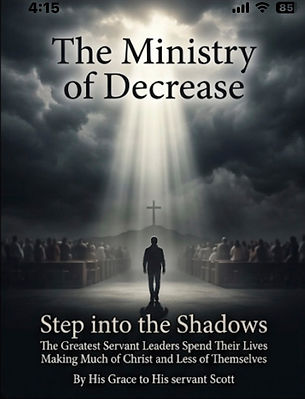
El Ministerio De La Reducción
Los Más Grandes Líderes Siervos Dedican Su Vida A Exaltar A Cristo Y A Restarse Importancia.
El mundo enseña a los líderes a crear plataformas, aumentar su influencia, proteger su reputación y dar a conocer su nombre. El Reino de Dios enseña algo completamente distinto. Los más grandes líderes siervos no son quienes alcanzan la fama, sino quienes caen en el olvido para que Jesucristo pueda verse con mayor claridad. Tarde o temprano, todo líder siervo llega a una encrucijada en la que debe decidir si desea reconocimiento o fidelidad. La carne anhela los aplausos, pero el Espíritu anhela la obediencia.
Juan el Bautista comprendió esta verdad mejor que quizá cualquier otra persona que haya vivido. Las multitudes se congregaban a su alrededor. Las naciones lo escuchaban. Sin embargo, cuando llegó Jesús, Juan se retiró voluntariamente a un segundo plano. En vez de proteger su ministerio, renunció a él. En vez de competir con Cristo, se alegró de que Cristo creciera mientras él menguaba. Esa es la esencia de todo líder servidor.
«Es necesario que él crezca, pero que yo mengüe». (Juan 3:30)
Esas palabras son sencillas, pero están entre las oraciones más difíciles que un líder siervo llegará a vivir. Podemos citarlas con facilidad, pero vivirlas exige crucificar cada día el orgullo, la ambición y la autopromoción. El liderazgo de servicio no consiste simplemente en aprender a servir a las personas; consiste en aprender a desaparecer detrás de la cruz para que las personas se encuentren con Jesús y no con nosotros.
Jesús mismo demostró este patrón a lo largo de su ministerio terrenal. Aunque tenía toda autoridad, se humilló continuamente. Lavó pies sucios, tocó a los leprosos, abrazó a los niños, acogió a los marginados y, finalmente, entregó su propia vida. El cielo mide la grandeza por la humildad, no por la visibilidad.
«Porque ni siquiera el Hijo del Hombre vino para ser servido, sino para servir y para dar su vida en rescate por muchos». (Marcos 10:45)
Todo líder siervo debe recordar que el ministerio es una responsabilidad que se nos confía, no algo que nos pertenece. Las personas no son nuestras. Los dones no son nuestros. Las oportunidades no son nuestras. Toda bendición pertenece a Dios y existe únicamente para Su gloria. En el momento en que empezamos a proteger nuestra posición más que Su presencia, hemos cambiado el servicio por la autopreservación.
El apóstol Pablo comprendía esta sagrada tensión. Aunque Dios lo usó para fundar iglesias por todo el mundo conocido, Pablo les recordaba continuamente a los creyentes que solo Cristo merecía la gloria. Se veía simplemente como un siervo que llevaba un tesoro de incalculable valor que pertenecía a otro.
«Pero tenemos este tesoro en vasijas de barro, para que el poder extraordinario sea de Dios y no nuestro». (2 Corintios 4:7)
Dios coloca intencionalmente su gloria dentro de personas frágiles para que nadie confunda el origen del poder. Nuestras debilidades no son obstáculos para el ministerio; a menudo se convierten en el escenario mismo en el que se manifiesta la fuerza de Dios. Un líder servidor que oculta sus debilidades suele ocultar también la oportunidad de que se vea la gracia de Dios.
Por eso el quebrantamiento se convierte en una de las mayores aulas del cielo. El Señor va quitando con ternura nuestra dependencia del talento, la personalidad, la experiencia y la reputación, hasta que solo Cristo se convierte en nuestra confianza. Permite que haya temporadas en las que fracasen nuestros planes para que sus propósitos puedan cumplirse. Permite que nos pode, porque la capacidad de dar fruto siempre nace de la entrega.
«Yo soy la vid, ustedes son las ramas; el que permanece en mí y yo en él, ese da mucho fruto, porque separados de mí no pueden hacer nada». (Juan 15:5)
El fruto nunca nace del afán, sino de permanecer. Los líderes servidores suelen agotarse porque intentan producir lo que solo el Espíritu Santo puede producir. El ministerio vuelve a ser gozoso cuando dejamos de cargar con responsabilidades que Dios nunca nos pidió asumir y simplemente permanecemos cerca de Cristo. La eficacia de nuestro ministerio nunca superará la profundidad de nuestra comunión con Él.
El orgullo susurra en silencio: «Construye tu reino». La humildad ora en silencio: «Construye el tuyo». El orgullo teme pasar desapercibido. La humildad se alegra cuando Cristo es exaltado. El orgullo compite. La humildad celebra a los demás. El orgullo ansía reconocimiento. La humildad atesora la obediencia, aunque nadie se dé cuenta.
Pedro exhortó a los líderes con estas palabras:
«Pastoreen el rebaño de Dios que está entre ustedes, cuidándolo no por obligación, sino voluntariamente, conforme a la voluntad de Dios; no por ganancias deshonestas, sino con entusiasmo; y no como quienes dominan a los que les fueron confiados, sino siendo ejemplos para el rebaño». (1 Pedro 5:2-3)
Observa que los líderes al servicio de los demás lideran principalmente con el ejemplo, no desde su posición. Los títulos pueden atraer la atención, pero el carácter inspira respeto. La influencia que proviene del Espíritu Santo siempre perdurará más que la influencia creada por la personalidad.
El mayor éxito de un líder servidor no se mide por la asistencia, los edificios, las finanzas ni el reconocimiento social. El cielo mide el éxito por la fidelidad. ¿Amamos bien? ¿Obedecimos sin demora? ¿Guiamos a las personas hacia Jesús o hacia nosotros mismos? ¿Hicieron nuestras vidas que Cristo fuera más visible?
Un día, todo líder servidor comparecerá ante el Príncipe de los pastores. Ese día, los logros terrenales se desvanecerán en la eternidad, y solo permanecerá lo que se haya hecho por Cristo. Nuestra mayor recompensa no será oír los aplausos de la gente por nuestro ministerio, sino escuchar a nuestro Salvador decir: «Bien hecho».
Hasta ese día, que nuestra oración diaria haga eco de las palabras de Juan el Bautista: «Es necesario que él crezca, pero que yo mengüe». Esa no es la oración de un líder débil. Es la declaración de alguien que ha descubierto que el lugar más seguro para servir está escondido tras la grandeza de Jesucristo. Cuando Cristo crece, todos los que nos rodean reciben vida. Cuando el yo mengua, el cielo recibe la gloria. Ese es el hermoso llamado de todo verdadero líder servidor.
减少部
最伟大的仆人领袖,一生都在高举基督、淡化自己
世界教导领袖建立平台、扩大影响力、维护声誉、扬名立万。神的国度所教导的却截然不同。最伟大的服侍型领袖,不是那些声名鹊起的人,而是那些甘愿被人遗忘,好让人们更清楚地看见耶稣基督的人。每一位服侍型领袖终究都会来到一个十字路口,必须决定自己渴望的是被人赏识,还是忠心持守。肉体渴望掌声,圣灵却渴望顺服。
施洗约翰对这一真理的理解,或许胜过有史以来任何人。人群聚集在他周围,万国都聆听他的教诲。然而,耶稣到来时,约翰甘愿退居幕后。他没有维护自己的事工,反而将其交出;他没有与基督争竞,反而因基督兴盛、自己衰微而欢喜。这正是每一位仆人式领袖的核心精神。
“他必兴旺,我必衰微。”(约翰福音 3:30)
这些话语简单明了,却是仆人式领袖一生中最难践行的祷告之一。我们可以轻易地引用它们,但要活出这些话,就必须每天将骄傲、野心和自我推销钉在十字架上。仆人式领导不只是学习服侍他人,更是学习隐退在十字架之后,让人们遇见耶稣,而不是我们自己。
耶稣在地上传道期间,始终亲自践行这一准则。尽管祂拥有一切权柄,却不断谦卑自己。祂为人洗脏脚,触摸麻风病人,拥抱孩子,接纳被排斥的人,最终甚至舍去了自己的生命。在天国,衡量伟大的标准是谦卑,而非显赫。
“因为人子来,并不是要受人的服侍,乃是要服侍人,并且要舍命,作多人的赎价。”(马可福音 10:45)
每一位仆人领袖都必须牢记:事奉是受托管理,而非拥有。人不属于我们,恩赐不属于我们,机会也不属于我们。每一份祝福都属于神,唯独为彰显祂的荣耀而存在。当我们开始比珍视祂的同在更在意维护自己的地位时,我们就已经用自我保全取代了仆人之心。
使徒保罗深知这种神圣的张力。尽管上帝使用他在当时已知的世界各地建立教会,保罗仍不断提醒信徒,唯有基督配得荣耀。他视自己不过是个仆人,肩负着属于他人的无价珍宝。
“我们有这宝贝放在瓦器里,要显明这莫大的能力是出于神,不是出于我们。”(哥林多后书 4:7)
上帝特意将祂的荣耀放在脆弱的人里面,好让人不至于误以为能力的源头在于人。我们的软弱并不是服事的障碍;它们往往恰恰成为彰显上帝大能的舞台。仆人式领袖若隐藏自己的软弱,往往也会错失让人看见上帝恩典的机会。
这就是为什么破碎会成为天国最重要的课堂之一。主温柔地除去我们对才干、个性、经验和声誉的倚靠,直到基督成为我们唯一的信心所在。祂容许我们的计划有时失败,好使祂的旨意得以成就。祂容许我们被修剪,因为丰盛的果实总是从降服中结出。
“我是真葡萄树,你们是枝子;常在我里面的,我也常在他里面,这人就多结果子;因为离了我,你们就不能做什么。”(约翰福音 15:5)
果子不是靠努力挣来的,而是靠常在结出的。仆人领袖常常筋疲力尽,因为他们试图制造只有圣灵才能结出的果子。当我们不再承担上帝从未要我们承担的责任,只是安静地亲近基督,服事便会重新充满喜乐。我们的服事成效永远不会超过我们与祂相交的深度。
骄傲轻声低语:“建立你的王国。”谦卑默默祷告:“建立祢的国度。”骄傲害怕被忽视。谦卑因基督得荣耀而欢喜。骄傲争强好胜。谦卑为他人喝彩。骄傲渴求认可。谦卑珍视顺服,即使无人看见也不改变。
彼得用这些话劝勉领袖:
“务要牧养在你们中间神的群羊,按着神的旨意照管他们;不是出于勉强,乃是出于甘心;也不是因为贪财,乃是出于乐意;也不是辖制所托付你们的,乃是作群羊的榜样。”(彼得前书 5:2-3)
请注意,仆人式领袖主要是以身作则,而非凭借职位领导。头衔或许能吸引注意,但品格才能赢得尊重。来自圣灵的影响力,永远比靠个人魅力营造的影响力持久。
仆人式领袖最大的成功,不是以出席人数、建筑、财务状况或社会认可来衡量的。天国以忠心来衡量成功。我们是否真诚地去爱?是否迅速顺服?我们是引导人们归向耶稣,还是引向自己?我们的生命是否让基督更加彰显?
总有一天,每一位仆人领袖都要站在大牧者面前。那一天,世上的成就终将褪色,唯有为基督所做的一切会存留。我们最大的奖赏,不是听见人们为我们的服事鼓掌,而是听见救主对我们说:“做得好。”
在那一天到来之前,愿我们每日的祷告都回响着施洗约翰的话:“他必兴旺,我必衰微。”这不是软弱领袖的祷告,而是一个人发现:在事奉中,最安稳之处莫过于隐藏在耶稣基督的伟大之中时所发出的宣告。当基督兴旺,我们身边的每个人都得着生命;当自我衰微,荣耀便归于天上。这就是每一位真正的仆人领袖蒙召所要活出的美好使命。