September 7
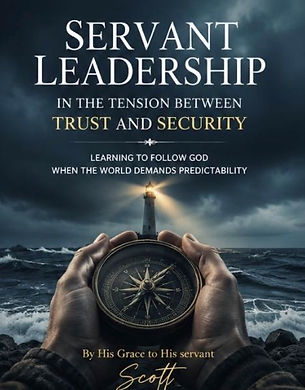
Servant Leadership in the Tension Between Trust and Security
Learning to Follow God When the World Demands Predictability

Servant leadership in the kingdom of God is not built on the same foundation as the systems of this world. It is not dismissive of responsibility, work, or wise planning, but it is deeply resistant to anything that replaces trust in God with trust in predictability. Many ministers today quietly live in a tension they rarely articulate: they feel the pull to remain anchored in God’s call while also trying to secure themselves through the same structures the world depends on—financial forecasting, backup plans, and systems of guaranteed stability. Yet Scripture continually calls the servant leader back to a different center, one rooted not in control, but in communion with God.
Jesus speaks directly into this tension when He says, “But seek first His kingdom…” (Matthew 6:33, NASB). The weight of that statement is not merely priority—it is reorientation. It is the redirection of trust away from secondary systems and back to the primary source of provision. In servant leadership, “seeking first” is not only spiritual devotion; it becomes financial posture, emotional stability, and decision-making clarity. When the order is reversed, even subtly, ministry begins to carry burdens it was never designed to hold.
The world trains leaders to secure outcomes before they move. It rewards certainty, measurable guarantees, and risk reduction. These are not inherently evil principles, but they are incomplete when placed over a life of calling. Proverbs reminds us, “Trust in the LORD… and He will make your paths straight” (Proverbs 3:5–6, NASB). Notice the direction of responsibility: trust is placed on God, and direction is produced by Him. The servant leader does not manufacture straight paths through strategic control; they walk them through surrendered trust.
This is where many ministers quietly struggle. The pressure of financial responsibility can begin to shape internal decisions more than spiritual conviction. Without realizing it, the desire for stability can begin to compete with obedience. Yet Scripture speaks plainly: “Make sure that your character is free from the love of money, being content with what you have; for He Himself has said, ‘I will never desert you’” (Hebrews 13:5, NASB). The issue is not money itself, but the internal dependence placed upon it for peace. When financial security becomes the anchor of the heart, calling begins to feel unstable—even when God has not moved.
Servant leadership requires a different kind of strength: the ability to live faithfully without demanding full visibility. “For we walk by faith, not by sight” (2 Corinthians 5:7, NASB). This is not poetic language for uncertainty; it is a leadership reality. Faith does not eliminate planning, but it refuses to bow to planning as ultimate security. The servant leader plans with wisdom but rests in obedience, not in outcomes.
The conflict becomes most visible when leaders attempt to live with one foot fully in the kingdom and one foot fully in the world’s system of security. Over time, this divided posture can produce quiet compromise—not always moral failure, but directional drift. Decisions begin to be shaped more by fear of lack than by clarity of calling. Yet Jesus defines discipleship differently: “If anyone wishes to come after Me, he must deny himself, and take up his cross daily…” (Luke 9:23, NASB). The word “daily” matters. It implies ongoing surrender, not one-time commitment. Servant leadership is sustained through repeated release of control.
This does not mean irresponsibility. Scripture also affirms provision: “And my God will supply all your needs…” (Philippians 4:19, NASB). But provision is not presented as something secured through systems alone—it is supplied through relationship with the One who calls. The servant leader learns to live in that tension without resolving it through worldly substitutes. Even David testified, “I have not seen the righteous forsaken…” (Psalm 37:25, NASB). Not because life was always predictable, but because God remained faithful through every unknown.
At the heart of servant leadership is this unavoidable truth: security is not a system, it is a Person. When leaders attempt to replace relational trust with structural guarantees, they may gain stability in appearance, but lose sensitivity in calling. True servant leadership does not reject wisdom; it refuses to elevate wisdom above obedience.
The mature leader learns to hold both responsibility and surrender in the same hands. They work diligently, plan carefully, and steward well—but they do not anchor their peace in what they can control. Their stability comes from trust, not calculation. And in that place, ministry stops being a performance of security and becomes again what it was always meant to be: a life walked step by step with God.
Recent Devotionals
El Liderazgo Servicial En La Tensión Entre La Confianza Y La Seguridad
Aprender A Seguir A Dios Cuando El Mundo Exige Previsibilidad
El liderazgo de servicio en el reino de Dios no se construye sobre los mismos cimientos que los sistemas de este mundo. No resta importancia a la responsabilidad, al trabajo ni a la planificación sensata, pero se resiste profundamente a todo lo que sustituya la confianza en Dios por la confianza en lo previsible. Hoy, muchos ministros viven en silencio una tensión que rara vez expresan: sienten el llamado a permanecer firmes en el llamado de Dios, mientras también intentan asegurarse mediante las mismas estructuras de las que depende el mundo: proyecciones financieras, planes alternativos y sistemas que prometen estabilidad. Sin embargo, las Escrituras llaman continuamente al líder siervo a volver a un centro distinto, fundado no en el control, sino en la comunión con Dios.
Jesús aborda directamente esta tensión cuando dice: «Pero busquen primero Su reino…» (Mateo 6:33, NASB). El peso de esta afirmación no radica únicamente en la prioridad, sino en un cambio de orientación: dirigir la confianza, apartándola de los sistemas secundarios y devolviéndola a la fuente principal de provisión. En el liderazgo de servicio, «buscar primero» no es solo devoción espiritual; también se convierte en una postura financiera, estabilidad emocional y claridad para tomar decisiones. Cuando se invierte el orden, aunque sea sutilmente, el ministerio empieza a cargar con responsabilidades que nunca fue concebido para soportar.
El mundo enseña a los líderes a asegurarse de los resultados antes de actuar. Premia la certeza, las garantías cuantificables y la reducción de riesgos. Estos principios no son malos en sí mismos, pero son insuficientes cuando se anteponen a una vida de llamado. Proverbios nos recuerda: «Confía en el SEÑOR… y Él enderezará tus caminos» (Proverbios 3:5–6, NASB). Observemos dónde recae la responsabilidad: la confianza se deposita en Dios, y Él es quien da dirección. El líder siervo no fabrica caminos rectos mediante el control estratégico; los recorre confiando y rindiéndose a Dios.
Aquí es donde muchos ministros luchan en silencio. La presión de la responsabilidad financiera puede empezar a influir en las decisiones internas más que las convicciones espirituales. Sin darse cuenta, el deseo de estabilidad puede comenzar a competir con la obediencia. Sin embargo, las Escrituras lo dicen claramente: «Asegúrense de que su carácter esté libre del amor al dinero y conténtense con lo que tienen; porque Él mismo ha dicho: “Nunca te dejaré ni te desampararé”» (Hebreos 13:5, NASB). El problema no es el dinero en sí, sino la dependencia interior que se deposita en él para alcanzar la paz. Cuando la seguridad financiera se convierte en el ancla del corazón, el llamado empieza a parecer inestable, aunque Dios no se haya movido.
El liderazgo de servicio requiere otra clase de fortaleza: la capacidad de vivir fielmente sin exigir una visión completa. «Porque por fe andamos, no por vista» (2 Corintios 5:7, NASB). No es una expresión poética para referirse a la incertidumbre; es una realidad del liderazgo. La fe no elimina la planificación, pero se niega a considerar la planificación como la seguridad suprema. El líder siervo planifica con sensatez, pero descansa en la obediencia, no en los resultados.
El conflicto se hace más evidente cuando los líderes intentan vivir con un pie plenamente en el reino y el otro plenamente en el sistema de seguridad del mundo. Con el tiempo, esta postura dividida puede conducir a concesiones silenciosas: no siempre a una falla moral, pero sí a un desvío de rumbo. Las decisiones empiezan a estar más determinadas por el temor a la escasez que por la claridad del llamado. Sin embargo, Jesús define el discipulado de otro modo: «Si alguien quiere venir en pos de Mí, niéguese a sí mismo, tome su cruz cada día…» (Lucas 9:23, NASB). La palabra «cada día» importa. Implica una entrega continua, no un compromiso de una sola vez. El liderazgo de servicio se sostiene mediante la renuncia reiterada al control.
Esto no significa actuar con irresponsabilidad. Las Escrituras también afirman la provisión: «Y mi Dios suplirá todas sus necesidades…» (Filipenses 4:19, NASB). Pero la provisión no se presenta como algo que se asegura únicamente por medio de sistemas; proviene de la relación con Aquel que llama. El líder siervo aprende a vivir con esa tensión sin resolverla mediante sustitutos mundanos. Incluso David dio testimonio: «No he visto al justo desamparado…» (Salmo 37:25, NASB). No porque la vida siempre fuera previsible, sino porque Dios permaneció fiel en medio de cada incertidumbre.
En el corazón del liderazgo de servicio hay una verdad ineludible: la seguridad no es un sistema; es una Persona. Cuando los líderes intentan sustituir la confianza relacional por garantías estructurales, quizá logren una apariencia de estabilidad, pero pierdan sensibilidad al llamado. El verdadero liderazgo de servicio no rechaza la sabiduría; se niega a ponerla por encima de la obediencia.
El líder maduro aprende a sostener en las mismas manos tanto la responsabilidad como la rendición. Trabaja con diligencia, planifica con cuidado y administra bien, pero no ancla su paz en lo que puede controlar. Su estabilidad proviene de la confianza, no del cálculo. Y en ese lugar, el ministerio deja de ser una exhibición de seguridad y vuelve a ser lo que siempre debió ser: una vida que se recorre paso a paso con Dios.
在信任与安全的张力中践行服务型领导
当世界要求一切都可预测时,学习跟随上帝
神国中的仆人式领导,并非建立在这个世界各种体系所依托的同一根基之上。它并不轻视责任、工作或明智的规划,却强烈抗拒任何以对可预测性的信赖取代对神的信靠的做法。如今,许多事奉者默默地活在一种鲜少言明的张力之中:他们感受到自己蒙召要扎根于神的呼召,同时又试图借助世人所倚赖的同一套结构来保障自己——财务预测、备用方案,以及确保稳定的体系。然而,圣经不断呼召仆人领袖回归另一个中心:这个中心不在于掌控,而在于与神相交。
耶稣在说“你们要先求他的国……”时,直接回应了这种张力(马太福音 6:33,NASB)。这句话的分量不只在于优先次序,更在于重新校准方向:将信靠从次要的体系中转移出来,重新归向供应的首要源头。在仆人式领导中,“先求”不仅意味着属灵上的委身,也会体现在财务态度、情绪稳定和决策清晰度上。次序一旦颠倒,哪怕只是微妙地颠倒,事工便开始承担原本就不该由它承担的重担。
这个世界教导领袖在行动之前先确保结果。它奖赏确定性、可衡量的保证和风险规避。这些原则本身并非邪恶,但若将它们置于蒙召的人生之上,便是不完整的。《箴言》提醒我们:“你要信靠耶和华……他必使你的道路平直”(《箴言》3:5–6,NASB)。请留意责任的归属:信靠是交托给上帝的,而方向由他指引。仆人式领袖不会通过策略性控制来开辟平坦的道路;他们凭着交托于上帝的信靠,踏上这条道路。
许多牧者都在这里默默挣扎。经济责任带来的压力,可能开始左右内心的决定,甚至超过属灵信念的影响。不知不觉间,对安稳的渴望可能与顺服彼此争竞。然而,圣经对此说得很清楚:“你们存心不可贪爱钱财,要以自己所有的为满足;因为主曾说:‘我总不撇下你,也不丢弃你’”(希伯来书 13:5,NASB)。问题不在于金钱本身,而在于人把它当作内心平安的依靠。当财务保障成了心灵的锚,即便上帝从未离开,蒙召的道路也会让人觉得不再稳固。
仆人式领导需要一种不同的力量:即使无法看清全貌,也能忠心而行的能力。“因我们行事为人是凭着信心,不是凭着眼见。”(哥林多后书 5:7,NASB)这并非用诗意的语言描述不确定性,而是领导力的现实。信心不会让人放弃规划,却拒绝把规划奉为终极保障。仆人式领导者以智慧规划,却安于顺服,而非执着于结果。
当领袖试图一只脚完全踏在神的国里,另一只脚完全踏在世界的安全体系中时,这种冲突就会变得最为明显。久而久之,这种分裂的姿态可能导致悄无声息的妥协——未必总是道德上的失守,却会让方向逐渐偏移。决策开始更多受到对匮乏的恐惧左右,而不是由对使命的清晰认识引导。然而,耶稣对门徒身份有不同的定义:“若有人要跟从我,就当舍己,天天背起他的十字架来跟从我……”(路加福音 9:23,NASB)。「天天」这个词至关重要。它意味着持续不断地降服,而非一次性的承诺。仆人式领导力,需要通过一次又一次放下掌控来维系。
这并不意味着不负责任。圣经也肯定神会供应:“我的神必照着他荣耀的丰富,在基督耶稣里使你们一切所需用的都充足……”(《腓立比书》4:19,NASB)。但供应并非单靠某种体系就能确保的,而是来自与那位呼召人的主之间的关系。仆人式领袖学会在这种张力中生活,而不以世俗的替代品来化解它。大卫也曾见证说:“我未见过义人被撇弃……”(《诗篇》37:25,NASB)。这并不是因为人生总是尽在掌握,而是因为无论前路多么未知,神始终信实。
仆人式领导的核心,有一个无法回避的真相:安全感不是一种制度,而是一位位格者。当领导者试图用结构性的保障取代关系中的信任时,或许能获得表面上的稳定,却会失去对呼召的敏锐。真正的仆人式领导并不排斥智慧;它只是不愿将智慧置于顺服之上。
成熟的领袖学会同时担当责任、交托自己。他们勤勉做事,周密计划,忠心管理所托付的一切——但他们不会把平安寄托在自己能够掌控的事上。他们的稳固源于信靠,而非盘算。在这样的状态中,事奉不再是一场彰显安全感的表演,而是回归它原本的样子:与神同行,一步一步走过人生。