October 6
Servant Leaders at the Lord’s Table
Remembering Christ, Examining the Heart, and Walking in Love
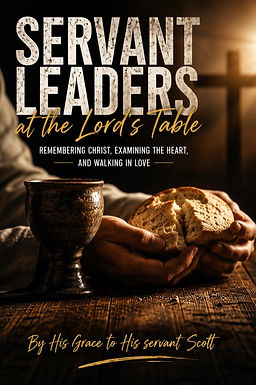
One of the greatest dangers in servant leadership is becoming so busy serving others that we neglect our own relationship with Christ. Ministry responsibilities, leadership demands, and the needs of people can slowly pull our attention away from the One we are called to serve. This is why the Lord’s Supper is such a precious gift. It is more than a church ordinance; it is an opportunity to pause, remember, reflect, repent, and realign our hearts with Jesus.
In 1 Corinthians 11:23-34, Paul addresses abuses that had developed in the Corinthian church during the Lord’s Supper. What was meant to be a celebration of Christ’s sacrifice and the unity of believers had become marked by selfishness, division, and spiritual carelessness. Through Paul’s correction, we discover powerful lessons for every servant leader. The Lord’s Table teaches us four important directions for spiritual health: look back, look ahead, look within, and look around.
First, servant leaders must look back. Jesus said, “Do this in remembrance of Me” (1 Corinthians 11:24). The bread reminds us of His body given for us, and the cup reminds us of His blood shed for our sins. Everything we have as believers centers on the cross. Romans 5:8 says, “But God demonstrates His own love toward us, in that while we were yet sinners, Christ died for us.”
The cross keeps leaders humble. It reminds us that we were not saved because of our abilities, accomplishments, or righteousness. We were saved by grace. When servant leaders continually remember Christ’s sacrifice, pride loses its grip and gratitude fills the heart. We become more compassionate toward others because we remember how much mercy has been shown to us.
Second, servant leaders must look ahead. Paul writes, “For as often as you eat this bread and drink the cup, you proclaim the Lord’s death until He comes” (1 Corinthians 11:26). The Lord’s Supper points not only to Calvary but also to Christ’s return. Servant leaders are people of hope.
Leadership often involves challenges, disappointments, and seasons when progress seems slow. Yet we are reminded that Jesus is coming again. Our labor is not in vain. Every act of service, every sacrifice, every prayer, and every seed planted in another person’s life carries eternal value. Scripture says, “We know that when He appears, we will be like Him, because we will see Him just as He is” (1 John 3:2). This future hope strengthens present faithfulness.
Third, servant leaders must look within. Paul instructs believers, “But a person must examine himself, and in so doing he is to eat of the bread and drink of the cup” (1 Corinthians 11:28). Notice that Paul says to examine ourselves, not everyone else. It is easy to see the faults of others while overlooking our own weaknesses.
Healthy servant leaders regularly invite the Holy Spirit to search their hearts. David prayed, “Search me, God, and know my heart; Put me to the test and know my anxious thoughts; And see if there is any hurtful way in me, and lead me in the everlasting way” (Psalm 139:23-24). Before we lead others, we must allow God to lead us. Before we correct others, we must be willing to receive correction ourselves.
Unconfessed sin, pride, bitterness, and self-reliance can quietly weaken spiritual influence. The Lord’s Table calls us back to humility, repentance, and dependence upon God’s grace. Servant leaders remain teachable because they understand that growth never stops.
Fourth, servant leaders must look around. Paul speaks about discerning the body of Christ. The Corinthians were participating in a meal designed to celebrate unity while living in division. Their actions contradicted the very message they were proclaiming.
Servant leadership is ultimately about people. It is about loving those whom Christ loves. Jesus said, “By this all people will know that you are My disciples: if you have love for one another” (John 13:35). A leader cannot genuinely grow closer to Christ while intentionally distancing himself from Christ’s people.
The Lord’s Table reminds us that we belong to one family. We are connected through one Savior and one Spirit. Healthy servant leaders pursue reconciliation, extend forgiveness, and protect unity. They build bridges rather than walls and seek restoration rather than division.
The Lord’s Supper calls servant leaders to live with gratitude, humility, hope, repentance, and love. We look back to remember Christ’s sacrifice. We look ahead to His return. We look within to examine our hearts. We look around to strengthen our relationships with His people.
When we approach the Lord’s Table this way, it becomes more than a religious observance. It becomes a place of renewal. Our hearts are refreshed, our priorities are realigned, and our love for Christ deepens. The servant leader who continually remembers the cross, lives in expectation of Christ’s return, examines his own heart, and walks in love toward others will lead with both spiritual health and lasting influence. Such leadership reflects the heart of Jesus, who came “not to be served, but to serve, and to give His life as a ransom for many” (Mark 10:45).
Recent Devotionals

Líderes Siervos En La Mesa Del Señor
Recordar A Cristo, Examinar El Corazón Y Andar En Amor
Uno de los mayores peligros del liderazgo de servicio es estar tan ocupados sirviendo a los demás que descuidemos nuestra propia relación con Cristo. Las responsabilidades del ministerio, las exigencias del liderazgo y las necesidades de las personas pueden ir apartando poco a poco nuestra atención de Aquel a quien estamos llamados a servir. Por eso, la Cena del Señor es un regalo tan valioso. Es más que una ordenanza de la iglesia: es una oportunidad para hacer una pausa, recordar, reflexionar, arrepentirnos y volver a alinear nuestro corazón con Jesús.
En 1 Corintios 11:23-34, Pablo aborda los abusos que habían surgido en la iglesia de Corinto durante la Cena del Señor. Lo que debía ser una celebración del sacrificio de Cristo y de la unidad de los creyentes se había caracterizado por el egoísmo, la división y la indiferencia espiritual. A través de la corrección de Pablo, descubrimos valiosas lecciones para todo líder servidor. La Mesa del Señor nos enseña cuatro pautas importantes para la salud espiritual: mirar atrás, mirar hacia adelante, mirar hacia nuestro interior y mirar a nuestro alrededor.
En primer lugar, los líderes servidores deben mirar atrás. Jesús dijo: «Hagan esto en memoria de mí» (1 Corintios 11:24). El pan nos recuerda su cuerpo entregado por nosotros, y la copa nos recuerda su sangre derramada por nuestros pecados. Todo lo que tenemos como creyentes se centra en la cruz. Romanos 5:8 dice: «Pero Dios demuestra su amor por nosotros en que, siendo aún pecadores, Cristo murió por nosotros».
La cruz mantiene humildes a los líderes. Nos recuerda que no fuimos salvos por nuestras capacidades, logros ni justicia propia. Fuimos salvos por gracia. Cuando los líderes servidores recuerdan continuamente el sacrificio de Cristo, el orgullo pierde su dominio y el corazón se llena de gratitud. Nos volvemos más compasivos con los demás porque recordamos cuánta misericordia se nos ha mostrado.
En segundo lugar, los líderes servidores deben mirar hacia adelante. Pablo escribe: «Porque todas las veces que coman este pan y beban esta copa, proclaman la muerte del Señor hasta que él venga» (1 Corintios 11:26). La Cena del Señor no solo señala el Calvario, sino también el regreso de Cristo. Los líderes servidores son personas de esperanza.
El liderazgo suele implicar desafíos, decepciones y temporadas en las que el progreso parece lento. Sin embargo, se nos recuerda que Jesús volverá. Nuestro trabajo no es en vano. Cada acto de servicio, cada sacrificio, cada oración y cada semilla plantada en la vida de otra persona tienen valor eterno. La Escritura dice: «Sabemos que, cuando él se manifieste, seremos semejantes a él, porque lo veremos tal como él es» (1 Juan 3:2). Esta esperanza futura fortalece nuestra fidelidad en el presente.
En tercer lugar, los líderes servidores deben mirar hacia su interior. Pablo instruye a los creyentes: «Cada uno debe examinarse a sí mismo y, después de hacerlo, comer del pan y beber de la copa» (1 Corintios 11:28). Notemos que Pablo dice que nos examinemos a nosotros mismos, no a los demás. Es fácil ver las faltas ajenas y pasar por alto nuestras propias debilidades.
Los líderes servidores saludables invitan regularmente al Espíritu Santo a examinar su corazón. David oró: «Examíname, oh Dios, y conoce mi corazón; ponme a prueba y conoce mis pensamientos ansiosos. Mira si hay en mí algún camino perjudicial y guíame por el camino eterno» (Salmo 139:23-24). Antes de guiar a los demás, debemos permitir que Dios nos guíe. Antes de corregir a otros, debemos estar dispuestos a aceptar corrección nosotros mismos.
El pecado no confesado, el orgullo, la amargura y la autosuficiencia pueden debilitar silenciosamente nuestra influencia espiritual. La Mesa del Señor nos llama a volver a la humildad, al arrepentimiento y a depender de la gracia de Dios. Los líderes servidores mantienen una actitud enseñable porque entienden que el crecimiento nunca se detiene.
En cuarto lugar, los líderes servidores deben mirar a su alrededor. Pablo habla de discernir el cuerpo de Cristo. Los corintios participaban en una comida destinada a celebrar la unidad mientras vivían divididos. Sus acciones contradecían el mensaje mismo que proclamaban.
En última instancia, el liderazgo servidor se trata de las personas. Se trata de amar a quienes Cristo ama. Jesús dijo: «En esto conocerán todos que son mis discípulos: si se aman unos a otros» (Juan 13:35). Un líder no puede acercarse genuinamente más a Cristo mientras se distancia intencionalmente del pueblo de Cristo.
La Mesa del Señor nos recuerda que pertenecemos a una sola familia. Estamos unidos por un solo Salvador y un solo Espíritu. Los líderes servidores saludables procuran la reconciliación, ofrecen perdón y protegen la unidad. Construyen puentes en vez de muros y buscan la restauración en vez de la división.
La Cena del Señor llama a los líderes servidores a vivir con gratitud, humildad, esperanza, arrepentimiento y amor. Miramos atrás para recordar el sacrificio de Cristo. Miramos hacia adelante, a su regreso. Miramos hacia nuestro interior para examinar el corazón. Miramos a nuestro alrededor para fortalecer nuestras relaciones con su pueblo.
Cuando nos acercamos así a la Mesa del Señor, esta se convierte en algo más que una observancia religiosa. Se convierte en un lugar de renovación. Nuestro corazón se reanima, nuestras prioridades se reajustan y nuestro amor por Cristo se profundiza. El líder servidor que recuerda continuamente la cruz, vive esperando el regreso de Cristo, examina su propio corazón y trata a los demás con amor, liderará con salud espiritual e influencia duradera. Ese liderazgo refleja el corazón de Jesús, quien vino «no para ser servido, sino para servir y para dar su vida en rescate por muchos» (Marcos 10:45).
主的筵席上的仆人式领袖
纪念基督、省察内心、凭爱心行事
仆人式领导最大的危险之一,就是忙于服事他人,以至于忽略了自己与基督的关系。事工责任、领导重担以及人们的需要,都可能渐渐转移我们的注意力,使我们远离那位我们蒙召去服事的主。因此,主的晚餐是如此宝贵的恩赐。它不仅仅是教会的一项礼仪,更是一个让我们停下脚步、记念、反思、悔改,并使自己的心重新归向耶稣的机会。
在《哥林多前书》11:23-34中,保罗指出哥林多教会在领受圣餐时出现的种种弊端。原本是为纪念基督的牺牲、彰显信徒合一而举行的聚会,却充斥着自私、纷争和属灵上的漫不经心。透过保罗的纠正,我们可以从中领受对每一位仆人式领袖都极有帮助的教训。圣餐教导我们关注四个对灵命健康至关重要的方向:回顾过去、展望将来、审视内心、关怀身边的人。
首先,仆人式领袖必须回顾过去。耶稣说:“你们应当如此行,为的是记念我”(《哥林多前书》11:24)。饼让我们想起祂为我们舍去的身体,杯让我们想起祂为我们的罪所流的血。我们作为信徒所拥有的一切,都以十字架为中心。《罗马书》5:8说:“惟有基督在我们还作罪人的时候为我们死,神的爱就在此向我们显明了。”
十字架使领袖保持谦卑。它提醒我们,得救并不是因为自己的能力、成就或义行,而是因着恩典。当仆人式领袖不断记念基督的牺牲时,骄傲便不再辖制我们,感恩则充满我们的心。我们也会对他人更有怜悯,因为我们记得自己蒙了何等大的恩慈。
其次,仆人式领袖必须展望将来。保罗写道:“你们每逢吃这饼、喝这杯,是表明主的死,直等到他来”(《哥林多前书》11:26)。圣餐不仅指向各各他,也指向基督的再来。仆人式领袖是满怀盼望的人。
领导事奉往往伴随着挑战、失望,以及进展似乎缓慢的时期。然而,我们要记得耶稣必再来。我们的劳苦并非徒然。每一次服事、每一份牺牲、每一个祷告,以及每一粒撒在人生命中的种子,都具有永恒的价值。经上说:“我们知道,主若显现,我们必要像他,因为必得见他的真体”(《约翰一书》3:2)。这份对将来的盼望,坚固我们此刻忠心持守。
第三,仆人式领袖必须审视内心。保罗吩咐信徒:“人应当自己省察,然后吃这饼、喝这杯”(《哥林多前书》11:28)。请注意,保罗说的是省察自己,而不是别人。我们很容易看见别人的过失,却忽略自己的软弱。
灵命健康的仆人式领袖会常常求圣灵鉴察自己的内心。大卫曾这样祷告:“神啊,求你鉴察我,知道我的心思;试炼我,知道我的意念;看在我里面有什么恶行没有,引导我走永生的道路”(《诗篇》139:23-24)。我们带领别人之前,必须先让神带领自己;我们纠正别人之前,也必须愿意接受别人的纠正。
未承认的罪、骄傲、苦毒和自恃,都可能悄然削弱属灵影响力。圣餐呼唤我们回到谦卑、悔改,并倚靠神的恩典。仆人式领袖始终保持受教的心,因为他们明白,成长永无止境。
第四,仆人式领袖必须关怀身边的人。保罗谈到分辨基督的身体。哥林多信徒参加的是一场本为庆祝合一而设的筵席,他们的生活却充满纷争。他们的行为与自己所宣扬的信息背道而驰。
仆人式领导归根结底关乎人,关乎爱基督所爱的人。耶稣说:“你们若有彼此相爱的心,众人因此就认出你们是我的门徒了”(《约翰福音》13:35)。一个领袖若刻意疏远基督的子民,就不可能真正与基督更加亲近。
圣餐提醒我们,我们同属一个家。我们因同一位救主、同一位圣灵而彼此相连。灵命健康的仆人式领袖致力于和好,给予饶恕,并守护合一。他们搭建桥梁,而不是筑起高墙;他们寻求修复关系,而不是制造分裂。
圣餐呼召仆人式领袖活出感恩、谦卑、盼望、悔改和爱。我们回顾过去,记念基督的牺牲;我们展望将来,盼望祂再来;我们审视内心,省察自己的心;我们关怀身边的人,增进与祂子民的关系。
我们若以这样的心态领受圣餐,它就不再只是一个宗教仪式,而会成为更新生命之处。我们的心灵得着更新,优先次序重新调整,对基督的爱也更加深厚。仆人式领袖若不断记念十字架,满怀期待地等候基督再来,省察自己的内心,并以爱待人,就能以灵命健康和持久的影响力来带领他人。这样的领导彰显了耶稣的心肠;祂来“不是要受人的服事,乃是要服事人,并且要舍命,作多人的赎价”(《马可福音》10:45)。