June 21, 2026
The Courage To Make Things Right
The Difference Between Real Amends & Manipulative Apologies

When we hurt someone, something inside us knows the relationship is no longer whole. Most people respond to that discomfort with quick apologies, vague words, or emotional language meant to relieve guilt — not repair the damage. But biblical restoration is different. True amends are not about easing our feelings; they are about acknowledging the truth, owning what we broke, and honoring the person we harmed. Proverbs 28:13 says, “Whoever conceals his sins does not prosper, but whoever confesses and forsakes them finds mercy.” God doesn’t bless hiding. He blesses honesty.
A manipulative apology sounds like: “I’m sorry you felt that way,” or “I was going through a lot,” or “We both made mistakes.” It shifts blame, minimizes the damage, asks for sympathy, or quietly attempts to regain the relationship. These are not amends — they are strategies to escape consequences. Jesus said in Matthew 5:37, “Let your ‘Yes’ be yes and your ‘No’ be no.” That means clarity, not confusion. Responsibility, not excuses. Truth, not performance.
A true amends letter has three marks. First, it names what you did without spin or self-defense. Second, it acknowledges the pain you caused without demanding anything in return. Third, it releases the other person from any expectation — no hooks, no pressure, no subtle hope they respond the way you want. Real amends say, “What I did was wrong. You did not deserve the impact of my choices. I take full responsibility.” Nothing more. Nothing less. That humility honors God, honors truth, and honors the person.
There is another layer — a deeper one — that many people avoid: restitution. Scripture is clear that when possible, repentance includes repairing what was damaged. In Luke 19:8, Zacchaeus says, “If I have taken anything from anyone by false accusation, I restore fourfold.” That is not legalism. That is love in action. Restitution is saying, “I will make right what I made wrong.” Sometimes restitution is financial. Sometimes it is returning what we took. Sometimes it is rebuilding trust through consistency. Sometimes it is cleaning up a mess we created. Romans 12:18 says, “As far as it depends on you, live at peace with everyone.” Restitution is the “as far as it depends on you.”
Restitution does not guarantee reconciliation. Amends do not guarantee restored relationship. The person you harmed may never respond. They may not trust you again. They may not want connection. And that is their right. Amends are about integrity, not outcome. They are about obedience to God, not controlling someone’s reaction. A mature heart says, “I will do what is right — even if it changes nothing on their side.” That’s what grace looks like lived out.
Sometimes the hardest part is facing our own shame. But Scripture gives us courage: “If we confess our sins, He is faithful and just to forgive us” (1 John 1:9). God does not humiliate those who tell the truth. He heals them. When we take ownership without excuses, when we confess without fear, when we make things right without demanding anything back, we walk in the kind of freedom Jesus describes in John 8:36: “So if the Son sets you free, you will be free indeed.”
True amends are not about the past — they are about the kind of person we are becoming. They are proof that growth is real, that humility has taken root, and that we value people more than our pride. Anyone can say “I’m sorry.” Only the transformed can say, “I was wrong, I accept responsibility, and as far as it depends on me, I will make this right.”
This is the path of peace. This is the way of Christ. And this is how broken relationships find the doorway to healing — one honest, humble, responsibility-filled step at a time.
Recent Devotionals
Jun 24, 2026
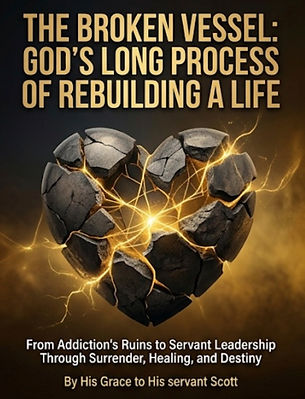
The Broken Vessel: God’s Long Process of Rebuilding a Life
From Addiction’s Ruins to Servant Leadership Through Surrender, Healing, and Destiny
El valor de arreglar las cosas
La diferencia entre una verdadera reparación y una disculpa manipuladora
Cuando herimos a alguien, algo dentro de nosotros sabe que la relación ya no está completa. La mayoría de las personas responden a esa incomodidad con disculpas rápidas, palabras vagas o lenguaje emocional destinado a aliviar la culpa, no a reparar el daño. Pero la restauración bíblica es diferente. La verdadera reparación no tiene como propósito aliviar nuestros sentimientos; tiene como propósito reconocer la verdad, asumir la responsabilidad por lo que rompimos y honrar a la persona que lastimamos. Proverbios 28:13 dice: “El que encubre sus transgresiones no prosperará, pero el que las confiesa y las abandona hallará compasión.” Dios no bendice el ocultamiento. Él bendice la honestidad.
Una disculpa manipuladora suena así: “Lamento que te hayas sentido así”, o “Estaba pasando por muchas cosas”, o “Los dos cometimos errores”. Estas expresiones desvían la culpa, minimizan el daño, buscan simpatía o intentan silenciosamente recuperar la relación. Eso no es hacer una reparación; son estrategias para escapar de las consecuencias. Jesús dijo en Mateo 5:37: “Pero sea vuestro hablar: Sí, sí; no, no.” Eso significa claridad, no confusión. Responsabilidad, no excusas. Verdad, no apariencia.
Una verdadera carta de reparación tiene tres características. Primero, identifica claramente lo que hiciste, sin justificarte ni defenderte. Segundo, reconoce el dolor que causaste sin exigir nada a cambio. Tercero, libera a la otra persona de cualquier expectativa: sin ganchos, sin presión, sin la esperanza oculta de que responda como tú deseas. Una verdadera reparación dice: “Lo que hice estuvo mal. No merecías el impacto de mis decisiones. Asumo toda la responsabilidad.” Nada más. Nada menos. Esa humildad honra a Dios, honra la verdad y honra a la persona.
Hay otro nivel, uno más profundo, que muchas personas evitan: la restitución. La Escritura es clara en que, cuando es posible, el arrepentimiento incluye reparar lo que fue dañado. En Lucas 19:8, Zaqueo dice: “Si he defraudado a alguien de algo, se lo restituiré cuadruplicado.” Eso no es legalismo. Es amor en acción. La restitución es decir: “Haré correcto aquello que hice incorrecto.” A veces la restitución es financiera. A veces implica devolver lo que tomamos. A veces significa reconstruir la confianza mediante una conducta constante. A veces significa limpiar el desorden que creamos. Romanos 12:18 dice: “Si es posible, en cuanto de vosotros dependa, estad en paz con todos los hombres.” La restitución es el “en cuanto de vosotros dependa”.
La restitución no garantiza la reconciliación. Hacer una reparación no garantiza que la relación sea restaurada. La persona que lastimaste puede que nunca responda. Puede que nunca vuelva a confiar en ti. Puede que no desee tener una relación contigo. Y ese es su derecho. Las reparaciones tienen que ver con la integridad, no con los resultados. Tienen que ver con la obediencia a Dios, no con controlar la reacción de otra persona. Un corazón maduro dice: “Haré lo correcto, aunque eso no cambie nada del otro lado.” Así es como se ve la gracia cuando se vive en la práctica.
A veces, la parte más difícil es enfrentar nuestra propia vergüenza. Pero la Escritura nos da valor: “Si confesamos nuestros pecados, Él es fiel y justo para perdonarnos los pecados y para limpiarnos de toda maldad” (1 Juan 1:9). Dios no humilla a quienes dicen la verdad. Él los sana. Cuando asumimos la responsabilidad sin excusas, cuando confesamos sin temor, cuando corregimos lo que está mal sin exigir nada a cambio, caminamos en la clase de libertad que Jesús describe en Juan 8:36: “Así que, si el Hijo os hace libres, seréis realmente libres.”
Las verdaderas reparaciones no se tratan del pasado; se tratan de la clase de persona en la que nos estamos convirtiendo. Son evidencia de que el crecimiento es real, de que la humildad ha echado raíces y de que valoramos a las personas más que a nuestro orgullo. Cualquiera puede decir: “Lo siento.” Solo una persona transformada puede decir: “Estuve equivocado, acepto la responsabilidad y, en cuanto dependa de mí, haré todo lo posible por corregirlo.”
Este es el camino de la paz. Este es el camino de Cristo. Y así es como las relaciones quebrantadas encuentran la puerta hacia la sanidad: un paso honesto, humilde y lleno de responsabilidad a la vez.
真正的弥补与操控性的道歉之间的区别
当我们伤害了别人,内心深处都会知道,这段关系已经不再完整。大多数人面对这种不舒服的感觉时,会很快说一句“对不起”,或说一些模糊的话、充满情绪的话,为的是减轻自己的内疚,而不是修复自己造成的伤害。但圣经所讲的恢复并不是这样。真正的弥补,不是为了让自己感觉好一点,而是诚实承认事实,承担自己造成的伤害,并尊重那个被我们伤害的人。箴言 28:13 说:“遮掩自己罪过的,必不亨通;承认离弃罪过的,必蒙怜恤。” 神不会祝福隐藏,祂祝福诚实。
操控性的道歉常常听起来像这样:“对不起,让你有这种感觉。”“我那段时间压力太大了。”“其实我们双方都有错。”这样的话把责任转移,淡化了伤害,试图博取同情,或者暗中希望借此重新得到对方的接纳。这些都不是真正的弥补,而只是逃避后果的方法。耶稣在马太福音 5:37 说:“你们的话,是,就说是;不是,就说不是。”这意味着要清楚,而不是含糊;要承担责任,而不是寻找借口;要讲真话,而不是做表面的表现。
真正的弥补有三个重要的特点。第一,要清楚承认自己做错了什么,不找理由,不为自己辩护。第二,要承认自己的行为给别人带来了怎样的伤害,而不是要求对方理解自己。第三,不对对方提出任何期待,不施加压力,也不暗中希望对方按自己的想法回应。真正的弥补会说:“我所做的是错的。你不应该承受我所造成的伤害。我愿意完全承担责任。”就是这么简单,不多也不少。这种谦卑尊荣神,尊荣真理,也尊荣被伤害的人。
还有一个更深的层面,是很多人愿意回避的,那就是赔偿与补偿。圣经清楚告诉我们,如果有可能,真正的悔改也包括尽力修复自己所造成的损失。在路加福音 19:8,撒该说:“我若讹诈了谁,就还他四倍。”这不是律法主义,而是爱真正活出来的表现。补偿就是说:“我愿意尽我所能,把我弄坏的事情尽力修复。”有时候,这种补偿是金钱上的赔偿;有时候,是归还我们拿走的东西;有时候,是长期用诚信和稳定的行动重新建立信任;还有时候,是亲自去收拾自己造成的残局。罗马书 12:18 说:“若是能行,总要尽力与众人和睦。”补偿,就是“尽力而为”的实际行动。
补偿并不保证双方一定会和好。真正的弥补,也不保证关系一定能够恢复。被你伤害的人,可能永远不会回应你;他们可能不会再信任你;也可能不愿意继续与你保持关系。而这完全是他们的权利。真正的弥补关注的是自己的品格,而不是最后的结果;关注的是顺服神,而不是控制别人的反应。一个成熟的人会说:“无论对方怎样回应,我都要去做神认为正确的事。”这才是真正活出恩典的样子。
很多时候,最困难的,是面对自己内心的羞耻感。但圣经给了我们勇气:“我们若认自己的罪,神是信实的,是公义的,必要赦免我们的罪,洗净我们一切的不义。”(约翰一书 1:9)神不会羞辱那些愿意说真话的人,祂会医治他们。当我们不找借口,愿意承担责任;当我们坦然认罪,不再惧怕;当我们尽力修复,却不要求任何回报,我们就开始经历耶稣在约翰福音 8:36 所说的自由:“所以天父的儿子若叫你们自由,你们就真自由了。”
真正的弥补,不只是为了处理过去,而是为了塑造未来的自己。它证明我们的生命真的在成长,谦卑已经扎根在我们的心里,我们开始看重别人,胜过维护自己的面子。任何人都可以说一句“对不起”,但只有真正被神改变的人,才能说:“我错了,我愿意承担全部责任,并且只要我能够做到,我愿意尽力把这件事修复。”
这就是通向平安的道路,这就是基督所走的道路。这也是破碎关系重新走向医治的开始——一步一步,以诚实、谦卑和勇于承担责任的态度,走向真正的恢复。