The Necessary Place of Sacrificial Service
May 25
Serving Where Nothing Is Gained
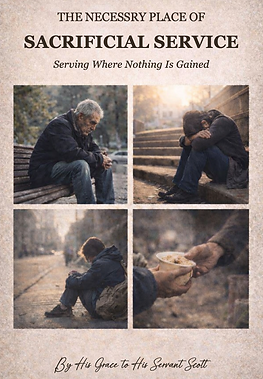
Scripture reveals a pattern that runs quietly but consistently through the formation of God’s people: every healthy life with God contains a place of sacrificial service where nothing is gained except obedience. This kind of giving is not primarily financial, though generosity may be involved. It is relational. It is the offering of time, presence, and care to people who cannot repay it, advance it, or affirm it. It exists outside of family obligation and close relational circles. It is chosen, not required. And it is essential for spiritual balance.
Jesus addressed this principle directly when He taught, “Beware of practicing your righteousness before other people in order to be seen by them” (Matthew 6:1). He went on to describe giving, praying, and fasting done in secret—acts that carry no public reward, no recognition, and no affirmation. “Your Father who sees in secret will reward you” (Matthew 6:4). The reward Jesus speaks of is not applause or platform, but alignment. God forms the heart in places where motive is exposed.
Throughout Scripture, God repeatedly trains His servants in hidden places. Moses spent decades tending sheep in obscurity before leading a nation. David learned faithfulness watching sheep long before anyone watched him. Paul labored with his hands and suffered quietly even while carrying apostolic authority. These hidden assignments were not detours; they were preparation. God uses unseen service to break self-dependence and to teach His servants how to serve without agenda.
There is a wisdom in what could be called a spiritual 80/20 principle. Much of what we do in life—and even in ministry—can be fulfilling. Fruit is visible. Encouragement is offered. Gratitude is expressed. While these things are not wrong, they can subtly shape us if they are all we know. Without balance, the heart can begin to drift toward serving where affirmation is strongest rather than where obedience is required. Scripture warns us that even good works can become self-serving if motive is not guarded. “Let nothing be done through selfish ambition or conceit” (Philippians 2:3).
That smaller, sacrificial portion—the hidden 20 percent—keeps us honest. It anchors the heart. It reminds us that we serve because Christ served us. Jesus Himself modeled this when He “made Himself nothing, taking the form of a servant” (Philippians 2:7). He washed feet that would soon walk away from Him. He loved without return. He served without leverage. In doing so, He revealed the heart of God.
Sacrificial service also protects us from spiritual imbalance. Paul warned the Corinthians that knowledge, gifting, and activity without love ultimately profit nothing (1 Corinthians 13:1–3). Love is most clearly tested where there is no visible gain. When we serve those who cannot thank us, repay us, or help us, our motives are purified. These spaces expose whether we are serving God or serving fulfillment.
In Breaking Free, one expression of this principle is homeless ministry. There is no platform attached to it. No recognition. No measurable return. It is often inconvenient and uncomfortable. It requires early mornings, patience, and presence. And yet, over time, a consistent pattern has emerged. Blessings, relationships, and opportunities often trace back—sometimes indirectly—to these moments of quiet obedience. Not because they were pursued, but because God honors faithfulness done without agenda. Scripture affirms this truth: “Whoever gives one of these little ones even a cup of cold water…will by no means lose his reward” (Matthew 10:42).
It is important to understand that this is not transactional. We do not serve in secret to get something from God. That would simply be another form of self-interest. We serve because obedience keeps us aligned with Him. And alignment places us where God can entrust more. “Humble yourselves, therefore, under the mighty hand of God so that at the proper time He may exalt you” (1 Peter 5:6).
Every life needs a place where sacrifice outweighs satisfaction. A place where giving costs something and returns nothing visible. These places keep us grounded, soften our hearts, and guard us from pride. They remind us that ministry is not about outcome, recognition, or reward—it is about faithfulness. And over time, those hidden acts shape us more deeply than the visible ones ever could.
God sees what is done in secret. He forms His servants there. And those who remain faithful in unseen places discover that the greatest gift of sacrificial service is not what comes from it—but what God does within us through it.
Recent Devotionals


El Lugar Necesario Del Servicio Sacrificial
Servir Donde Nada Se Gana
Las Escrituras revelan un patrón que recorre silenciosa pero constantemente la formación del pueblo de Dios: toda vida saludable con Dios incluye un espacio de servicio sacrificial en el que no se obtiene nada excepto obedecer. Este tipo de entrega no es principalmente económica, aunque puede implicar generosidad. Es relacional. Consiste en ofrecer tiempo, presencia y cuidado a personas que no pueden retribuirlo, impulsarnos ni darnos su aprobación. Se da fuera de las obligaciones familiares y de los círculos de relaciones estrechas. Es una elección, no una exigencia. Y es esencial para el equilibrio espiritual.
Jesús abordó directamente este principio cuando enseñó: «Cuídense de practicar su justicia delante de los demás para que ellos los vean» (Mateo 6:1). Luego habló de dar, orar y ayunar en secreto: actos que no reportan recompensa pública, reconocimiento ni aprobación. «Tu Padre, que ve en lo secreto, te recompensará» (Mateo 6:4). La recompensa de la que habla Jesús no es el aplauso ni una plataforma, sino la armonía con Dios. Dios forma el corazón allí donde quedan al descubierto las motivaciones.
A lo largo de las Escrituras, Dios forma repetidamente a sus siervos en lugares ocultos. Moisés pasó décadas cuidando ovejas en la oscuridad antes de guiar a una nación. David aprendió a ser fiel mientras cuidaba ovejas, mucho antes de que alguien se fijara en él. Pablo trabajó con sus manos y sufrió en silencio, aun cuando ejercía autoridad apostólica. Esas tareas ocultas no fueron desvíos, sino preparación. Dios usa el servicio que nadie ve para quebrantar la autosuficiencia y enseñar a sus siervos a servir sin segundas intenciones.
Hay sabiduría en lo que podría llamarse un principio espiritual del 80/20. Gran parte de lo que hacemos en la vida —e incluso en el ministerio— puede ser gratificante. Los frutos son visibles. Recibimos ánimo. Nos expresan gratitud. Aunque estas cosas no son malas, pueden moldearnos sutilmente si son todo lo que conocemos. Sin equilibrio, el corazón puede empezar a inclinarse a servir donde más aprobación recibe, en vez de donde la obediencia lo exige. Las Escrituras nos advierten que incluso las buenas obras pueden volverse egoístas si no cuidamos nuestras motivaciones. «No hagan nada por ambición egoísta ni por vanidad» (Filipenses 2:3).
Esa porción más pequeña y sacrificial —el 20 por ciento oculto— nos mantiene sinceros. Afirma el corazón. Nos recuerda que servimos porque Cristo nos sirvió. Jesús mismo nos dio el ejemplo cuando «se despojó a sí mismo, tomando forma de siervo» (Filipenses 2:7). Lavó los pies de quienes pronto se alejarían de él. Amó sin esperar nada a cambio. Sirvió sin buscar ventaja alguna. Al hacerlo, reveló el corazón de Dios.
El servicio sacrificial también nos protege del desequilibrio espiritual. Pablo advirtió a los corintios que el conocimiento, los dones y la actividad sin amor no aprovechan nada (1 Corintios 13:1–3). El amor se pone más claramente a prueba allí donde no hay ningún beneficio visible. Cuando servimos a quienes no pueden agradecérnoslo, recompensarnos ni ayudarnos, nuestras motivaciones se purifican. Estos espacios dejan al descubierto si servimos a Dios o buscamos sentirnos realizados.
En Breaking Free, una expresión de este principio es el ministerio dedicado a las personas sin hogar. No hay una plataforma asociada. No hay reconocimiento. No hay resultados cuantificables. A menudo es incómodo y poco conveniente. Requiere madrugar, tener paciencia y estar presente. Y, sin embargo, con el tiempo, ha surgido un patrón constante. Las bendiciones, las relaciones y las oportunidades suelen remontarse —a veces de manera indirecta— a estos momentos de obediencia silenciosa. No porque se hayan buscado, sino porque Dios honra la fidelidad que no persigue ningún interés personal. Las Escrituras afirman esta verdad: «Quien dé a uno de estos pequeños siquiera un vaso de agua fría… de ningún modo perderá su recompensa» (Mateo 10:42).
Es importante entender que esto no es una transacción. No servimos en secreto para obtener algo de Dios. Eso no sería más que otra forma de interés propio. Servimos porque la obediencia nos mantiene alineados con Él. Y esa alineación nos coloca en el lugar donde Dios puede confiarnos más. «Humíllense, pues, bajo la poderosa mano de Dios, para que Él los exalte a su debido tiempo» (1 Pedro 5:6).
Toda vida necesita un lugar donde el sacrificio pese más que la satisfacción. Un lugar donde dar cueste algo y no produzca ningún beneficio visible. Estos lugares nos mantienen con los pies en la tierra, ablandan nuestro corazón y nos protegen del orgullo. Nos recuerdan que el ministerio no se trata de resultados, reconocimiento ni recompensa: se trata de fidelidad. Y, con el tiempo, esos actos ocultos nos moldean mucho más profundamente de lo que jamás podrían hacerlo los visibles.
Dios ve lo que se hace en secreto. Allí forma a sus siervos. Y quienes permanecen fieles en lugares donde nadie los ve descubren que el mayor regalo del servicio sacrificial no es lo que se obtiene de él, sino lo que Dios obra en nuestro interior por medio de él.
牺牲性服事不可或缺的地位
在得不到任何回报之处服侍
圣经揭示了一种贯穿神子民成长历程的规律:每一种与神同行的健康生命,都有一处献上牺牲、默默服事的地方,在那里,人所得到的只有顺服。这种付出主要并非金钱上的,尽管其中可能包含慷慨给予;它关乎人与人的关系。它是把时间、陪伴和关怀献给那些无法回报你、助你前行或给予你肯定的人。这种付出不属于家庭责任,也不在亲密关系圈之内。它出于自愿,而非受人要求;对于属灵生命的平衡,它不可或缺。
耶稣教导说:“你们要小心,不可将善事行在人的面前,故意叫他们看见”(马太福音 6:1),祂直接阐明了这个原则。接着,祂讲到暗中施舍、祷告和禁食——这些行为不会带来公开的奖赏、认可或肯定。“你父在暗中察看,必然报答你”(马太福音 6:4)。耶稣所说的奖赏,不是掌声或显要地位,而是与神的心意相合。神在动机显露的地方塑造人的内心。
纵观整本圣经,神一再在隐秘之处操练祂的仆人。摩西在默默无闻中牧羊数十年,之后才带领一个民族。大卫在无人注视他之前,早已在看顾羊群时学会忠心。保罗即使肩负使徒的权柄,仍亲手劳作、默默受苦。这些隐秘的托付并非绕远路,而是预备。神借着不为人知的服事,破除人对自己的倚靠,并教导祂的仆人如何不带私心地服事。
我们可以从一种堪称属灵“二八原则”的规律中看见智慧。我们在生活中所做的许多事——甚至在服事中所做的许多事——都能让人感到满足。果效显而易见,有人给予鼓励,也有人表达感激。这些事本身并没有错,但如果我们所熟悉的只有这些,它们就可能在不知不觉间塑造我们。若缺乏平衡,我们的心就可能渐渐偏向去那些最能得到肯定的地方服事,而不是去那些顺服所要求的地方。圣经提醒我们,即使是善行,若不谨守动机,也会变成谋求私利。“凡事不可结党,不可贪图虚浮的荣耀”(腓立比书 2:3)。
那较小、甘愿牺牲的一部分——那隐而不显的 20%——让我们保持诚实,使我们的心有所依归。它提醒我们,之所以服事,是因为基督先服事了我们。耶稣亲自为我们树立了榜样:“反倒虚己,取了奴仆的形象”(腓立比书 2:7)。祂为那些不久后就会离祂而去的人洗脚。祂去爱,不求回报;祂去服事,不借此谋取任何好处。祂以此显明了上帝的心肠。
甘愿牺牲地服事,也能使我们免于灵性失衡。保罗警告哥林多人,若没有爱,知识、恩赐和行动终究毫无益处(哥林多前书 13:1–3)。当看不见任何好处时,爱最能经受考验。当我们服事那些无法感谢我们、报答我们或帮助我们的人时,我们的动机便得以纯净。在这样的处境中,我们会看清自己究竟是在服事上帝,还是在追求自我满足。
在《挣脱束缚》中,这一原则的一种体现就是面向无家可归者的事工。这件事没有附带任何平台,也不会带来认可,更没有可衡量的回报。它常常既不方便,也让人感到不自在;需要早起、耐心和亲身陪伴。然而,随着时间推移,一种一贯的模式逐渐显现出来:祝福、人际关系和机会,往往都能追溯到这些默默顺服的时刻——有时是间接地。并非因为人刻意追求这些,而是因为神看重不带任何目的、忠心所行的事。圣经印证了这一真理:“无论何人,因为门徒的名,只把一杯凉水给这小子里的一个喝……这人不能不得赏赐。”(马太福音 10:42)
重要的是要明白,这不是一种交易。我们不是为了从神那里得到什么,才暗中服事;那只不过是另一种自利。我们服事,是因为顺服使我们与祂保持一致。而与祂保持一致,就使我们处在神可以托付更多的地方。“所以,你们要自卑,服在神大能的手下,到了时候祂必叫你们升高。”(彼得前书 5:6)
每个人的生命中,都需要有一个付出远胜于满足感的地方。在那里,给予需要付出代价,却得不到任何看得见的回报。这样的地方让我们脚踏实地,使我们的心变得柔软,也保护我们不致骄傲。它们提醒我们,事奉并非关乎成果、认可或奖赏,而是关乎忠心。日积月累,这些隐而不显的行动对我们的塑造,远胜于那些显而易见的行动。
上帝看见人在暗中所做的一切。祂在那里塑造祂的仆人。那些在无人看见之处仍然忠心的人会发现,牺牲奉献的事奉所带来的最大礼物,并非事奉本身产生了什么,而是上帝借着它在我们里面所成就的改变。