With Generosity
November 21
How Simplicity Frees the Heart to Live Open-Handed Before God
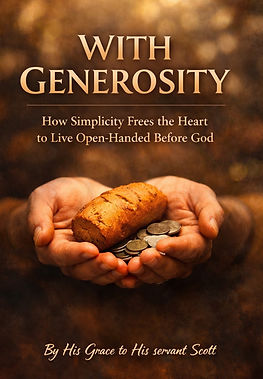
Simplicity is not primarily about reducing possessions; it is about realigning ownership. Scripture declares, “The earth is the Lord’s, and all its fullness” (Psalm 24:1). Everything we hold—money, homes, time, influence, even breath—belongs first to God. David understood this when he prayed, “For all things come from You, and of Your own we have given You” (1 Chronicles 29:14). When we grasp this truth, simplicity becomes a posture of stewardship rather than sacrifice. We are not giving away what is ours; we are distributing what is His. Generosity begins when ownership transfers from self to God.
Jesus warned, “Take heed and beware of covetousness, for one’s life does not consist in the abundance of the things he possesses” (Luke 12:15). Covetousness is subtle. It does not always shout greed; often it whispers comparison. It convinces us that more will satisfy, that accumulation equals security. Yet Scripture exposes the lie: “He who loves silver will not be satisfied with silver” (Ecclesiastes 5:10). Simplicity confronts this endless appetite. It declares that Christ is sufficient. Paul wrote, “Godliness with contentment is great gain” (1 Timothy 6:6). Contentment is not complacency; it is confidence in God’s provision. When the heart says, “The Lord is my shepherd; I shall not want” (Psalm 23:1), generosity naturally follows.
Simplicity also aligns us with kingdom priorities. Jesus commanded, “Seek first the kingdom of God and His righteousness” (Matthew 6:33). The order matters. When the kingdom is first, possessions fall into proper place. Jesus continued, “Where your treasure is, there your heart will be also” (Matthew 6:21). Treasure directs affection. If our treasure is locked in earthly accumulation, our hearts will be anchored to temporary things. But when treasure is invested in eternal purposes, our hearts lift toward heaven. Simplicity creates margin—margin in finances, margin in time, margin in emotional energy—so that kingdom work can flourish.
The early church embodied this truth. Acts 2:44–45 records that believers “had all things in common, and sold their possessions and goods, and divided them among all, as anyone had need.” This was not forced redistribution; it was Spirit-produced generosity. Their simplicity enabled shared abundance. Likewise, Paul commended the Macedonian believers who, “in a great trial of affliction,” overflowed “in the riches of their liberality” (2 Corinthians 8:2). They gave beyond their ability because their hearts were anchored beyond this world. Generosity is not measured by surplus but by surrender.
Simplicity actively breaks the power of greed. Proverbs teaches, “There is one who scatters, yet increases more… The generous soul will be made rich” (Proverbs 11:24–25). This richness is not merely financial; it is spiritual vitality. Jesus affirmed, “It is more blessed to give than to receive” (Acts 20:35). Giving loosens the grip of materialism. It trains the soul to trust God as provider. When we intentionally give—whether finances, possessions, or time—we declare that our security is not in what we store but in who we serve.
Generosity also promotes justice. Isaiah rebuked empty religion and described true fasting: “Is it not to share your bread with the hungry… to bring to your house the poor who are cast out?” (Isaiah 58:6–7). Simplicity makes room for compassion. When we consume less, we can contribute more. Proverbs 19:17 says, “He who has pity on the poor lends to the Lord.” What a staggering promise—that generosity toward others is treated as a loan to God Himself. First John 3:17 confronts us plainly: “Whoever has this world’s goods, and sees his brother in need, and shuts up his heart from him, how does the love of God abide in him?” Generosity is visible love.
Ultimately, generosity reflects God’s nature. “For God so loved the world that He gave” (John 3:16). Giving is not merely something God does; it is who He is. James reminds us that “Every good gift and every perfect gift is from above” (James 1:17). When we live simply and give freely, we mirror our Father. The widow’s oil multiplied only after she surrendered her empty vessels (2 Kings 4:1–7). The loaves and fish fed thousands only after they were placed in Jesus’ hands (John 6:9–13). Release precedes multiplication.
Simplicity, then, is not deprivation but liberation. It frees us from covetousness, aligns us with kingdom values, and creates capacity for justice and compassion. It shifts our posture from clenched fists to open hands. And open hands are the posture of faith. When we truly believe that God supplies “all your need according to His riches in glory by Christ Jesus” (Philippians 4:19), we are no longer afraid to give.
Generosity is not the result of having more. It is the fruit of trusting more. The simpler the heart, the freer the hand. And the freer the hand, the greater the impact for eternity.
Recent Devotionals


Con Generosidad
Cómo La Sencillez Libera El Corazón Para Vivir Con Las Manos Abiertas Ante Dios
La sencillez no consiste principalmente en reducir las posesiones, sino en reorientar la propiedad. La Escritura declara: «Del Señor es la tierra y todo cuanto hay en ella» (Salmo 24:1). Todo lo que tenemos —el dinero, los hogares, el tiempo, la influencia e incluso el aliento— pertenece primero a Dios. David lo entendió cuando oró: «Todo viene de ti, y de lo recibido de tu mano te damos» (1 Crónicas 29:14). Cuando comprendemos esta verdad, la sencillez se convierte en una actitud de mayordomía, en lugar de sacrificio. No estamos regalando lo que es nuestro; estamos distribuyendo lo que es suyo. La generosidad comienza cuando la propiedad pasa de nosotros a Dios.
Jesús advirtió: «Mirad, y guardaos de toda avaricia, porque la vida del hombre no consiste en la abundancia de los bienes que posee» (Lucas 12:15). La avaricia es sutil. No siempre clama con codicia; a menudo susurra comparaciones. Nos convence de que tener más nos satisfará, de que acumular equivale a estar seguros. Sin embargo, la Escritura deja al descubierto la mentira: «El que ama el dinero no se saciará de dinero» (Eclesiastés 5:10). La sencillez hace frente a este apetito insaciable. Declara que Cristo es suficiente. Pablo escribió: «La piedad acompañada de contentamiento es gran ganancia» (1 Timoteo 6:6). El contentamiento no es conformismo; es confianza en la provisión de Dios. Cuando el corazón dice: «El Señor es mi pastor; nada me faltará» (Salmo 23:1), la generosidad surge de manera natural.
La sencillez también nos alinea con las prioridades del reino. Jesús mandó: «Buscad primero el reino de Dios y su justicia» (Mateo 6:33). El orden importa. Cuando el reino ocupa el primer lugar, las posesiones quedan en el lugar que les corresponde. Jesús añadió: «Donde esté vuestro tesoro, allí estará también vuestro corazón» (Mateo 6:21). El tesoro dirige nuestros afectos. Si nuestro tesoro está atado a la acumulación terrenal, nuestro corazón quedará anclado a cosas pasajeras. Pero cuando invertimos el tesoro en propósitos eternos, nuestro corazón se eleva hacia el cielo. La sencillez crea espacio: espacio en las finanzas, en el tiempo y en la energía emocional, para que la obra del reino pueda prosperar.
La iglesia primitiva encarnó esta verdad. Hechos 2:44–45 cuenta que los creyentes «lo tenían todo en común, vendían sus propiedades y sus bienes, y los repartían entre todos según la necesidad de cada uno». No se trataba de una redistribución forzada, sino de una generosidad producida por el Espíritu. Su sencillez hizo posible que compartieran su abundancia. Asimismo, Pablo elogió a los creyentes macedonios, quienes, «en medio de una gran prueba de sufrimiento», rebosaron «en la riqueza de su generosidad» (2 Corintios 8:2). Dieron más allá de sus posibilidades porque sus corazones estaban anclados en algo que trascendía este mundo. La generosidad no se mide por lo que sobra, sino por lo que uno entrega.
La sencillez rompe activamente el poder de la avaricia. Proverbios enseña: «Hay quien reparte y, sin embargo, aumenta… El alma generosa será prosperada» (Proverbios 11:24–25). Esta prosperidad no es solo económica; es vitalidad espiritual. Jesús afirmó: «Más bienaventurado es dar que recibir» (Hechos 20:35). Dar afloja el dominio del materialismo. Enseña al alma a confiar en Dios como proveedor. Cuando damos intencionalmente —ya sean recursos económicos, bienes o tiempo— declaramos que nuestra seguridad no reside en lo que acumulamos, sino en aquel a quien servimos.
La generosidad también promueve la justicia. Isaías reprendió la religión vacía y describió el verdadero ayuno: «¿No consiste en compartir tu pan con el hambriento… en llevar a tu casa a los pobres expulsados?» (Isaías 58:6–7). La sencillez abre espacio para la compasión. Cuando consumimos menos, podemos aportar más. Proverbios 19:17 dice: «El que se compadece del pobre le presta al Señor». ¡Qué promesa tan extraordinaria! La generosidad hacia los demás se considera un préstamo a Dios mismo. Primera de Juan 3:17 nos interpela claramente: «El que tiene los bienes de este mundo y ve a su hermano en necesidad, y cierra su corazón a él, ¿cómo puede permanecer en él el amor de Dios?». La generosidad es amor visible.
En última instancia, la generosidad refleja la naturaleza de Dios. «Porque de tal manera amó Dios al mundo que dio» (Juan 3:16). Dar no es simplemente algo que Dios hace; es quien Él es. Santiago nos recuerda que «toda buena dádiva y todo don perfecto descienden de lo alto» (Santiago 1:17). Cuando vivimos con sencillez y damos con generosidad, reflejamos a nuestro Padre. El aceite de la viuda se multiplicó solo después de que ella entregara sus vasijas vacías (2 Reyes 4:1–7). Los panes y los peces alimentaron a miles solo después de que los pusieron en manos de Jesús (Juan 6:9–13). La entrega precede a la multiplicación.
Así pues, la sencillez no es privación, sino liberación. Nos libra de la codicia, nos alinea con los valores del Reino y crea espacio para la justicia y la compasión. Cambia nuestra actitud: pasamos de tener los puños cerrados a abrir las manos. Y las manos abiertas son la postura de la fe. Cuando de verdad creemos que Dios suplirá «todo lo que os falta conforme a sus riquezas en gloria en Cristo Jesús» (Filipenses 4:19), ya no tenemos miedo de dar.
La generosidad no es fruto de tener más, sino de confiar más. Cuanto más sencillo es el corazón, más libre es la mano. Y cuanto más libre es la mano, mayor es el impacto en la eternidad.
怀着慷慨之心
简朴如何释放人心,使其在上帝面前活得慷慨坦然
简朴的核心并不在于减少财物,而在于重新调整所有权。圣经宣告:“地和其中所充满的,世界和住在其间的,都属耶和华”(诗篇 24:1)。我们所拥有的一切——金钱、房屋、时间、影响力,甚至气息——都首先属于上帝。大卫祷告说:“万物都从你而来,我们把从你而得的献给你”(历代志上 29:14),他深明此理。当我们领悟这一真理,简朴就成了一种管家职分,而非牺牲。我们并不是把自己的东西送出去,而是在分配属于上帝的东西。慷慨始于所有权从自己转归上帝。
耶稣警告说:“你们要谨慎自守,免去一切的贪心,因为人的生命不在乎家道丰富”(路加福音 12:15)。贪心往往隐而不显。它不总是大声嚷嚷着贪婪,更多时候只是低声诱使我们攀比。它让我们相信,拥有更多就能满足,积累财富就等于安全。然而,圣经揭穿了这个谎言:“喜爱银子的,不因得银子知足”(传道书 5:10)。简朴直面这永无止境的欲望,并宣告基督已足够。保罗写道:“敬虔加上知足的心便是大利了”(提摩太前书 6:6)。知足不是安于现状,而是确信上帝必供应。当我们的心说:“耶和华是我的牧者,我必不致缺乏”(诗篇 23:1),慷慨便自然随之而来。
简朴也使我们与天国的优先次序一致。耶稣吩咐说:“你们要先求他的国和他的义”(马太福音 6:33)。先后次序至关重要。当天国居首位,财物便会归于恰当的位置。耶稣接着说:“因为你的财宝在哪里,你的心也在那里”(马太福音 6:21)。财宝牵引着我们的情感。若我们的财宝都锁在地上的积累中,心就会系在短暂之物上。但若把财宝投资于永恒的旨意,我们的心便会仰望天国。简朴能腾出余裕——财务上的余裕、时间上的余裕、情感能量上的余裕——使天国的事工得以兴旺。
早期教会践行了这一真理。《使徒行传》2:44–45 记载,信徒“凡物公用,并且卖了田产、家业,照各人所需用的分给各人”。这并非强制分配,而是圣灵所结出的慷慨果子。他们生活简朴,使丰盛得以共享。同样,保罗称赞马其顿的信徒:他们“在大患难中……格外显出他们乐捐的厚恩”(哥林多后书 8:2)。他们付出超乎所能,因为他们的心所系之处,远超这个世界。衡量慷慨,不在于手头有多少盈余,而在于愿意舍弃多少。
简朴能主动打破贪婪的势力。《箴言》教导说:“有施散的,却更增添……好施舍的,必得丰裕”(箴言 11:24–25)。这种丰裕不只是财务上的,更是属灵生命的丰盛。耶稣宣告:“施比受更为有福”(使徒行传 20:35)。施予能松开物质主义的束缚,训练我们的心灵信靠上帝为供应者。当我们有意地付出——无论是金钱、财物还是时间——我们就是在宣告:我们的安全感不在于所积存的东西,而在于我们所事奉的那一位。
慷慨也能促进公义。以赛亚谴责徒有其表的宗教,并描述了真正的禁食:“不是要把你的饼分给饥饿的人……将被赶出的人接到你家中吗?”(以赛亚书 58:6–7)简朴的生活为怜悯留出空间。当我们减少消费,就能多些付出。箴言 19:17 说:“怜悯贫穷的,就是借给耶和华。”这是多么惊人的应许——我们对他人的慷慨,竟被视为借给上帝自己的贷款。约翰一书 3:17 直截了当地质问我们:“凡有世上财物的,看见弟兄穷乏,却塞住怜恤的心,爱上帝的心怎能存在他里面呢?”慷慨是看得见的爱。
归根结底,慷慨彰显了上帝的本性。“上帝爱世人,甚至将他的独生子赐给他们”(约翰福音 3:16)。赐予不只是上帝所做的事,更是祂的本质。雅各提醒我们:“各样美善的恩赐和各样全备的赏赐都是从上头来的”(雅各书 1:17)。当我们过简朴的生活、慷慨地给予时,便是在效法我们的天父。寡妇的油,是在她交出空器皿之后才增多的(列王纪下 4:1–7)。饼和鱼也是在交到耶稣手中之后,才使数千人吃饱(约翰福音 6:9–13)。先舍下,后增多。
因此,简朴并非剥夺,而是释放。它使我们摆脱贪欲,让我们的价值观与天国相契合,也为行公义、施怜悯腾出余地。它使我们的姿态从紧握双拳转为张开双手。而张开的双手,正是信心的姿态。当我们真正相信上帝会“照着他在基督耶稣里荣耀的丰富,使你们一切所需用的都充足”(腓立比书 4:19),就不再害怕付出。
慷慨并非拥有更多的结果,而是更加信靠的果实。内心越简朴,双手就越自由;双手越自由,就越能为永恒带来深远影响。