When the Spirit Reveals the Self-Nature
September 29, 2026
From Striving to Surrender in the School of Failure
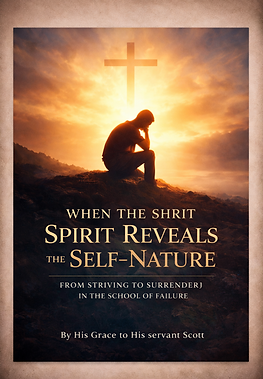
As we journey with the Lord, there comes a holy and painful moment when we begin to truly see ourselves—not the version we present, not the disciplined exterior we have worked hard to maintain, but the underlying self-nature that operates beneath it all. This realization does not come through intellect, nor through moral effort, nor through improved habits. It comes by revelation of the Holy Spirit. Jesus said that when the Spirit comes, “He will convict the world concerning sin and righteousness and judgment” (John 16:8). That conviction is not merely about outward behavior; it penetrates motive, intention, and hidden allegiance. Hebrews 4:12 declares that the Word of God is living and active, “piercing to the division of soul and spirit… discerning the thoughts and intentions of the heart.” When that dividing work begins, we start to see what has always been there.
Most of us begin sincerely. We truly desire God. We pray, we fast, we study, we serve. We attempt to discipline our weaknesses and refine our rough edges. We try to overcome sin patterns through commitment and accountability. And for a season, it may even appear successful. But beneath the surface, something remains untouched. Romans 7:18 becomes painfully real: “For I know that nothing good dwells in me, that is, in my flesh.” We discover that even our efforts to seek God can be subtly driven by pride, fear, control, or self-preservation. What we thought was devotion is often mixed. What we thought was surrender still carries self at the center.
Behavior modification can restrain the flesh, but it cannot transform it. Paul warns that certain practices “have indeed an appearance of wisdom… but they are of no value in stopping the indulgence of the flesh” (Colossians 2:23). We adjust habits but not nature. We polish the exterior while the root remains intact. Over time, repeated failure begins to expose this reality. We recommit. We strive harder. We promise God deeper devotion. Yet we find ourselves falling short again. This is not because we do not love Him, but because self-effort cannot produce spiritual life. Jesus was clear: “Apart from Me you can do nothing” (John 15:5). Not less. Not little. Nothing.
It is often through failure that revelation deepens. God allows us to exhaust our own strength so we can see its limits. Paul pleaded for his thorn to be removed, but the Lord answered, “My grace is sufficient for you, for My power is made perfect in weakness” (2 Corinthians 12:9). Weakness becomes the classroom where self-confidence dies. Peter’s bold declarations collapsed into denial, and only then was he ready to truly depend. When we repeatedly fall while trying to reach God through effort, we begin to realize that the problem is not merely what we do—it is what we are apart from Christ.
This is the moment when we begin to despise the self-nature—not with self-hatred, but with holy clarity. We do not despise our identity as beloved sons and daughters; we despise the independent, self-reliant nature inherited from Adam. “The mind set on the flesh is hostile to God” (Romans 8:7). It resists surrender. It seeks control. It wants spiritual credit. When Isaiah declared that “all our righteous deeds are like filthy rags” (Isaiah 64:6), he was not denying good works; he was exposing their corruption when rooted in self. This revelation humbles us. It silences comparison. It removes boasting.
Yet this revelation is not meant to crush us into despair. “There is therefore now no condemnation for those who are in Christ Jesus” (Romans 8:1). Conviction is not rejection; it is invitation. The Spirit reveals the self-nature not to shame us, but to lead us to the cross. Galatians 2:20 becomes more than theology: “I have been crucified with Christ. It is no longer I who live, but Christ who lives in me.” The self-nature is not rehabilitated—it is crucified. The Christian life is not self-improvement; it is exchanged life.
When this revelation settles in, striving begins to give way to abiding. We stop attempting to fix ourselves and start trusting the indwelling Christ. “Walk by the Spirit, and you will not gratify the desires of the flesh” (Galatians 5:16). Notice the order: walking with Him precedes freedom from the flesh. Philippians 2:13 anchors us: “For it is God who works in you, both to will and to work for His good pleasure.” Even our desire to obey is sustained by Him.
The journey, then, moves from effort to exhaustion, from exhaustion to revelation, from revelation to surrender. What once felt like failure becomes mercy. What once felt like defeat becomes deliverance. We learn that true spirituality is not mastering our nature but depending on His. We cease trying to appear better than we are and instead rest in the One who is our righteousness. In that place, humility grows, compassion deepens, and gratitude overflows.
The Holy Spirit’s revelation of the self-nature is painful, but it is also freeing. It strips illusion so that union can take its rightful place. We finally agree with Jesus: apart from Him, we can do nothing. But in Him, “Christ in you, the hope of glory” (Colossians 1:27), we discover a life not sustained by striving, but by grace.


