Enjoying Rest & Relaxation
November 24
Receiving the Gift Without Replacing the Giver
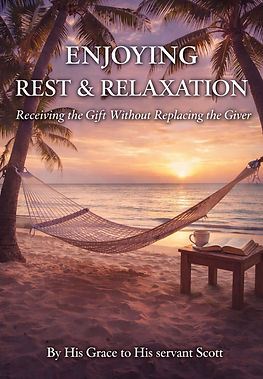
From the beginning, God established rhythm. Genesis 2:2–3 tells us that “on the seventh day God ended His work which He had done, and He rested.” God did not rest because He was exhausted. He rested because rhythm is divine. Work and rest were woven into creation before sin ever entered the world. Therefore, rest itself is not weakness, nor is relaxation carnality. Rest is design.
Ecclesiastes 3:1 reminds us, “To everything there is a season, a time for every purpose under heaven.” There is a time to labor and a time to pause. There is a time to build and a time to breathe. Healthy relaxation — time with family, quiet evenings, recreation, even vacation — can be a gift from God. First Timothy 6:17 says that God “richly gives us all things to enjoy.” Enjoyment is not rebellion. Gratitude is not compromise.
However, there is a difference between physical rest and spiritual rest. Hebrews 4:9–10 declares, “There remains therefore a rest for the people of God. For he who has entered His rest has himself also ceased from his works as God did from His.” Spiritual rest is not primarily about sleep. It is about surrender. It is the ceasing of self-striving. It is the quieting of the soul before God.
A person can sleep eight hours and wake up anxious. A family can take a beautiful vacation and return still internally restless. Why? Because outward rest does not automatically produce inward peace. Psalm 23:2–3 says, “He makes me lie down in green pastures; He leads me beside the still waters. He restores my soul.” Notice that restoration flows from His leadership, not merely from the scenery. The Shepherd restores. The pasture is the setting.
Relaxation becomes dangerous when it becomes escape. When we run to distraction instead of returning to God, we are no longer receiving a gift — we are constructing a substitute. Isaiah 30:15 says, “In returning and rest you shall be saved; in quietness and confidence shall be your strength.” Returning comes before resting. Confidence comes from communion.
In our culture, many attempt to silence their souls through constant stimulation. We scroll, binge, travel, shop, medicate, or fill every quiet space with noise. But noise does not equal peace. Jesus said in Matthew 11:28–29, “Come to Me, all you who labor and are heavy laden, and I will give you rest… and you will find rest for your souls.” Christ did not offer an environment. He offered Himself. The rest of God is relational before it is situational.
Psalm 127:2 says, “He gives His beloved sleep.” Sleep is sweetest when trust is deepest. The heart that rests in God does not depend on circumstances for peace. Philippians 4:6–7 instructs us to be anxious for nothing, but in everything by prayer and supplication with thanksgiving to let our requests be made known to God. The result? “The peace of God, which surpasses all understanding, will guard your hearts and minds through Christ Jesus.” Peace is the guard of the abiding heart.
When abiding comes first, relaxation becomes healthy again. You can enjoy a sunset without worshiping it. You can take a day off without idolizing it. You can enjoy recreation without hiding in it. Acts 17:28 declares, “In Him we live and move and have our being.” When our being is rooted in Him, enjoyment becomes gratitude instead of escape.
Jesus Himself modeled this balance. Luke 5:16 says, “So He Himself often withdrew into the wilderness and prayed.” He withdrew not to escape the Father but to deepen communion with Him. His outward ministry flowed from inward union. Even in rest, His heart was turned toward the Father. John 5:19 reveals His secret: “The Son can do nothing of Himself, but what He sees the Father do.” That is abiding rest.
The danger arises when we reverse the order. When relaxation becomes the source instead of the overflow, the soul slowly drifts. Hebrews 3:12 warns us, “Beware, brethren, lest there be in any of you an evil heart of unbelief in departing from the living God.” Substitution is subtle. It rarely feels like rebellion. It feels like comfort. Yet anything that replaces communion will eventually expose emptiness.
The mature believer learns order: abide first, labor faithfully, relax gratefully, and return quickly. Colossians 3:17 says, “Whatever you do in word or deed, do all in the name of the Lord Jesus.” Even rest can be done in His name. Even recreation can be received as worship when the heart remains aligned.
There is a rest that refreshes the body, and there is a rest that restores the soul. One comes from pause; the other comes from presence. When the body rests but the heart is disconnected, fatigue returns quickly. When the heart abides, even simple moments become deeply restorative.
Therefore, enjoy the gift of rest. Receive relaxation with thanksgiving. But guard the throne of your heart. Let no created thing replace the Creator. For true rest is not found in the absence of activity but in the presence of God. And when the soul rests in Him, every other form of rest becomes what it was always meant to be — a blessing, not a substitute.
Recent Devotionals


Disfrutar Del Descanso Y La Relajación
Recibir El Regalo Sin Sustituir A Quien Lo Da
Desde el principio, Dios estableció un ritmo. Génesis 2:2–3 nos dice que «el séptimo día Dios terminó la obra que había hecho, y descansó». Dios no descansó porque estuviera agotado. Descansó porque el ritmo es divino. El trabajo y el descanso quedaron entrelazados en la creación antes de que el pecado entrara en el mundo. Por lo tanto, descansar no es debilidad, ni relajarse es algo carnal. El descanso es parte del diseño. Eclesiastés 3:1 nos recuerda: «Todo tiene su tiempo, y todo lo que se quiere debajo del cielo tiene su hora». Hay un tiempo para trabajar y un tiempo para hacer una pausa. Hay un tiempo para construir y un tiempo para respirar. La relajación saludable —pasar tiempo con la familia, disfrutar de noches tranquilas, recrearse e incluso irse de vacaciones— puede ser un regalo de Dios. Primera de Timoteo 6:17 dice que Dios «nos da todas las cosas en abundancia para que las disfrutemos». Disfrutar no es rebelarse. La gratitud no es transigir.
Sin embargo, hay una diferencia entre el descanso físico y el descanso espiritual. Hebreos 4:9–10 declara: «Por tanto, queda todavía un reposo para el pueblo de Dios. Porque el que ha entrado en su reposo, también ha reposado de sus obras, como Dios de las suyas». El descanso espiritual no tiene que ver principalmente con dormir. Tiene que ver con rendirse. Consiste en dejar de esforzarse por cuenta propia. Es aquietar el alma ante Dios.
Una persona puede dormir ocho horas y despertarse con ansiedad. Una familia puede disfrutar de unas vacaciones maravillosas y volver todavía inquieta por dentro. ¿Por qué? Porque el descanso exterior no produce automáticamente paz interior. Salmo 23:2–3 dice: «En lugares de delicados pastos me hará descansar; junto a aguas de reposo me pastoreará. Confortará mi alma». Observa que la restauración proviene de su guía, no simplemente del paisaje. El Pastor restaura. El prado es el escenario.
El descanso se vuelve peligroso cuando se convierte en una vía de escape. Cuando recurrimos a las distracciones en vez de volver a Dios, ya no estamos recibiendo un regalo: estamos creando un sustituto. Isaías 30:15 dice: «En volver y en descansar seréis salvos; en quietud y confianza estará vuestra fortaleza». Primero viene el regreso; después, el descanso. La confianza nace de la comunión.
En nuestra cultura, muchos intentan acallar su alma mediante una estimulación constante. Navegamos sin parar, hacemos maratones de series, viajamos, compramos, nos medicamos o llenamos de ruido cada espacio de silencio. Pero el ruido no equivale a la paz. Jesús dijo en Mateo 11:28–29: «Venid a mí todos los que estáis trabajados y cargados, y yo os haré descansar… y hallaréis descanso para vuestras almas». Cristo no ofreció un ambiente; se ofreció a sí mismo. El descanso de Dios es relacional antes que circunstancial.
El Salmo 127:2 dice: «A su amado dará Dios el sueño». El sueño es más dulce cuando la confianza es más profunda. El corazón que descansa en Dios no depende de las circunstancias para tener paz. Filipenses 4:6–7 nos exhorta a no estar afanosos por nada, sino a presentar nuestras peticiones a Dios en toda oración y ruego, con acción de gracias. ¿El resultado? «Y la paz de Dios, que sobrepasa todo entendimiento, guardará vuestros corazones y vuestros pensamientos en Cristo Jesús». La paz protege al corazón que permanece en Dios.
Cuando permanecer en Dios ocupa el primer lugar, el descanso vuelve a ser saludable. Puedes disfrutar de un atardecer sin adorarlo. Puedes tomarte un día libre sin idolatrarlo. Puedes disfrutar de la recreación sin refugiarte en ella. Hechos 17:28 declara: «En él vivimos, nos movemos y existimos». Cuando nuestro ser está arraigado en Él, el disfrute se convierte en gratitud, en vez de evasión.
Jesús mismo fue un ejemplo de este equilibrio. Lucas 5:16 dice: «Pero él se apartaba a lugares desiertos y oraba». Se retiraba, no para escapar del Padre, sino para profundizar su comunión con Él. Su ministerio exterior fluía de su unión interior. Incluso en el descanso, su corazón estaba vuelto hacia el Padre. Juan 5:19 revela su secreto: «No puede el Hijo hacer nada por sí mismo, sino lo que ve hacer al Padre». Ese es el descanso que nace de permanecer en Él.
El peligro surge cuando invertimos el orden. Cuando el descanso se convierte en la fuente, en vez de ser el fruto, el alma se va desviando poco a poco. Hebreos 3:12 nos advierte: «Mirad, hermanos, que no haya en ninguno de vosotros un corazón malo de incredulidad que lo aparte del Dios vivo». La sustitución es sutil. Rara vez parece una rebelión. Se siente como consuelo. Sin embargo, todo lo que reemplaza la comunión acabará poniendo al descubierto el vacío.
El creyente maduro aprende a vivir con orden: permanecer primero, trabajar fielmente, descansar con gratitud y regresar pronto. Colosenses 3:17 dice: «Y todo lo que hagan, de palabra o de hecho, háganlo todo en el nombre del Señor Jesús». Incluso el descanso puede vivirse en su nombre. Incluso la recreación puede recibirse como adoración cuando el corazón permanece alineado con Él.
Hay un descanso que renueva el cuerpo y otro que restaura el alma. Uno proviene de hacer una pausa; el otro, de estar en su presencia. Cuando el cuerpo descansa, pero el corazón está desconectado, el cansancio regresa pronto. Cuando el corazón permanece en Él, hasta los momentos sencillos se vuelven profundamente reparadores.
Por tanto, disfruta del regalo del descanso. Recibe la relajación con gratitud. Pero protege el trono de tu corazón. No permitas que ninguna cosa creada reemplace al Creador. Porque el verdadero descanso no se encuentra en la ausencia de actividad, sino en la presencia de Dios. Y cuando el alma descansa en Él, toda otra forma de descanso se convierte en lo que siempre debió ser: una bendición, no un sustituto.
享受休闲时光
接受馈赠,却不取代馈赠者
从起初,神就设立了节奏。《创世记》2:2–3 告诉我们:“到第七日,神造物的工已经完毕,就在第七日歇了他一切的工。”神歇息,并不是因为精疲力竭,而是因为有节奏是神圣的。在罪进入世界以前,工作与安息就已交织在创造之中。因此,安息本身并非软弱,放松也不等于属肉体。安息是受造的安排。
《传道书》3:1 提醒我们:“凡事都有定期,天下万务都有定时。”有劳作的时候,也有停歇的时候;有建造的时候,也有喘息的时候。健康的放松——与家人共度时光、安静的夜晚、休闲活动,甚至度假——都可以是神所赐的礼物。《提摩太前书》6:17 说,神“厚赐百物给我们享受”。享受并非悖逆,感恩也不是妥协。
然而,身体的休息与灵里的安息并不相同。《希伯来书》4:9–10 宣告:“这样看来,必另有一安息日的安息为神的子民存留。因为那进入安息的,乃是歇了自己的工,正如神歇了他的工一样。”灵里的安息主要不是睡眠,而是降服;是停止靠自己竭力争取,是让灵魂在神面前安静下来。
一个人可以睡足八小时,醒来时却依然焦虑。一家人可以度过一场美好的假期,回来后心里仍然躁动不安。为什么?因为外在的休息并不会自动带来内心的平安。《诗篇》23:2–3 说:“他使我躺卧在青草地上,领我在可安歇的水边。他使我的灵魂苏醒。”请注意,复原源于他的引领,而不只是周围的景致。使人复原的是牧者,草场只是所在之处。
当放松变成逃避时,它就会带来危险。当我们奔向消遣,而不是回到神面前时,我们领受的就不再是恩赐,而是在打造一个替代品。以赛亚书 30:15 说:“你们得救在乎归回安息;你们得力在乎平静安稳。”归回在安息之前,信靠则源于与神相交。
在我们的文化中,许多人试图用持续不断的刺激让自己的心安静下来。我们不停刷手机、追剧、旅行、购物、服药,或是用喧闹填满每一处安静的空间。但喧闹并不等于平安。耶稣在马太福音 11:28–29 说:“凡劳苦担重担的人,可以到我这里来,我就使你们得安息……你们心里就必得享安息。”基督所赐的不是一种环境,而是祂自己。神所赐的安息,首先建立在关系之上,而非环境之中。
诗篇 127:2 说:“耶和华必叫他所亲爱的安然睡觉。”信靠越深,睡眠就越甘甜。安息在神里面的心,不会依赖外在境况来获得平安。腓立比书 4:6–7 教导我们,一无挂虑,只要凡事借着祷告、祈求和感谢,将所求的告诉神。结果如何?“神所赐、出人意外的平安,必在基督耶稣里保守你们的心怀意念。”平安守护着住在主里面的心。
当住在主里面成为首要之事,放松便能重新成为健康的事。你可以欣赏日落,却不必敬拜它;可以休息一天,却不必把休息奉为偶像;可以享受娱乐,却不必躲进其中。使徒行传 17:28 宣告:“我们生活、行动、存留,都在乎祂。”当我们的生命根植于祂,享受便成为感恩,而不是逃避。
耶稣亲自活出了这种平衡。路加福音 5:16 说:“耶稣却退到旷野去祷告。”祂退去,不是为了逃离天父,而是为了与祂更深相交。祂外在的事奉,源自内在与父的联合。即使安歇时,祂的心仍向着天父。约翰福音 5:19 揭示了祂的秘诀:“子凭着自己不能做什么,惟有看见父所做的,子才能做。”这就是住在主里面的安息。
当我们把次序颠倒,危险便随之而来。当放松不再是满溢而出的结果,反倒成了源头,灵魂就会慢慢偏离。希伯来书 3:12 警告我们:“弟兄们,你们要谨慎,免得你们中间或有人存着不信的恶心,把永生神离弃了。”取代之物往往悄无声息。它很少让人感觉像是在悖逆,反而像是一种安慰。然而,凡是取代与神相交之物,终将显露出其中的空虚。
成熟的信徒学会了按次序生活:先住在主里面,忠心劳作,怀着感恩放松,并迅速回到主面前。歌罗西书3:17说:“无论做什么,或说话或行事,都要奉主耶稣的名而做。”休息也可以奉祂的名而做。只要心仍与祂对齐,娱乐也可以成为敬拜。
有一种休息能使身体恢复精力,另有一种休息能使灵魂重新得力。前者来自暂停,后者来自亲近。当身体休息、心却与主疏离时,疲惫很快又会回来;当心安住在主里面,即使是平凡的片刻,也能带来深层的恢复。
因此,要享受休息这份恩赐,怀着感恩领受放松的时光。但要守护你心中的宝座,不要让任何受造之物取代造物主。真正的安息并非来自活动的停止,而是来自上帝的同在。当灵魂在祂里面安息,其他一切形式的休息便都能成为它原本应有的样子——祝福,而非替代品。