Drawn Upward
August 31, 2026
Purified by Proximity, Not Pressure
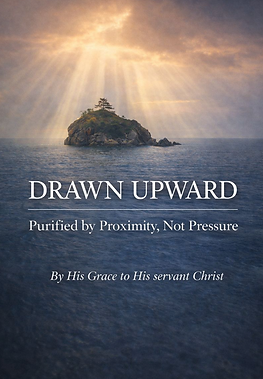
All throughout creation, God has written spiritual truth into natural process. One of the most consistent patterns on earth is water’s relationship with the sun. Across cultures, climates, and centuries, the same quiet process unfolds again and again: water is drawn upward. It is not pushed. It is not forced. It is drawn—responding to presence rather than pressure.
Scripture tells us this is intentional. “Since the creation of the world His invisible attributes… have been clearly seen, being understood through what has been made” (Romans 1:20). God teaches us through what He has designed.
When water evaporates, it does not struggle. It does not strive. It simply remains exposed to the sun. As it rises, something remarkable happens: impurities are left behind. The evaporation itself becomes a process of purification. The ascent is passive, but the transformation is real. This reveals a spiritual truth many believers miss—purification is often the byproduct of proximity, not effort. Jesus did not say, “Work harder to become clean.” He said, “Abide in Me” (John 15:4). Holiness flows from nearness.
The sun does not chase the water. It does not adjust itself to make evaporation happen. It simply remains what it is—constant, radiant, unchanging. The water rises because of its relationship to the source. Scripture points us to Christ in the same way: “But for you who fear My name, the Sun of righteousness will rise with healing in His wings” (Malachi 4:2). Jesus draws us upward not through force, but through faithful presence. Transformation happens when we stay exposed to Him.
Yet purification does not only occur through rising. At times, God purifies through stillness. When water freezes, motion stops. Mixture separates. Ice forms distinction. Though different from evaporation, the result is still refinement. Scripture confirms this pattern. “Be still, and know that I am God” (Psalm 46:10). There are seasons when God slows us down—not to harm us, but to separate us from what cannot remain. James reminds us that trials and restraint produce endurance and maturity (James 1:2–4). Stillness can purify just as deeply as movement.
Here is where humanity differs from water: we have a choice. Water responds automatically to the sun. We do not. We can remain near the Source—or we can cling to what is familiar but broken. God speaks plainly about this struggle: “My people have committed two evils: they have forsaken Me, the fountain of living waters, to hew for themselves broken cisterns that can hold no water” (Jeremiah 2:13). Clinging feels safe, but it always leads to dryness.
This is where the internal gauge becomes essential. God has placed within every believer a quiet witness—the peace of the Holy Spirit. “Let the peace of Christ rule in your hearts” (Colossians 3:15). The word rule means to act as an umpire. Peace tells us when we are aligned. Strain tells us when we are resisting. When purification feels exhausting, it is often because we are trying to climb instead of abiding. Isaiah tells us plainly, “In repentance and rest you will be saved, in quietness and trust is your strength” (Isaiah 30:15).
Passivity toward God is not weakness—it is trust. Resistance often disguises itself as effort. But Scripture never tells us to force transformation. It invites surrender. David captured this posture when he wrote, “Surely I have calmed and quieted my soul” (Psalm 131:2). Purification does not come from gripping harder; it comes from loosening our hold.
God does not purify us by pressure. He purifies us by presence. He does not force ascent. He invites proximity. And when we allow ourselves to remain near Him—whether through rising seasons or frozen ones—we find that what once required effort now carries grace. The closer we stay to Christ, the less strain transformation requires. We are not pushed upward. We are drawn.


